
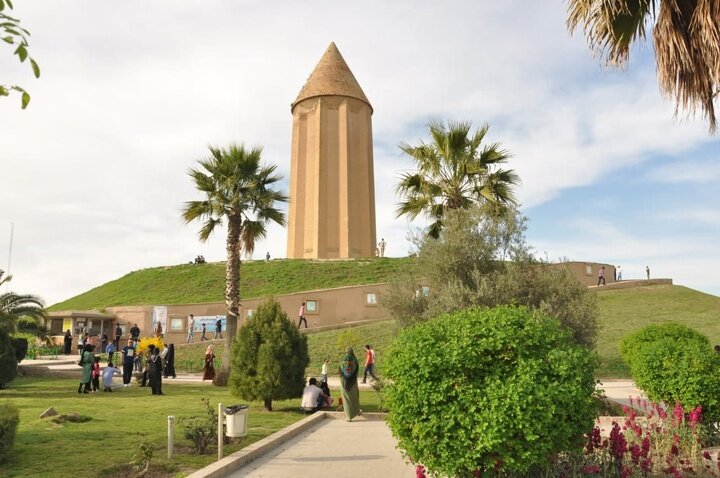
TEHRAN – Iranian heritage authorities are conducting subsidence monitoring and technical research on Gombad-E Cabas Tower, a registered UNESCO in Golestan province, the director of the Regional Tourism Bureau said on Saturday.
Fereydoun Fa’ali told a meeting of the state’s Technical Council that the project is being implemented in collaboration with leading academics and experts. The results will guide future decisions on technical recovery, lighting, landscaping and beautification projects around the monument.
He described the project as pursuing two complementary goals. It is about scientific conservation and meeting public demand for physical improvements to the site.
Fa’ali added that coordination between the Gonbad-e Kavus municipality and the local heritage sector is increasing to sort out the surroundings of the tower.

Over 70 meters tall, the Gonbad-e Qabus is considered one of the tallest pure brick towers in the world. Completed in 1006 AD by Ziyarid ruler Qabus Ibn voshmir, this is an example of architecture from the early Islamic period. The hollow, cylindrical shaft of the tower rises from a 10-point star plan to a cone-shaped roof, surrounding the Kufic inscription commemorating its founder.
The structure, located near the ancient capital of Jyarid in Yorjan, is visible from afar across the surrounding plains. UNESCO says it reflects the cultural exchange between the nomads of Central Asia and ancient Iranian civilizations, and has influenced the design of other tomb towers in the region and beyond.
morning