
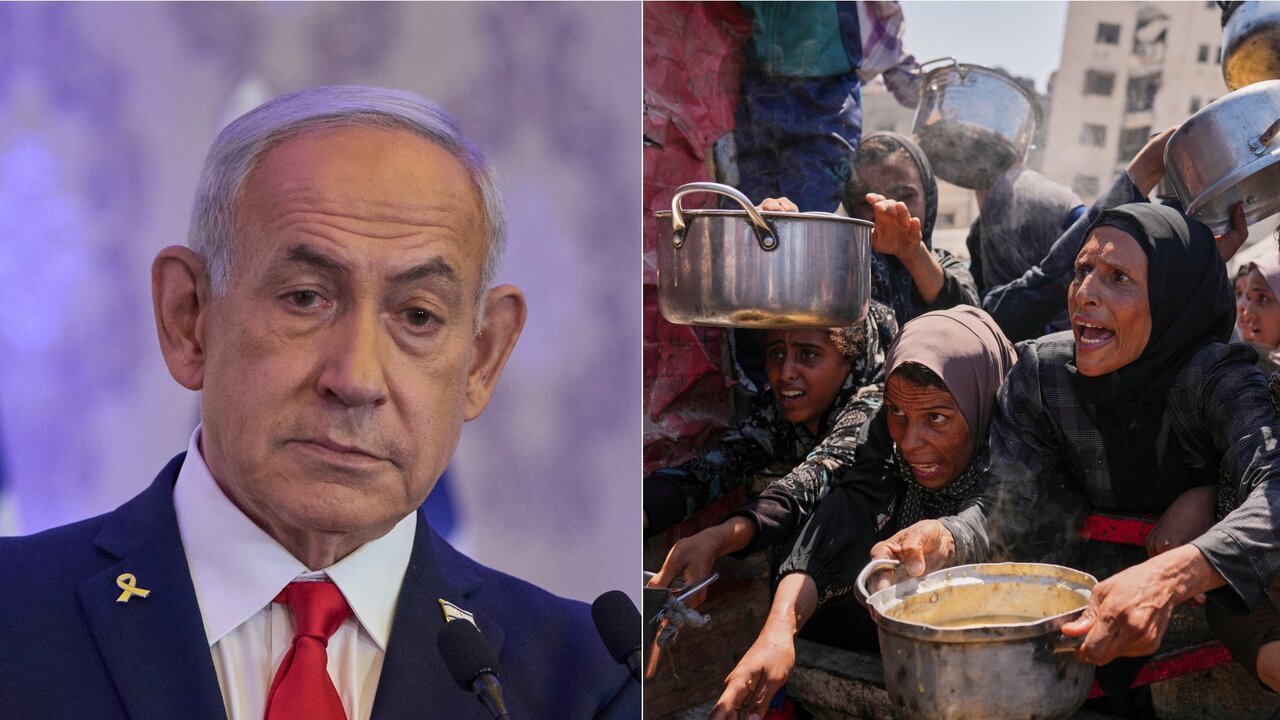
TEHRAN – Israeli Prime Minister Prime Minister Benjamin Netanyahu’s decision to fully occupy Gaza city and potentially occupy the entire Gaza Strip, celebrating the harsh escalation in the nearly two-year conflict with Hamas, revealing a deep and troubling neglect of military advisers, humanitarian norms and regional stability.
The decision was ratified by security guards despite sharp objections within the military and growing public unrest. Thus, this move exposed a more calculated, hardened posture on ideological rigidity than practical strategies.
Plans and their contradictions
Netanyahu’s plan was approved after extending debate and intense cabinet pressure, and is intended to force more than one million Palestinians from Gaza city by October 7, 2025. We celebrate the second anniversary of the Israeli Hama War in October 2023, and then Israel will rather munch on the ground to launch an attack to rob the city.
However, this superficially militaristic purpose is enveloped in contradictions that clearly reveal the difficult nature of Israeli approaches.
On the surface, Netanyahu promises that Israel does not aim to govern Gaza forever, instead “control” the strip temporarily, establishing security perimeters, and then handing over civilian rule to unspecified Arab forces who explicitly exclude both Hamas and Palestinian authority.
This ambiguous “handover” plan is politically convenient, but completely unrealistic, and it cannot hold Israel more accountable, avoiding the reality that it will crush Hamas’ control.
The military warning, voiced horribly by Israeli military chief of staff, Eyal Zamir, highlights this paradox and warns that the operation is full of deep security and ethical responsibility, at the risk of falling into free occupation and military regime.
Military opposition and political incompatibility
The military’s resistance to the plan is not a minor objection. It highlights the growth of the Gulf between extremist maximalism of political leaders and practical security assessments. Zamir and other top officers warn that the operations are putting hostage situations at stake, putting Israeli soldiers in risking complex urban wars, and exacerbating the already worn army, which has faded thinner after years of conflict in Gaza.
Nevertheless, Netanyahu’s cabinet, dominated by Hawkish and the idea of ultranationalism, ignored this advice and even vehemently opposed humanitarian relief to Palestinians and ceasefire negotiations. The rigidity of this ideological ideology reveals that the government is willing to abandon operational prudence and international norms for a burnt global strategy to wipe out Hamas at any cost.
Humanitarian crisis
Humanitarian outcomes are disastrous and predictable. Already destroyed by ongoing artillery bombardment, Gaza City sees forced displacement of around 1 million civilians being forced into confinement in overcrowded camps and southern regions that are currently not set to accommodate a significant number.
The aggressive images before starvation and malnutrition depict rather ugly scenes of the population sandwiched between sieges, threatened by the absolute termination of the most basic services offered.
International organizations and the United Nations are urgently warning of “devastating consequences” as Israel continues to hamper the flow of humanitarian aid. Despite these warnings, Israeli security ministers approved measures aimed at “demilitarizing” Gaza and changing governance.
This strategy fundamentally overlooks and exacerbates Gaza’s deep humanitarian crisis, effectively weaponizing the evacuation and hunger of civilians as they pursue military targets. Statements from Gaza residents reflect this desolate reality. “There’s nothing left to occupy,” one resident said.
Dangerous escalations that put peace and stability at risk
Political, Netanyahu’s gambit avoids viable diplomatic channels, deepens the cracks in Israeli-Palestinian relations, and destroys regional dynamics. By excluding Palestinian authority and rejecting meaningful involvement with Palestinian political actors, the plan reduces the possibility of negotiated peace or reintegration of Gaza governance.
The impact of Israeli escalation is far beyond the boundaries of Gaza. Neighborhood countries, particularly Egypt, could face increased pressure at the border as the conflict drives more refugees towards already tense intersections. This influx risks increasing tensions and complicating Egypt’s delicate balancing act between security concerns and humanitarian responsibility.
Domestic, Israel is tackling growing discrepancies. Polls have shown increasingly fatigue from the war and protested Gaza city’s occupation plans. Even within Israeli forces, reserves are reportedly resisting further deployments based on high-risk operations, informing a crack in homefront cohesion.
However, Netanyahu’s government is stalking politically driven calculations, strengthened by ultranationalists who refuse negotiations and humanitarian rest, and prioritize ideological victory over sustainable security and peace.
The international response highlights Israel’s diplomatic isolation in this respect. While the United States offers protected support, many Western and local officials have condemned the legality and humanitarian costs of operations.
The United Nations will issue warnings against violations of international law and urge immediate protection of civilians. However, these voices have barely shaken the dogmatic trajectory of the current Israeli government.
Netanyahu’s plan to forcibly occupy Gaza city and expand control of the Gaza Strip reflects more dangerous escalations shaped by ideological incommunity and political survival than strategic reasons.
By dismissing military and humanitarian warnings, Israeli leadership risks being trapped in a long-term occupation that undermines regional instability, deepens human suffering, undermines the prospect of peace, and more critically, forcing Israel to become even more entangled with Gaza-Quamia.