
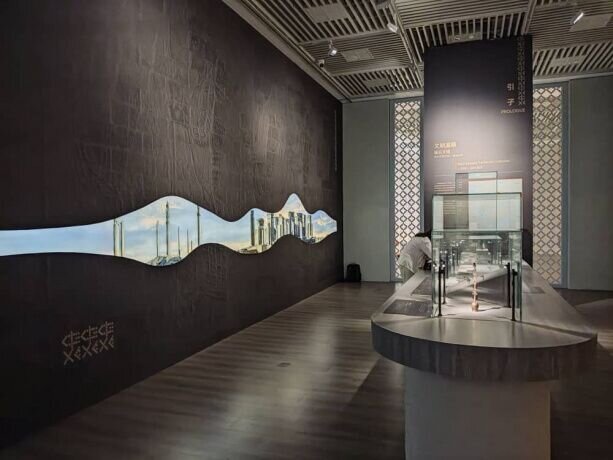
Tehran – The Land of Kindness loan exhibition displays several Tehran museum artifacts, including the Reza Abbasi Museum, the Mochadam Museum of the University of Tehran, the Abuzine Museum, and the Iranian Carpet Museum. We will run in Nanjing until the end of the Iranian month in Abang.
The exhibition, held in China on exhibition tours held in cities in Chengdu, Guangzhou and Nanjing, reports that it is currently ongoing at the Nanjing Museum, one of the Nanjing Museums.
Majid Montasel Zohuli, director of the Institute for Museums and Cultural Spaces at Tehran University, said that given the cultural, economic and political connections between Iran and China, and their friendship throughout history, holding an international exhibition can improve the knowledge of people of each other’s history, civilization and culture.
He recalled that the Land of Kindness exhibition is on display in the cities of Chengshi, Etta and Nanjing as Iran’s cultural ambassador with 151 outstanding artifacts, including metal objects, ceramics, glass factories, cotton, carpets and paintings.
Montasel Zohuli emphasized that the historical purpose of the exhibition was chosen in a way that spoke about various aspects of Iranian culture and presented a new story of Iranian ancient history.
“Exhibits often work using motifs, some of which are ancient cultural patterns with eternal messages: messages that remind us of the covenant, friendship, adherence to love, messages that speak of the immortality and vitality of Iranian culture.”
He said that Iranian works exhibited at the Nanjing Museum are displayed in chronological order, covering the period from the second millennium BC to the Qajar period.
“Land of Kindness” is a joint initiative by the Ministry of Cultural Heritage, Tourism and Crafts of Iran and the International Cultural Exchange Centre for China. The exhibition features around 150 artifacts, including metalwork, ceramics, silk textiles, carpets, seals and other artistic items, reflecting the grandeur of Islamic Iranian civilization.
From the 3rd millennium BC to the later Islamic period, items displayed include intricately crafted metalwork, ceramics, glassware, textiles and Persian carpets. These objects not only show the artistic evolution of Iran, but also tell us about important stages of cultural history, from the time of Mithra’s ritual to the emergence of Islam.
As the organizers stated, an important feature of the exhibition is its immersive design inspired by iconic elements of Iranian art and architecture. Visitors enter an area reminiscent of the Qur’an tilework at Golestan Palace in Tehran, but the main exhibition features stained glass and geometric patterns that inspire Shiraz’s Nasir al-Mark Mosque. This carefully curated atmosphere invites visitors to the spiritual and artistic hearts of Iranian heritage.
KD