
BEIRUT – Lebanon is awaiting the revival of US presidential envoy Thomas Barrack, who is scheduled to carry Tel Aviv’s response to the Lebanese government’s decision to implement US-Israel order to disarm the resistance movement.
Lebanon will also be visited by French envoy Jean Yves Le Dryan and Saudi envoy Yazid bin Fahan.
Meanwhile, Washington has expressed serious “concern” over continued tensions over Lebanon’s southern border, claiming that Hezbollah’s “escalation” and repeated targeting of occupied Palestinian territory “will endanger the security of civilians (i.e. occupyers).
A leading Arabic spokesman for the US government said “these actions threaten civilians to risk and threaten the region to wider conflict,” and said it is insisting Washington’s “support for Lebanon’s sovereignty and stability.”
Mitchell welcomed “the recent decision of the Lebanese government to begin implementing the Contingency Agreement signed in November 2024, in addition to its Security Council resolution 1701 and its TAIF agreement,” describing it as “historic, brave, and correct steps to implementing the principles of one military in one’s hometown.”
He added that these procedures “represent a practical basis for Hezbollah’s complete disarmament” when they consider “specific measures within this framework are essential to avoid the outbreak of new wars in the region.”
A US spokesman concluded by emphasizing that “continued coordination between Washington and its regional and international partners will support these efforts, integrate calm and prevent further deterioration of security situations in southern Lebanon.”
The recent provocative decision of the NAWAF SALAM government has become an important focus in the Hebrew world, given the great importance of Tel Aviv to the Lebanese government’s decision, particularly given these circles as an important Zionist role in creating the appropriate conditions for issuing this decision.
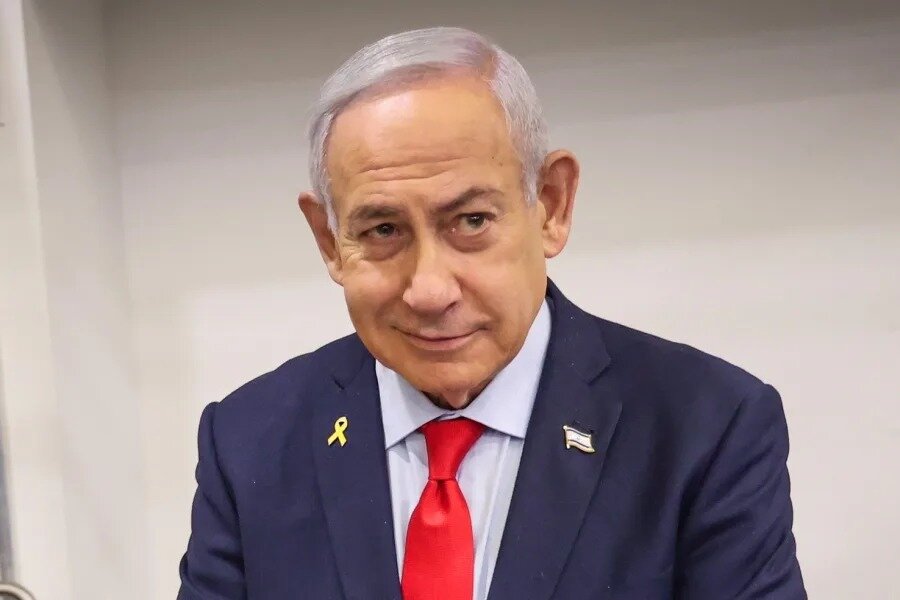
Israeli Prime Minister Benjamin Netanyahu has announced that his colonial groups have supported the Lebanese government in what they called an “effort to disarm Hezbollah.”
Netanyahu claimed at a press conference on Sunday that “what’s happening in Lebanon is being caused by Israel.”
Meanwhile, a poll conducted by the Statistical Polls Division of the Consulting Center for Studies and Documentation (July 27 to August 4) revealed that the majority of Lebanese (58%) are opposed to injuring weapons of resistance without a defensive strategy.
According to Lebanese think tanks, this majority includes half of the Sunnis, about a third of Christians, and even more druzes.
Sample number 600 respondents (54% males and 46% females) were randomly selected from all regions, denominations and age groups with an error of approximately 5%.
The proportion of Shia and Sunni respondents in the sample is equal (30%) compared to approximately 34% for Christians and 7% for Druze.
Approximately 72% of respondents argued that the Lebanese army alone cannot stand up to Israeli invasion. Also, about 76% believe that diplomacy alone cannot prevent aggression.
The study highlights serious concerns among and across all denominations about the existential threat posed by Syrian events to Lebanon.
The Ministry of Foreign Affairs, led by a Lebanese military figure, was last ranked when respondents were asked about their trust in official Lebanese institutions.
In response to a question, 96% of Shiite respondents said, “Do you support retracting weapons of resistance without a defensive strategy?” 50% of Sunni respondents. 46% of Druze respondents. And 32% of Christians responded “No.”
All denominations agree on a large degree (92% of Shiites and 63.3% of other denominations) that the Army alone cannot stand up to Israeli attacks.
Respondents from all denominations (various degrees) believe that diplomacy alone cannot prevent aggression. This has been confirmed by about 80% of Shiites, about 53% of Sunnis, 50% of Druze and about 41% of Christians.
A high proportion of respondents believes that events taking place in Syria pose an existential threat to Lebanon, threatening internal stability and paving the way for extremist war against Lebanon.
The notable similarity observed between Shiite and Druze respondents is attributed to recent events in the majority of Deleuze Syrian states of Ajweida.
88% of Shiites and over 83% of Druze believe that Syrian events pose a threat to Lebanon compared to over 68% of Christians and around 62% of Sunnis.
When asked about their confidence in official Lebanon institutions:
– The presidency is about 67%, and is medium to high trust.
-About 55% of the prime minister with medium to high trust.
– Approximately 50% in Congress.
– Approximately 40% justice.
– The Ministry of Foreign Affairs (led by the Lebanese military minister) is about 38%.