
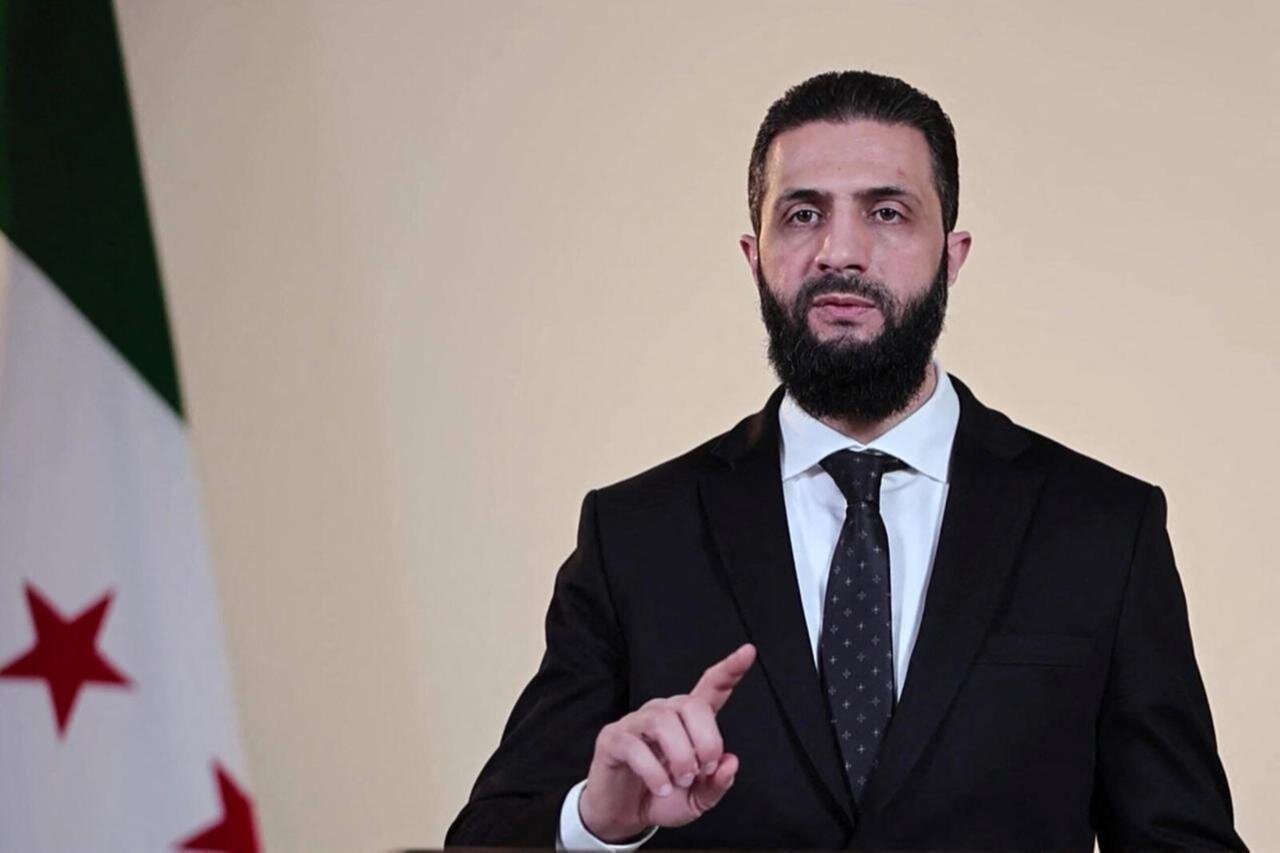
Tehran – In Syria, anxiety is growing in Syria as Ahmed al-Sharaa is centralised and oppressive rules deepen protests, sectarian violence and national instability.
Ahmed al-Sharaa’s self-appointed government approach is a highly centralized, bystanding important segment of Syria’s population.
By unifying power and excludeing different communities, Al-Sharaa created a political environment that was challenged by force and oppression rather than dialogue.
This forced governance has caused growth anxiety. The Druze community has recently called for accountability on the streets again after a fatal clash with forces alongside the Damascus control authorities.
Tensions also escalated along the coast of Syria, the heart of the Alawian sect.
In March, sectarian violence killed around 1,400 people, mostly civilians, as the UN says it was a war crime committed by members of Syrian interim government forces.
Extremist-led Hayat Taharil al-Sham (HTS) expelled former President Bashar al-Assad in December, deepening the rifts of existing sects.
Syrian authorities have sent reinforcements joined by thousands of fighter jets, according to a new statement by the United Nations Commission on Syria’s Investigation. What began as a military operation soon turned into a massive, sectarian killing.
The committee urged the interim government to expand its efforts to hold perpetrators accountable.
“The scale and cruelty of the violence recorded in our report is very intrusive,” said Paulo Sergio Pinheiro, chairman of the committee. “We are asking the interim authorities to continue to pursue accountability for all perpetrators, regardless of their affiliation or rank.”
Dozens of suspects have been reportedly arrested, but the committee said the seriousness of the violence requires a much broader response.
The report also warned of continued retaliatory attacks, saying that “there is a high environment of terror and must be urgently addressed by the interim government.”
Meanwhile, Alshara’s troops are engaged in continuous clashes with Kurdish groups in the contested regions.
Supported by certain regional countries and indirectly supported by Europe and the US, Alshara appears to believe he can act with immunity. But reality is more complicated. Regional power is deeply involved in Syria.
The Israeli regime repeatedly exposed the weakness of the new Syrian state institutions by hitting almost all of the country’s major military assets.
Experts argue that the courses Alshara adopted were ultimately unsustainable. It is unlikely to bring stability, and instead there is a risk that Syria will push further towards collapse.
In addition to the challenges, the government of Alshara is now facing pressure to deal with the status of thousands of foreigners fought in the Syrian war decades ago.
These individuals have formally petitioned to the Syrian citizenship and the interior ministry of Syrian passports.
According to Reuters, the fighter jets are claimed to be worthy of citizenship as they are helping to defeat the Assad government. Their letter states that Syrian nationality will legally settle, own property and allow them to travel freely.
This request was submitted on their behalf by Bilal Abdul Kareem, a prominent figure in foreign fighter jets. Abdul Kareem, a former American comedian who became a war correspondent, has lived mainly in Idlib, Syria since 2012. Speaking to Reuters over the phone, he said the petition represents thousands of foreigners from more than 12 countries.
These include individuals from Egypt, Saudi Arabia, Lebanon, Pakistan, Indonesia, Maldives, UK, Germany, France, the US and Canada, as well as fighters from Chechnya and Uyghur. Many of them and their families lack valid legal documents, and some have been stripped of their former citizenship.
They fear imprisonment or even execution if they are forced to return to their homeland.
Critics argue that granting Syrian citizenship to foreign fighters does not work with local people.