
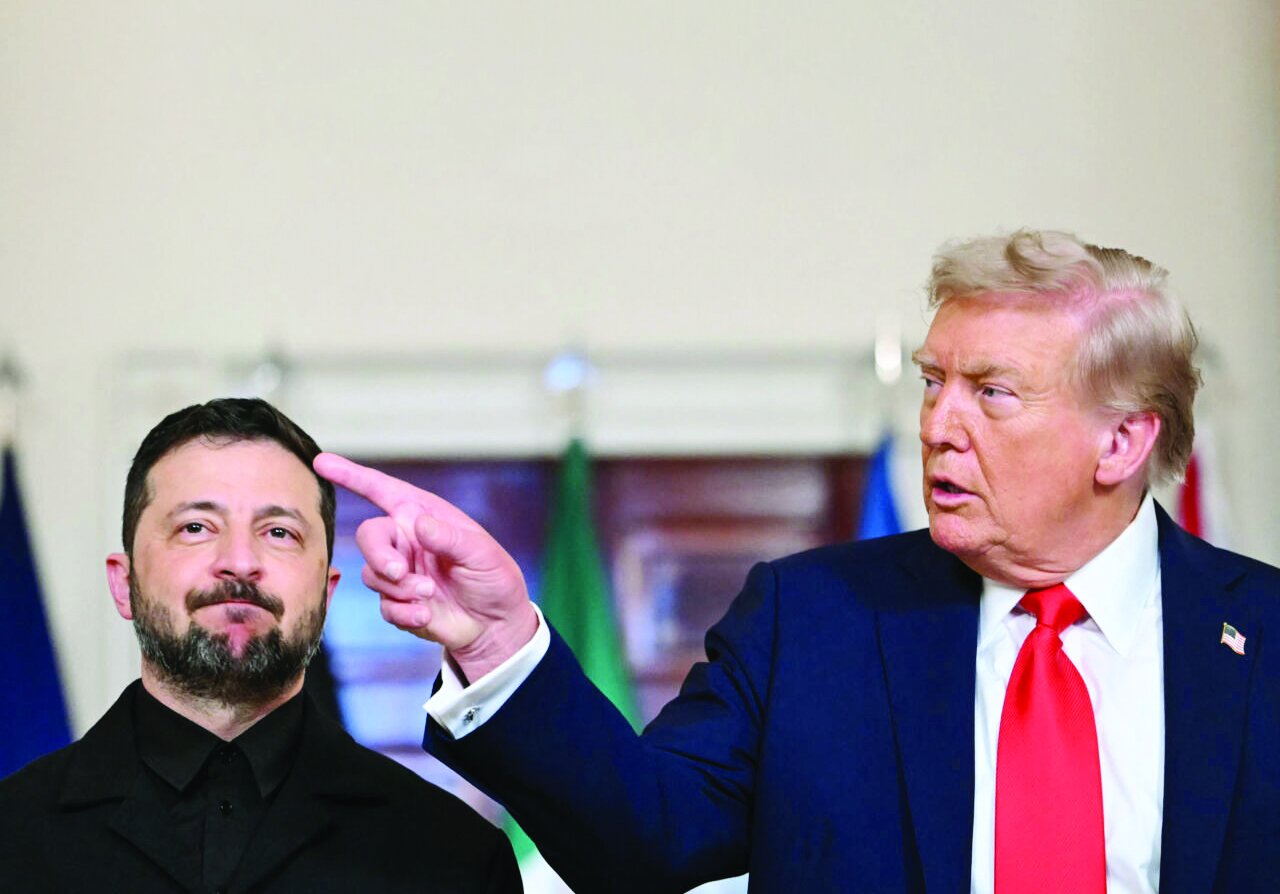
TEHRAN – Three days after giving Russian President Vladimir Putin a warm and prominent welcome in Alaska, President Donald Trump met with Ukrainian President Voldimi Zelensky and other European leaders at the White House on Monday.
Among the participants were French President Emmanuel Macron, Finland President Alexander Stubb, British Prime Minister Kiel Starmer, German Prime Minister Friedrich Merz, Italian Prime Minister Giorgia Meloni, European Commission President Ursula von der Leyen, and NATO Secretary-General Mark Latte.
They seemed to anticipate a sense of unity and in line with potential measures to curb the fight between Ukraine and Russia, but their diplomatic efforts did not end the conflict.
Many of the conferences focus on security assurances that the US and European countries can provide Ukraine if Zelensky agrees to a deal to end the battle. Certain differences have been revealed, including Mertz’s call for a ceasefire before further negotiations with Russia. This is a proposal that was gently rejected by Trump.
All participants appeared to be in line with plans to arrange a face-to-face meeting between Zelensky and Putin. Trump also spoke with Putin to explore the possibility of an in-person meeting between the two leaders.
Putin’s foreign policy aide Yuri Ushakov said that Russian and American leaders agreed to designate senior negotiators to hold direct consultations between Russia and Ukraine, but did not indicate whether Putin himself would participate. While Putin has not explicitly refused to meet with Zelensky, he emphasized that he does not consider the Ukrainian president to be justified or equal.
Since Russia’s invasion of Ukraine in February 2022, the US and other western allies have provided great military support to Ukraine, imposing sanctions on Russia, and pressured Putin to end the war. However, these measures have so far failed to achieve their goals. Frustrated by the limited effects of sanctions and pressure, the parties are now pursuing an end to the war through dialogue.
Ukraine’s meaningful security assurances would likely require European troops on the ground, as they demand.
The territorial issues needed for Kiev to surrender in the peace agreement remained unclear after Monday’s speech. Ukraine faces a difficult dilemma. Refusing to give up the land could extend the war, but agreeing to abandon the territory could be seen as surrender to Russian demands. Classic defeat situation. This predicament reflects both Western interference with Ukraine and Western interference with Ukrainian operations. This includes plans to ultimately incorporate Ukraine into NATO.
Researcher and foreign policy expert Afifeh Abedi told the Tehran Times that the US under Trump has stepped back from its direct involvement in the conflict. She said, “Since Trump took office, the United States has maintained a considerable distance from the development of the war in Ukraine. What has become more clear after meeting with Putin in Alaska?”
Abedi said the change emphasizes that Europe cannot rely on the US to escalate the conflict or increase pressure on Russia. The White House highlighted the “structural weakness and dependence of Brussels on Washington in the field of security and crisis management in Ukraine.” She described the rally as a clear effort by European leaders to prevent widening strategic gaps across the Atlantic.
Going forward, Abedi highlighted the uncertainty surrounding Europe’s next move. “If European leaders take a practical approach and agree to negotiations with Moscow, there could be a path to peace and lower tensions.” However, she warned that the situation could become increasingly complicated and high-risk as Europe continues to insist on military solutions.