
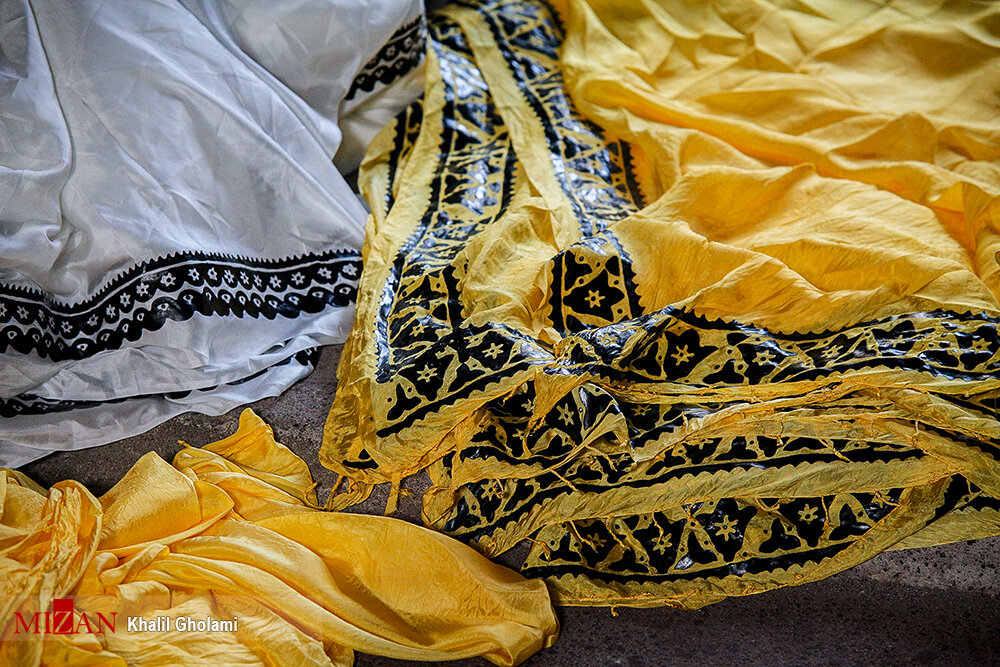
Tehran-Batik can be considered a kind of pattern that applies a pattern to fabrics, especially silk. In this method, the fabric portion is covered with a resistant material that passes the dye through the fabric and pretends to create the intended design in a specific way.
Java is the word Javanese. Java is one of the Indonesian islands. However, this form of art is rooted in China. In Iran, this print is called “Kalagheh’i.” The only region in Iran where batik printing is practiced is East Azabaijan. Written by Visitiran.ir, weaved silk fabrics have been popular in East Azarbaijan for a long time.
The exact history of Iranian batik prints is still unknown. However, some experts believe that the print came to Iran from China, as Azarbaijan is on the Silk Road road. Regarding the dates of introducing batik versions in Iran, a kind of batik known as “Gadak” was common during the Safavid dynasty, and can be said to have been used by women on clothing, carpets and tablecloths. Researchers believe that Batik will print traces about 500 years ago, and there are no artifacts older than this.
In the Osk region of East Azarbaijan there is a kind of silk fabric known as “karagie” and is dyed using a special method of batik. This fabric is manufactured only in this region and is not available anywhere else. These scarves are known among nomads as “Yairik” or “Gijir Yairik” and “Kalgi”. Yaylikh means summer clothes, and Ghizil Yaylikh means golden summer clothes.
According to local stories, the scarf is also known as kalgi, as the first motif that looks like cow’s feet is printed on the fabric. In Iran, to make batik prints, dye-resistant hot wax or gum-wax mixtures are first applied to certain points in the fabric.
Make Batik Wax or Kalagheh’i oil in Osku and use tar and solid wax. Therefore, if the fabric is dipped in dye, it will not affect waxed parts. Finally, the cloth is washed with hot water. Some colors are fixed by the flow of water, while some are fixed by an iron. Iron is actually a machine that contains two shiny rollers with iron in the fabric. Dying silk fabrics are hard and complicated, but Iranian dyes use only natural materials and chemicals to create dyes of different colours.