
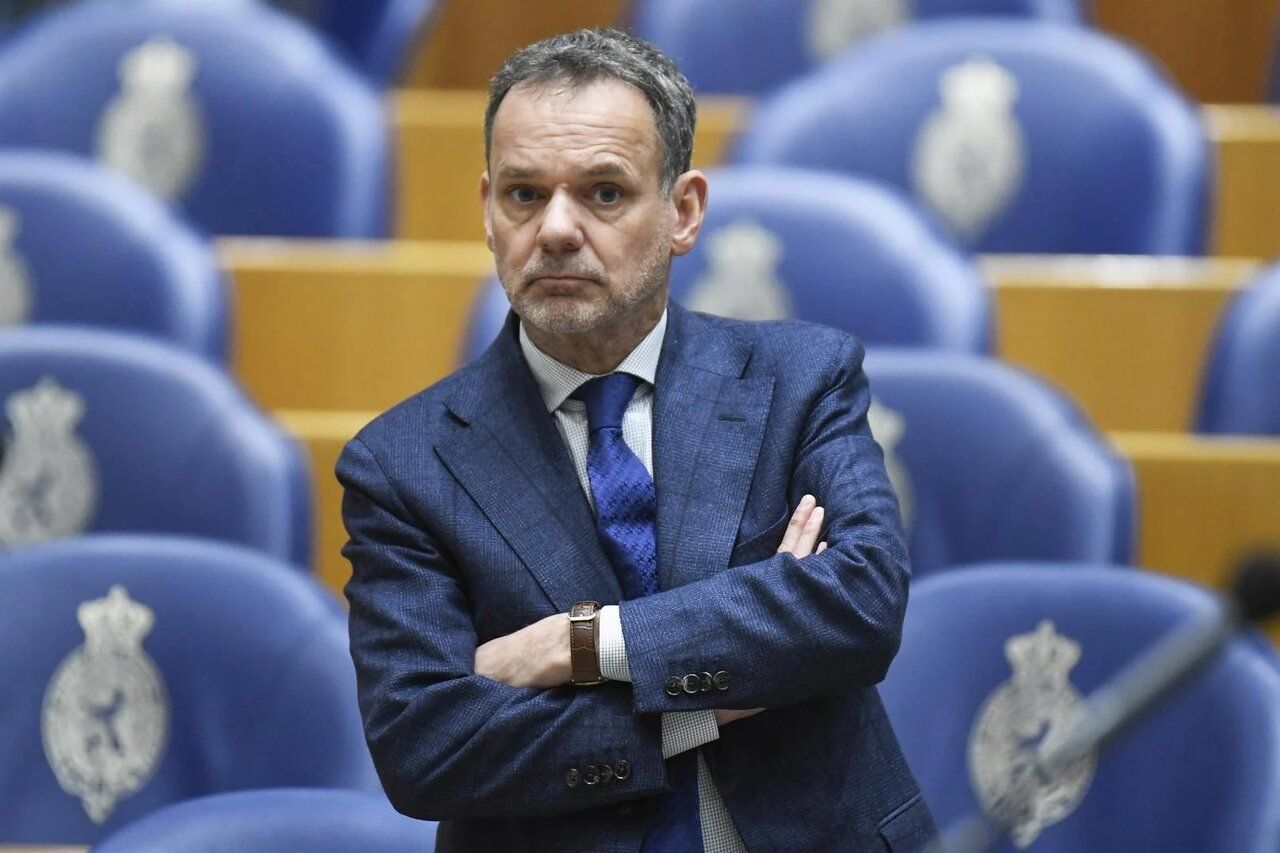
TEHRAN – In the dramatic political developments exposing deep divisions within Europe over Israel’s military action in Gaza, the Dutch caretaker government has been thrown into crisis following the resignation of several ministers who protested the failure to impose meaningful sanctions on Israel.
The mass resignation led by Foreign Minister Caspar Veldkamp is the most important political fallout of the European government directly related to differences in opinion over policy on Gaza. It comes amidst the designation of unsupported hunger, deaths of more than 62,700 Palestinians, injuries of more than 158,000 people, and calls for international accountability.
I. How many Dutch ministers have resigned and who is the most important person?
All ministers and state secretaries of the Centristic New Social Contract (NSC) Party – 9 people in total – resignation. These included Foreign Minister Kasper Berdkamp, acting Vice Prime Minister and Social Affairs Minister Eddie Van Heejum, Home Minister Judith Wutermark, Education Minister Eppo Bruins, Health Minister Daniel Jansen, and four state secretaries. Veldkamp, a former Israeli ambassador from 2011 to 2015 and a central figure in shaping Dutch foreign policy on conflict, is widely seen as the most important person to step down.
ii. What is the reason for their resignation?
Following his resignation, a failed effort to implement stronger sanctions against Israel in response to military operations in Gaza and widening reconciliation efforts in the West Bank. Veldkamp said he faced “resistance” within the Cabinet over the measures he proposed. This includes banning imports of goods from Israeli settlements, the entry of far-right Israeli ministers Bezarel Sumotrich and Itamar Ben Gwil, suspension of certain military export licenses, and pushing for a freeze on Israeli trade agreements. The move has resulted in UN experts confirming Gaza’s hunger as “completely artificial.”
iii. Why did the Dutch government not be able to sanction Israel?
The Union leaders have argued that they are bound by the need for consensus within the caretaker government, but this explanation has been widely criticized as a political choice rather than an inevitable legal barrier. The Liberals for Freedom and Democracy (VVD) and the Populist Peasant Civic Movement (BBB) have blocked the proposal of stronger measures and effectively protected Israel from the outcome despite increasing evidence of war crimes in Gaza. At the European Union level, foreign policy decisions require unanimity, and German opposition is being used in the Hague as a further justification for inaction. However, critics point out that the Netherlands has taken a one-sided stance that crossed the EU boundaries when it met its interests in the past, and that nothing in the EU treaty forces it to be passive in the face of the deaths of popular civilians. For many, refusing to act is not a lack of choice, but a reflection of political will, or lack of it.
IV. Will resignation lead to the collapse of the government?
no. The administration has been in caretaker mode since the coalition collapsed in June over the immigration conflict. The election is already scheduled for October 29th. However, strikes make major ministries leaderless and reduce the government’s diplomatic weight, particularly in foreign affairs.
V. How did the Palestinians and Dutch people react?
Hamas welcomed his resignation as “courageous and ethical” and called on other governments to follow suit. In the Netherlands, massive protests are being carried out in support of sanctions against Israel. This includes June March at The Hague, where between 100,000 and 150,000 participants. Polls across the European Union have shown majority support for arms embargo and sanctions, highlighting the gap between public sentiment and formal policy.
vi. Can this change the European approach to Israel?
The resignation may add to increasing uncertainty in Europe, but changes in wholesale policies remain uncertain. Some EU members, including Spain, Ireland, Norway and Slovenia, are aware that they have recently imposed Palestine or limited weapons restrictions, but the entire bloc has avoided sweep sanctions. Foreign Minister Veldkamp told Israel’s Channel-12 that he was “still committed to Israel’s security and future,” framing criticism of Prime Minister Netanyahu and his coalition’s far-right members, despite leading the strike. His stance reflects the broader European pattern. It carefully avoids challenges to deeper political, military and economic ties that link Europe and Israel, whilst yelling out the loud and selective disapproval of Gaza’s current Israeli policy, particularly the city of Gaza and the hunger attacks it has caused.