
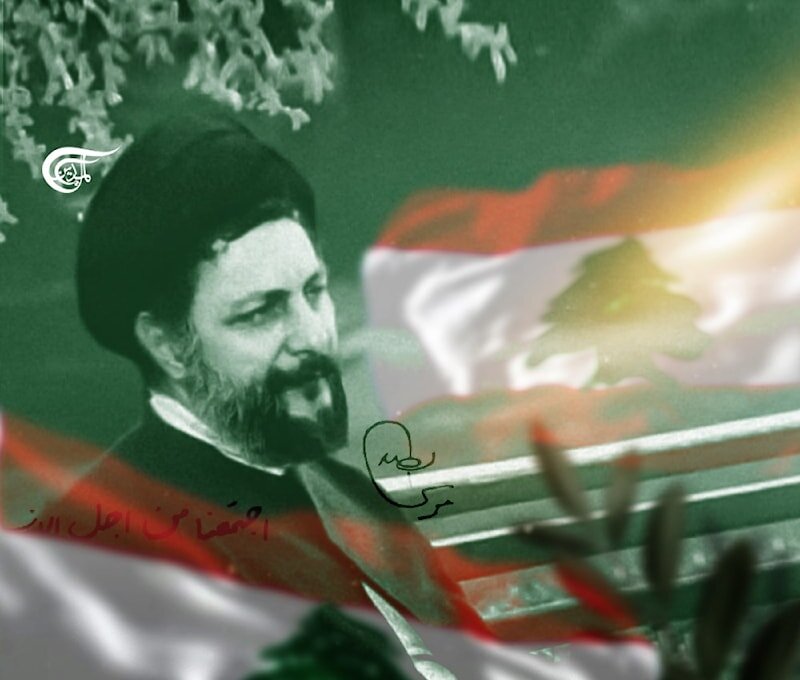
BEIRUT – On Sunday, Lebanon celebrates the 47th anniversary of the disappearance of Saeed Musa Al Sadr, founder of Israeli occupation, with his two companions, her two companions and journalist Abbas Baddiden.
Resistant Lebanese mark the event, but days before the Army submits plans to disarm the resistance while the country is experiencing the most difficult security and political dilemma.
Over the past 50 years, many stories have been weaved into the fate of Saeed Al Sadr and his two companions, including an incomplete account of the international plot behind the lure in Libya.
It is certain that the person who hid him is the same person who benefited from his absence, thinking that hiding him would destroy his project. However, fire repelled the magician, and his resistance project grew and grew.
After 47 years, the Sayyed Musa Al-Sadr project remains a comprehensive national and humanitarian project that outweighs sectarian divisions and narrow political interests.
Sayyed Al-Sadr was not a traditional religious scholar who simply offered and provided religious and spiritual guidance. Rather, he is a reformist thinker and has a future-looking vision, making him an exceptional person who can reconcile the requirements of a modern nation with spiritual values.
“Denominations are blessings, but sectarianism is a curse,” says Said Musa al-Sadr (R).
Sayyed Al-Sadr realized that building a nation begins with equality and does not alienate one sect at the expense of another.
He therefore focused on establishing an institution that eliminates deprivation and maintains Shiite dignity, believing that social justice and economic development are the fundamental pillars of all political stability.
This emphasized that during the civil war of the 1970s, when he worked diligently to extinguish the flames of discord between the Arab capitals, the civil war was not a fate, but an international game that served only Israel’s interests.
Sayyed Musa al-Sadr held a rifle at the Ain Al-Binya camp in Bekaa Valley and said, “The weapons are male ornaments.”
While foreign embassies were instigating the Lebanese to fight each other, Sayed Musa Al Sadr went on a starving strike inside a mosque on the southern suburbs of Beirut to prevent attacks on surrounding Christian villages.
He then founded the Resistance Brigade in 1975 to stand up to Israel’s occupation regime. These brigades caused great losses to the occupation regime during the Battle of Shallabone in 1978, paving the way for liberation in 2000, winning in 2006 and 2024.
Sayyed Al-Sadr never separated the fate of Lebanon from the fate of Palestinians. He believed that supporting the Palestinian cause was a moral and political examination of the Arab and Islamic world.
In doing so, Sayyed Al-Sadr has placed himself in a direct conflict with Israel’s expansionist project.
Today, Musa Al Sadr’s project for a balanced development and comprehensive civic nation remains an urgent need, rather than an annual commemoration.