
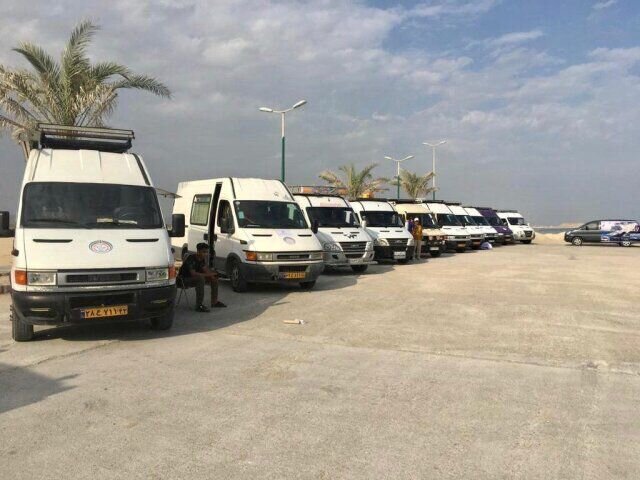
Tehran – The second “brick to brick” tourism rally will be held by the Carman Automobile and Tourism Vehicle Association, the National Camp and Caravan Club, and the Caravan Club, and the Caravan Chamber of Commerce and Industry, from September 14-19, with the participation of Kampers and Caravans in Kelman Province.
According to Mehr News Agency, the Public Relations Division of Tour & Automobile Clubs (TACI) in Islamic Republic of Iran (TACI) said at the same time as the date festival, it will begin its journey from the world’s largest Adobe structure, the historic Bamsitadel.
About 100 campers and caravans taking part in this rally tour will finish their journey at Hajiagaari House, known as the world’s largest Adobe House, after touring the state’s tourist routes. The closing ceremony of this rally tour will be held at the same time as the Pistachio Festival held in Raf Sandjean.
Along the way, rally tour participants will visit the unique possibilities of Carman State by passing through the historic, cultural and natural attractions of campers and caravans.
This rally tour will be held with the goal of creating social enthusiasm and vitality, showing Carman’s tourism capabilities, promoting a safe driving culture, developing responsible travel with families, and accustoming people to the functions and facilities of campers and caravans.
Based on the plan, various cultural and tourism stations are planned for the event, allowing participants to learn more about the history, art and valuable heritage of Carman as they travel the route.
Home to seven UNESCO World Heritage Sites, eye-catching gardens and ancient monuments, Carman City can be considered the perfect museum to mark various periods of Iranian history.
The UNESCO tagged BAM and its cultural landscape are located at the southern tip of the Iranian Heights in Karman province, near the Pakistan border. It is highly regarded as a prominent example of ancient fortified settlements.
Built in the late Qajar era by Haj Agha Ali, also known as Zaeim-Allah Rafsanjani, a prosperous merchant in the 19th century, the Haj Agha Ali House reflects the wealth and social celebrity of its owners. Exchange goods across Iran across countries such as China and India, and the thriving business of Hajiagaari has allowed him to build this extraordinary property among several others.
KD