
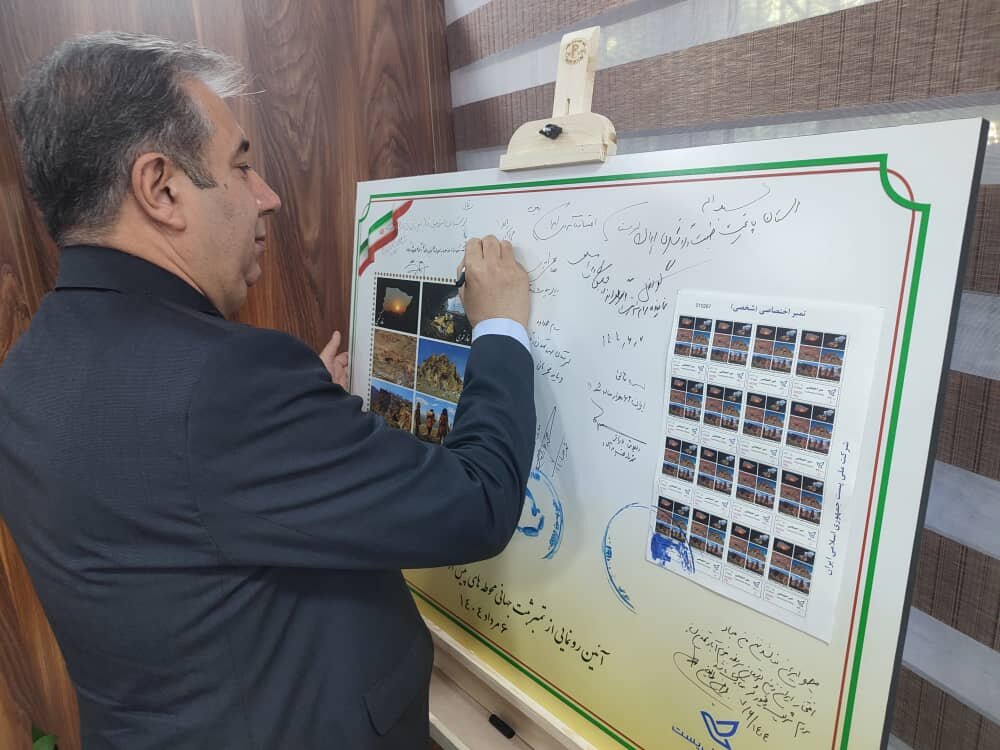
Khorramabad – A groundbreaking celebration of Iran’s deep prehistoric period, a commemorative stamp honouring the prehistoric location of Khorramabad Valley has been officially announced at Falak-ol-Aflak Castle.
The ceremony, attended by more than 3,000 people last Friday, brought together citizens, cultural leaders and government officials to commemorate the inscription of a UNESCO World Heritage Site, one of Iran’s most important Paleostone landscapes.
Hosted by Ata Hasanpour, the state director of Lorestan’s cultural heritage, tourism and handicrafts, the event combined ceremony and cultural performances. Traditional loli music was performed in SAZ, Dohol and Sorna, followed by the vocal work of acclaimed musician Bardia Mehravar. His compositions respected the prehistoric caves of Khoramabad and evoked the culture of Baladost, but were welcomed when the Iranian legacy of ancient stone entered the realm of popular music for the first time, drawing emotional responses from the audience.
The main addresses were distributed by Dr. Ata Hasanpur, Minister of Cultural Heritage, Tourism and Crafts Reza Salehi Amiri and Governor of Lorestan, Said Sharoki. Authorities praised decades of academic and community efforts that led to the UNESCO inscription and officially recognized those most closely involved.
A certificate of thanks was presented to major contributors: Hasanpour (nominated dejareed), Mohammad Hassan Talebian (technology and science supervisor), Sonia Shidrang (corresponding scientific author), Jebrael Nokandeh (director of the Iran National Museum), Fereidun Biglari (Inther of Iran for Cultural Museum for Cultural Museum, Deputy for Cult fore. In addition to tribute, the Khorramabad Municipality awarded Shidrang and Talebian honorary citizenship for their important role in securing inscriptions.
The commemorative stamps were jointly announced by Minister Salehi Amiri and Governor Sharoki. The initiative, created through collaboration between the Lorestin State Bureau of Cultural Heritage and the Iranian postal company, represents the culmination of decades of archaeological research aimed at ensuring international recognition of the region’s pale stone heritage.
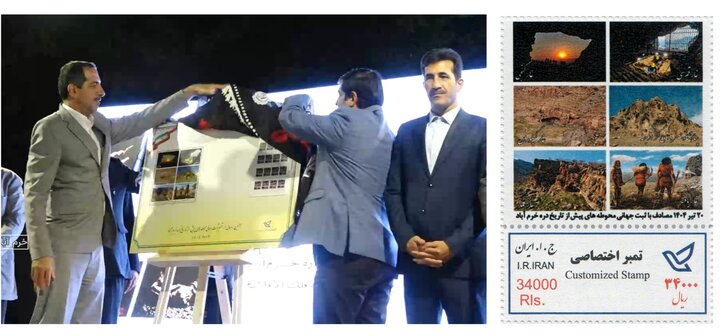
The stamp design highlights the archaeological richness of the Khorramabad Valley and presents six images of the 2025 Ghamari Cave Excavations scene, the rock shelter of Gilvaran and Gar Arjeneh, the views of the Kaldar Cave, and the artistic reconstruction of the Upper Pereollitic Harter of Yafteh Cave. Together, these visuals tell the story of Iran’s earliest human communities.
“This publication shows a major change in how the Iranian national story is presented,” said Fereidoun Biglari, who proposed the idea for the stamp. “From the late Qajar period until recently, stamps celebrating Iran’s archaeological heritage focused solely on the historical and Islamic periods.”
He noted that the turning point came in 2019 when the Iranian National Museum released its first two Paleostone-themed stamps. “These stamps marked the first step in bringing Iran’s deep prehistoric era into the imagination of the people,” Big Lali explained.
“The new Khorramabad Stamp continues its pioneering tradition,” he added. “It ensures that the stories of our early ancestors are not limited to academic circles, but are shared with the public. It is a celebration of scientific achievements and the recognition that the Iranian pale stone past is part of our collective cultural identity.”
Carved at the 47th session of the UNESCO World Heritage Committee in Paris in July, the prehistoric site of Khorramabad Valley includes five caves and one rock shelter. The area holds evidence of human occupations from 63,000 years ago, with archaeological remains from the mid- to upper-to-top period of the Paleostone period.
The site uncovers Musterian and Varadoian cultures and provides insight into early human migration from Africa to Eurasia. The discoveries of iconic objects and refined stone tools highlight the cognitive and technological developments of homo sapiens in the Zagros Mountains.
Among the most important places is Yafteh Cave. This includes some of the earliest evidence of the regional symbolic behavior, but Ghamari Cave retains traces of Neanderthal occupation.
morning