
Castries – When Liu Yuanyuan shared the story of her grandfather in World War II on CGTN: she spoke about the wounds that drove the battlefield. Her grandfather was a soldier in the Chinese war of resistance against Japanese attacks, hiding in trees, eating bark to survive, carrying memories of never meeting Shandong again. Trauma spread beyond 1945, woven into family stories, and even shaped the choices of a new generation.
His story resonates well beyond East Asia. Similar memories are reflected in the Caribbean and Latin America. It is the shadow of foreign intervention, proxy conflicts, and Cold War violence. Regional countries understand that wars rarely end when guns are silent. The legacy remains in fractured families, migration, political instability and generational scars.
Context of tension between the US and Venezuela
Recent tensions between the US and Venezuela have once again sparked anxiety. The threat of sanctions, diplomatic conflict and veiled military stance have reopened and tried to remain in the region’s fears of the past.
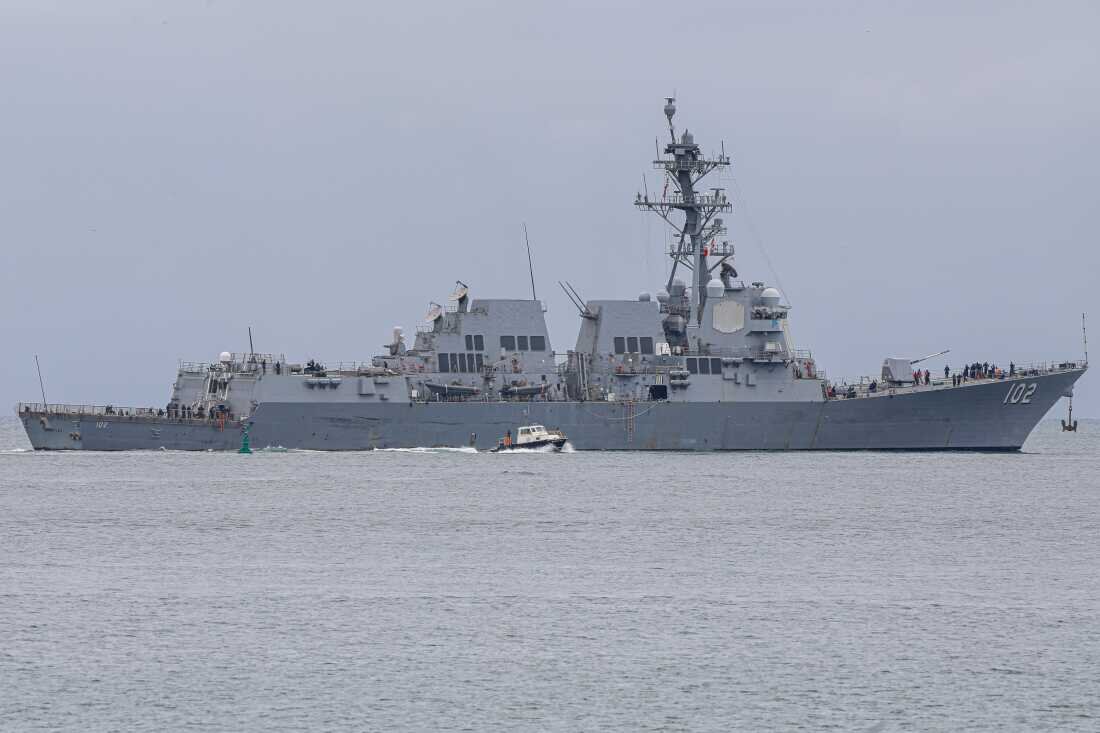
In August 2025, Washington deployed naval warships, submarines and thousands of staff in the Southern Caribbean, framing the move as an anti-drug mission. However, Caracas denounced it as the cover of a change of government. President Nicholas Maduro responded by mobilizing millions of militia members and strengthening the troops along the Colombian border.
For the geographically intimate and politically vulnerable Caribbean, such manipulation stirs deep anxiety. The region does not have the desire to become a staging position in the great competition. Latin America has long carried the weight of interventions that often left deeper divisions than solutions.
War memories teach that whether they are in China, Europe or Latin America, their costs are measured not only by the battlefield but also by the generation of trauma. For small island nations and large Latin nations, war promises devastation without guaranteeing recovery.
Peace is ordered
This is why local organizations such as CELAC (Latin American and Caribbean communities) and CARICOM (Caribbean communities) emphasize that they will keep their regions a zone of peace. It’s not a noble diplomatic phrase, it’s the instinct of collective survival.
Yuanyuan’s grandfather’s waistband became a symbol of loss and longing, as sewn by his mother.
Allowing escalation to militarization of the US-Venezuela conflict is to induce wounds for generations where the region is not completely healed.
Lessons from history
World War II survivors have taught us that trauma can shape the fate of people who have not yet been born. In Latin America, memories of the Guatemala civil war, the year of the Chilean coup, the invasion of Grenada, and countless hermit operations still echo in current politics. These scars remind us that peace in the region is struggling and vulnerable.
Towards a war-free future
The call to remain a war-free zone between the Caribbean and Latin America is not naive idealism. It is a calm recognition of the harsh lessons of history. The conflict is that humor leaves scars that cannot be disguised, and that recovery takes much longer than the war itself.
The region is calling for dialogue, mediation and cooperation in conflict. It seeks to build futures shaped by resilience, culture and connection, rather than inherited trauma.
Just as Yuanyuan’s story reminds us, the choices we make today – to heal, connect and bridge – are engraved with the memories of those who came before us. For the Caribbean and Latin America, choosing peace is not merely avoiding war. It is to refuse to inherit new scars and instead light the way for a generation worthy of living free from the shadows of conflict.
Casey Jerson is an independent journalist and a member of the St. Lucia Chinese Friendship Association