
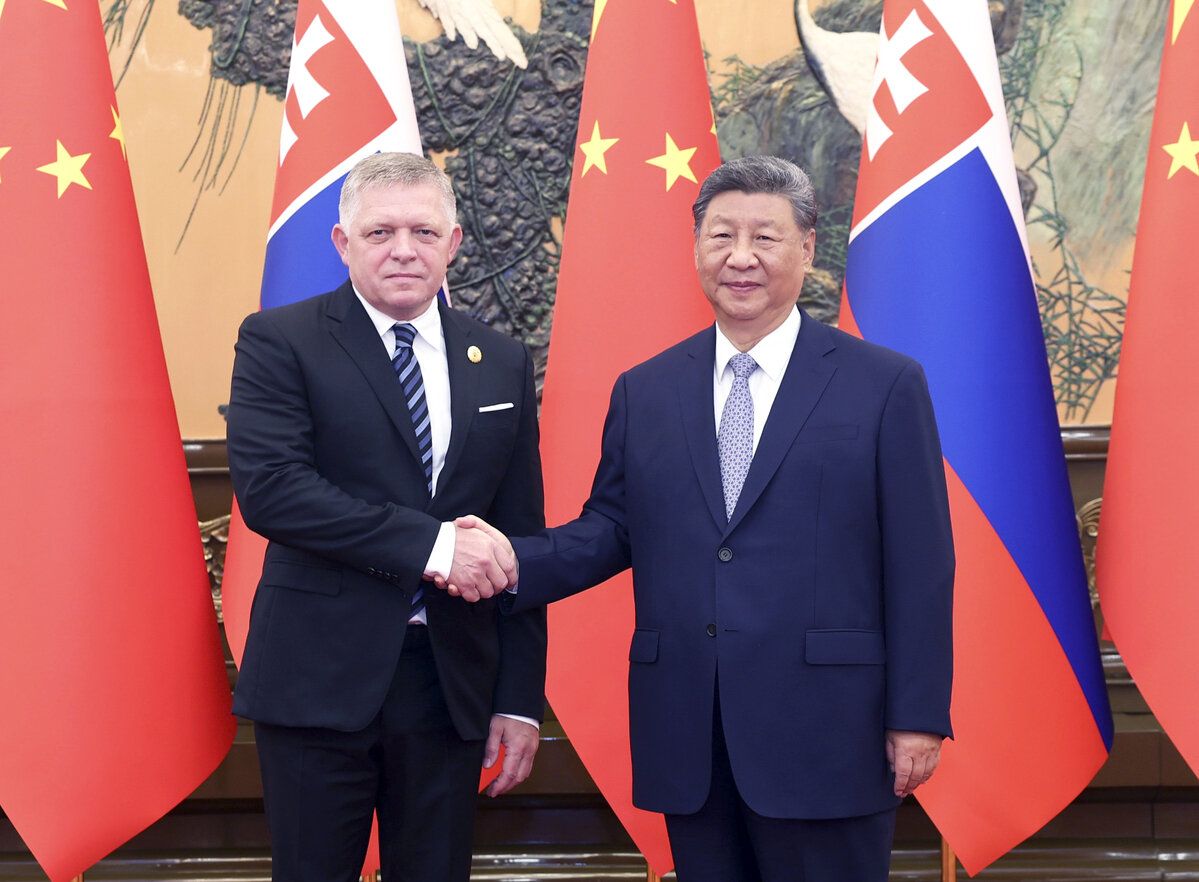
Pretoria – Robert Fico has once again placed Slovakia under the international spotlight. While other EU leaders remained at home, the Slovak Prime Minister traveled to Beijing to compete in China’s memorial to mark the 80th anniversary of his victory over Asian fascism. There he was the only EU head of government standing alongside Xi Jinping and Vladimir Putin.
For Brussels, this was a provocation. European diplomats have bristled images of EU members in very visible line-ups with Moscow and Beijing. Slovak opposition went further, calling the visit “international shame.” Still, the Slovak masses need to completely reject it, as they simply resist the instinct to cheer on travel out of frustration with the EU, or break the rank with Brussels. Both reactions miss the real question: what does such a visit mean to the people of Slovak?
Global Stage
Beijing knows how to set history. The speeches are surrounded by military parades, group photos of leaders, and slogans such as “The world is changing” and “Peace and War.” The event sent a clear message. The West no longer monopolizes global narratives.
Xi Jinping used the opportunity to praise Slovakia’s “positive role in fostering China-EU relations.” FICO responded by talking to China about “accelerating economic cooperation” and hoped to secure investments that have previously fled Slovakia. At the same time, he declared his desire to “normalize relations with Russia” and expand gas imports from Gazprom. Gazprom is at odds with EU policies.
This was more than a symbol. It was a performance that transformed alliances in the world where the “Global South” asserts itself against Western domination.
Shared History – and missed opportunities
It is right for Slovakia to develop relationships with the global South countries and the broader “global majority.” These countries, from China to Latin America, have lived through colonial rule and economic exploitation. Their history is not far from our history. Slovakia also knows the meaning of resources and labour being treated as periphery, a territory subordinate to foreign capital.
“Slovakia is right to develop relations with the global South and the broader global majority. From China to Latin America, these countries have lived through colonial rule and economic exploitation. Their history is not far from our history.” Their socialist projects were based on the belief that society, even if contradictory, must be freed from imperialist dependence. That experience resonates with us. Slovakia can seek cooperation with countries that seek a more equitable, anti-colonial, anti-imperialist world order.
But this is exactly where FICO is short. Instead of giving his visits this deeper and deeper meaning, he reduces them to anti-EU rhetoric. Rather than framing Slovak outreach as part of a liberating and anti-capitalist project, they play the tired card “Stopping in Brussels.” In reality, this is nothing more than a photo shoot designed to misuse anti-EU sentiment at home and prepare himself for the next election.
The central question
This is why the real question is not whether FICO looks like president in Beijing or whether Brussels was embarrassed. The real question is whether foreign policy choices will be used to build a path of socialization and liberation in the home.
Will new ties with China and Russia reduce the cost of living for Slovaks, strengthen health care, and fund schools? Will they protect us from the exploitation of foreign capitals, or will they just replace one exploit with another?
Food prices remain high now, hospitals are under pressure, education is ignored, and youths continue to migrate. Xi Jinping or Vladimir Putin’s handshake won’t change that.
Diplomatic relations are only important if Slovakia allows it to overcome its surrounding status and pursue developments that are not determined by the West or East, which are motivated by external interests. It means investing in education, raising wages and building institutions that strengthen social solidarity. In short, the task is not to move from one dependant to another, but to free Slovakia from the grip of capital itself.
Accountability at home
In democracy, government changes. If FICO loses the next election, what is the rest of this “Eastern Opening” if it is not tied to concrete domestic progress? Grand strategies will collapse unless they bring true improvements to the lives of ordinary Slovaks.
That’s why accountability is important. We must keep in FICO whether his government uses diplomacy to ensure true social development, not for Beijing’s photo op. And we must prepare the next generation of slovaking to navigate global politics in a way that helps liberate rather than dependence.
The location in the Slovak world is not defined by whether FICO is near Brussels, Beijing or Moscow. It is defined by whether foreign ties are used to construct a society that is freer, more equitable and uncontrolled by capital.
And this is a real criticism of FICO. He speaks loudly about his resistance to Brussels, but he cannot clearly express the only vision that can give these foreign bonds true meaning. Without it, his overseas visit would merely be an election theatre. Photo-opens for domestic consumption, material is empty and has no real value for our future.
Lucia Hubinská is a university lecturer, activist, commentator and public relations officer from Slovak who participated in BRICS Summer School in South Africa.