

Tehran – International criticism has risen following fatal Israeli air strikes on residential areas in Qatar’s capital Doha.
On Tuesday, Israel targeted what was described as a senior leader in Hamas. This includes key negotiators involved in the ceasefire talks aimed at ending the war in Gaza. Hamas confirmed that the senior leader had survived, but five low-ranked members were killed.
Qatar’s Foreign Ministry condemned the strike in “the strongest conditions,” labeling it as a “co-sick Israel attack” and a blatant violation of international law and norms. The attack also advocated the lives of Qatar security officials, further increasing tensions.
Qatar’s Emil Sheikh Tamim bin Hamad al Thani condemned the strike as “reckless and criminal” conduct and “serious violations” of Qatar’s sovereignty and principles of international law.
Israel’s strike in Qatar has led to rapid global condemnation. Iran, along with many countries in West Asia and around the world, has condemned the air raids.
“Breaking” Attack: Iran encourages Islamic unity
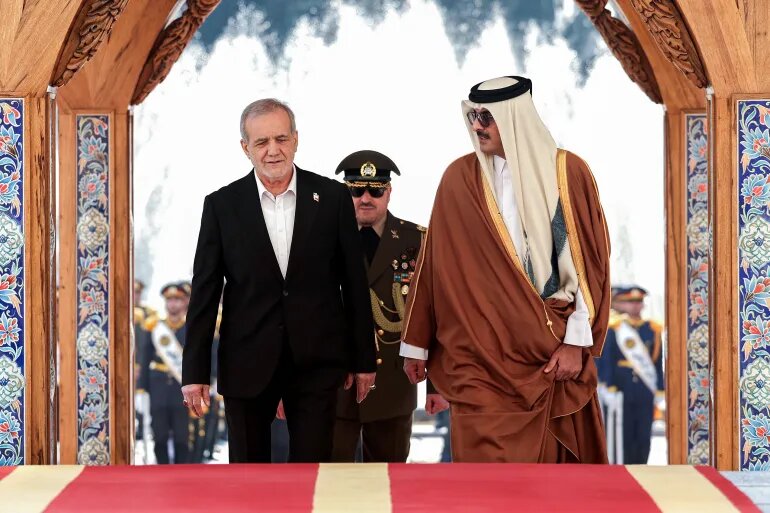
In a photo call with the Qatar chief, President Masuud Pezeshkian declared Iran’s solidarity with Qatar and strongly condemned Israel’s attacks. He also emphasized that Islamic countries should “really and effectively condemn the blatant crimes of Zionist regimes, both in their words and in their actions.”
Foreign Minister Abbas Aragci also condemned Israel’s “vicious” attacks. In a post on X, the top Iranian diplomat said, “The only way to deal with the recklessness of the Israeli regime is for the Islamic world to act together.”
Israel’s western allies, including Britain, France and Germany, have also expressed disapproval. UN Secretary-General Antonio Guterres described the air raid as a “significant violation” of Qatar’s sovereignty.
Despite the US administration’s claim that Qatar officials had been notified prior to the strike, the allegation firmly rejected by Doha is that the incident was Israel’s first attack in Qatar, the first attack in Qatar, a country mediating the ceasefire talks and the home of Al Udeid Air Force Base, the region’s largest military base.
The attack coincided with a meeting of negotiators discussing the latest US proposed ceasefire plan in Doha, highlighting a direct challenge to diplomatic efforts aimed at ending the Gaza conflict. However, the proposal appeared to be a ploy to provide Israel with an opportunity to target Hamas officials under the guise of diplomacy.
Targeted assassinations and local escalation
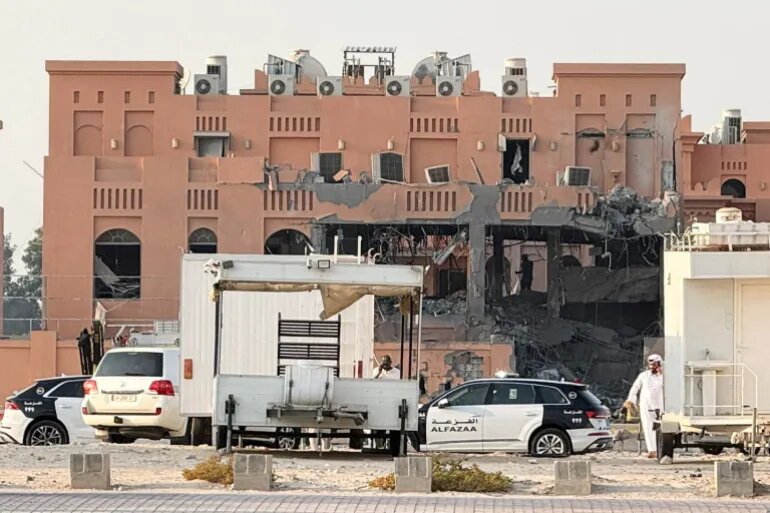
Damaged buildings following the Israeli attack in Doha, Qatar on September 9, 2025 (Ibraheem Abu Mustafa/Reuters)
Israeli strikes against Qatar come in a broader military campaign against Hamas, including the targeted assassination of numerous Hamas forces and politicians since October 2023. Israel assassinated Honey in Tehran, the capital of Iran.
Beyond Gaza, Israel has expanded its military operations to Lebanon, Yemen, Syria and the occupied West Bank, increasing regional instability. On June 13, Israel launched an unprovoked strike on Iranian territory, targeting high-ranking military commanders, nuclear scientists and civilians. The United States later joined the Israeli war with Iran by targeting three Iranian nuclear facilities.
In retaliation, Iran launched missile strikes in strategic Israeli cities, including Tel Aviv and Haifa, specifically targeting Al-Udeid Air Force Base in Qatar. These coordinated operations effectively halted Israeli and US military attacks by June 24, demonstrating Iran’s formidable missile capabilities, and demonstrated significant changes in regional power dynamics.
Before these escalations, Iran and the United States had held five rounds of indirect consultations on Tehran’s nuclear program. The sixth round, scheduled for June 15th in Muscat, Oman, was suddenly cancelled due to Israeli attacks on Iran.
These negotiations were publicly presented as a sincere effort by Iran to resolve tensions diplomatically, but the timing and subsequent attacks reveal a deeper strategy. The talks were used as a deliberate trap by the Trump administration, creating false sense of security, allowing Israel to prepare and carry out a surprising attack with US support or coordination. This strategy effectively weaponized diplomatic channels to justify military attacks and escalated conflict rather than fostering peace.
The expansionist ambitions behind Qatar’s strike
Israel’s strike against Qatar reveals deeper political and strategic calculations. Despite President Donald Trump’s attempts to distance himself from the attack, it certifies information coordination between the Israeli military and the US Central Command (CENTCOM), including cooperation with US controlled air defense systems.
Israel pressured Prime Minister Benjamin Netanyahu to escalate hostility as it failed to militarily defeat Hamas after nearly two years of conflict that led to the deaths of more than 64,000 Palestinians. The attack on Qatar appears to be aimed at distracting attention from Israel’s security vulnerability and military set-off, particularly after Monday’s fatal shooting attack (AL-QUDS) in Jerusalem.
Netanyahu’s political survival is also at risk. His hard-hit Union Minister threatens to abandon the government if he reaches a ceasefire agreement with Hamas, and the ongoing corruption charges against him will make the war an extension, keeping legal agendas and distracting them.
The attack on Qatar also highlights Israel’s dangerous regional vision, commonly referred to as “great Israel.” Netanyahu has recently publicly supported this expansionist agenda that seeks to expand Israeli borders, including parts of Jordan, Lebanon, Egypt, Syria, Iraq and Saudi Arabia.
Araguchi’s warning about “Great Israel”
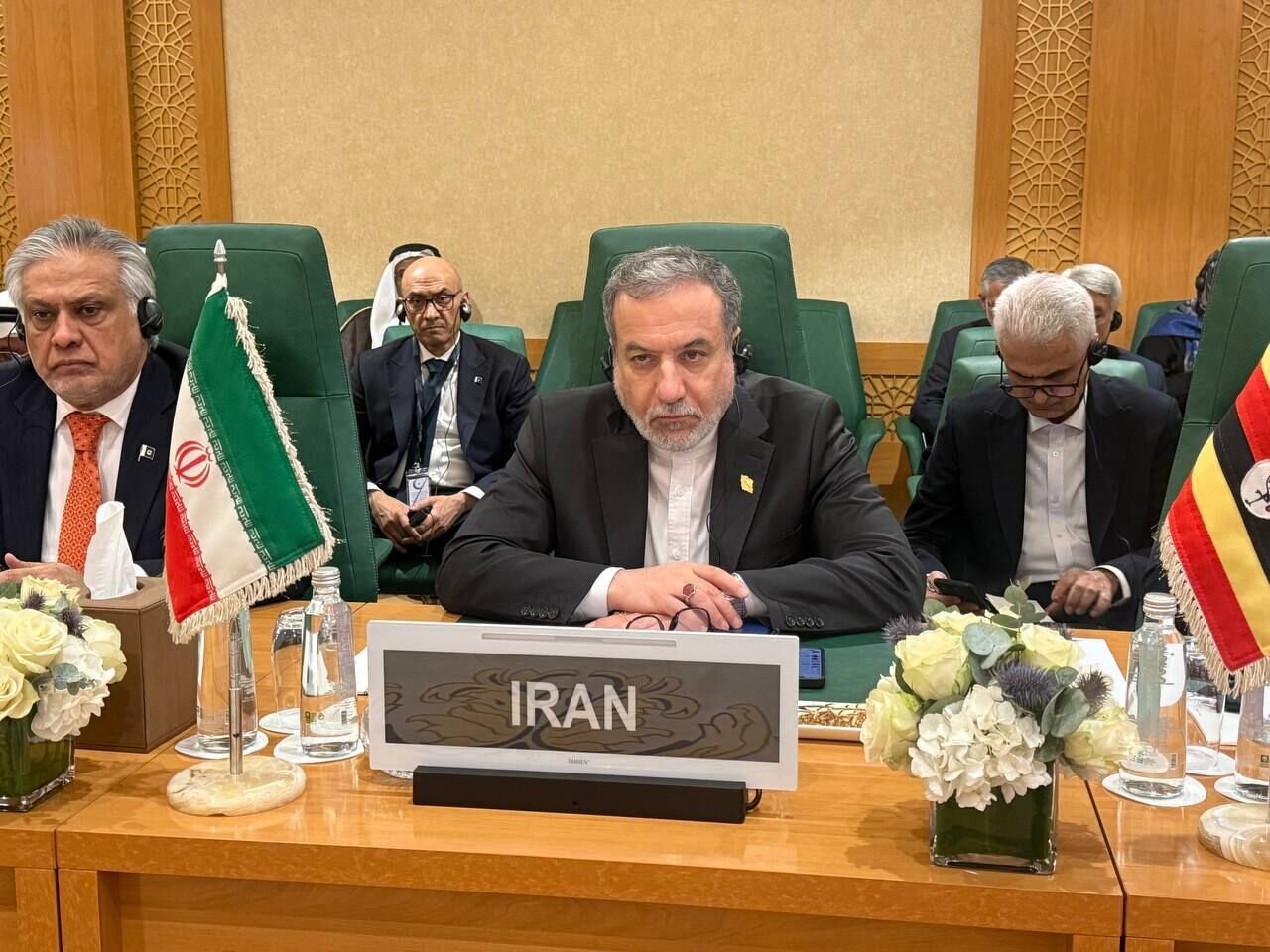
Iranian Foreign Minister Abbas Araguchi attended an extraordinary meeting of the OIC Foreign Ministers’ Council in Jeddah, Saudi Arabia on August 25, 2025.
The Iranian Foreign Minister recently issued a clear warning about these ambitions in an article entitled “The illusion of “Great Israel” is an existential threat and a danger to international peace and security.” Araghchi’s article came before attending the Islamic Cooperative Organization (OIC) conference held in Saudi Arabia at the end of last month. In his article, Aragut exposes Israel’s “insatiable expansionist ambitions,” describing Gaza’s ongoing ethnic cleansing and genocide as part of a broader campaign that threatens regional stability. He warned that Israel’s attacks on Lebanon, Syria, Yemen and Iran in itself are measures to realize a dangerous, vast vision that could quickly target other neighbouring countries.
In a recent article published in Asharq Al-Awsat ahead of the OIC conference in Saudi Arabia, Iranian FM Abbas Araghchi warned that Israel’s “insatiable expansionist ambitions” could quickly threaten the state of other regions. His view is consistent with the broader concerns expressed by many governments and analysts who view Israel’s actions as a component of a larger geopolitical strategy rather than an isolated military operation.
The attack on Qatar confirms Aragut’s warnings and reveals the true nature of Israel’s regional ambitions. It is essential that regional countries unite firmly against Israel’s aggressive policies to prevent further destabilization and potential broader conflict. Only through coordinated political, diplomatic and strategic efforts can a region protect its sovereignty and security.
Israel’s unprovoked attacks on sovereign states, blatant disregard for international law, and a relentless pursuit of territorial expansion demonstrate a reckless light emptying for peace and stability in the Middle East. The willingness to attack even diplomatic vehicle homes and attack the nation hosting US military bases exposes levels of immunity that threaten security not only locally but globally. Unless Israel’s aggressive policies are confronted with critical and containment, the region faces escalating violence and enduring instability. Uniforming between the Middle Eastern countries against this existential threat is not only necessary, but it is urgent and unnegotiable.