
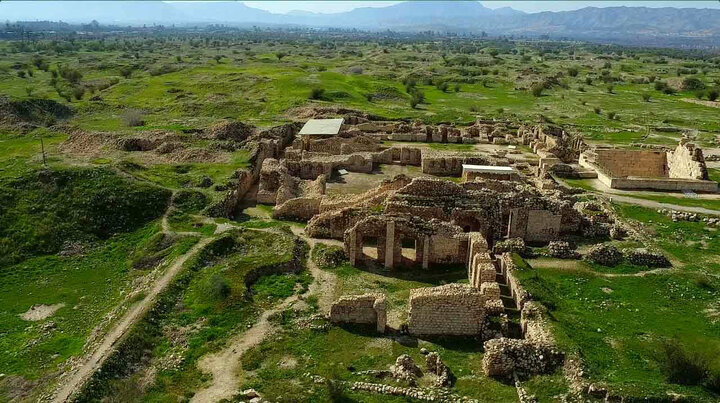
Tehran-Faaz Temple has minimal decorations at Anahita Temple in Bishapur, Faz Province, but the types of architecture used for places of worship and water movement are amazing.
According to Mehr News Agency, the Anahita Temple was built in 1931 by the Order of Sassanid King Shapur I, which was registered as a national monument.
The temple was built to easily transfer water to the temple’s centre, the water circulation system and prayer locations.
The Anahita Temple is a symbol of the Water Temple. In other words, it is the only element of the four elements that are attributed to the goddess Venus. The symbol of this goddess’ animal is the shape of a cow that is symmetrically around the temple. This temple is unique not only from an architectural perspective, but also in terms of observing water regulation, distribution and control systems.
Anahita is the goddess of water. The Iranians highly respected the four elements: water, wind, earth and fire, and water was one of those elements. To build this temple, they made it possible to transport water into the river as it was six meters below ground level and close to the level of their mother’s well and river.
The temple was underground to the third level of a building drawn out by the team of late archaeologist Ali Akbar Sarahraz. This historic monument features many architectural wonders, including the types of stone arrangements above each other, the water transfer system, and the creation of temples six meters below ground level. Also, all the principles of the mosque with four passages and two passages can be inspired here.
In fact, Anahita Temple is the most important monument to the Bishapur complex. It is also the most intact Sassanid temple that remains intact for all of Iran. However, some people believe that we also have a temple in Kangaval, but this is not true, and the temple in Bishapur is one of the most important temples.
KD