
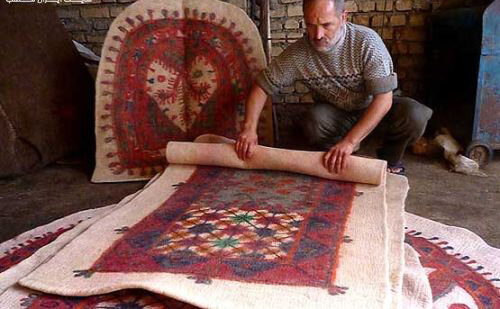
Tehran – Felt making is one of the ancient arts of Iran that has deep roots in many parts of the country, particularly in the tribal regions and many regions and cities of the Khorasan Razabi province, such as Neighbors, Bardaskan and Karat.
This art is produced in wool. The products include rugs, clothing and ornaments. In fact, felt as a traditional fabric is not only a handicraft, but also part of the region’s cultural and historical identity, Isna writes.
Felt’s history dates back to ancient times, and evidence shows that this art was used in people’s daily lives, especially in cold, mountain climates.
Felt was used as a cover and material for the production of clothing, bedding, and even nomadic tents due to its heat and moisture absorption properties.
In fact, I felt that making it as ancient art not only met the daily needs of people, but also was an artistic and cultural job. In today’s world, heading towards the use of synthetic and industrial materials, what we feel represents traditional values and cultural aesthetics.
Handicraft expert Azam Nasseri said he felt that making was a handicraft and cultural heritage to be preserved. It should be transferred to future generations, she added.
She noted that efforts to preserve this art could lead to strengthening national identity, introducing rich Iranian culture in global fields, and conveying felt to future generations as a symbol of Iranian art and culture.
“By supporting and paying attention to this ancient art, we help maintain and develop felt as a valuable cultural heritage, showing the world what the beauty and value of Iranian art and culture holds within itself.”
She said: “We hope that with continued efforts, the making of the country will be recognized as a symbol of Iranian culture and art in the international arena and will be passed down to future generations.”
Naseri said he felt it demonstrated the cultural identity of many Iranian and the city of Khorasan Razavi.
She continued to use wool fiber, soap and egg yolk in the process of making felt. This combination gives felt soft and flexible properties.
In this process, the fibers of wool are intertwined by creating and feeling moisture and pressure, she noted. This method requires accuracy and skill, and she added that artists felt that they would produce quality products with their experience and knowledge.
She believed that one of felt’s prominent features was resistance to fire. “Felt doesn’t burn easily. We felt this property is an ideal option for use in cold and hot seasons.”
Felt is a very good insulator and has been widely used throughout history, especially for nomads who live in a variety of climates, saying, “These abilities felt an essential material for everyday life.”
Nasseri said that despite the cultural and historical values of feltmaking, the art faces challenges.
She believed that one of these challenges was a decrease in the number of artisans working in this field. “The passage of time and social change will lead to fewer young people turning to this art, and therefore we need to pay more attention to promoting and training this art to the younger generation.”
Pointing to booming felt production in many cities and villages in the past, she said:
The handicraft expert said, “The limitations on the diversity of felt products and the failure to properly transfer Indigenous knowledge and skills to a new generation are other reasons for this decline in traditional art.”
She, of course, said that workshops and handicraft exhibitions could be held to make people accustomed to making and promoting this art, and that she could have a positive impact on the industry.
She also thought the role of women in feltmaking was extremely important, adding that the artists who make a considerable number of felt are women who produce beautiful products with skill and art.
She said she felt that promotions as a handicraft would help women financially empower them and strengthen their position in society.
Noting that felt is also a huge potential for export, Naseri said, “Given the beauty and high quality felt products, this art can find the right place in the international market.
KD