
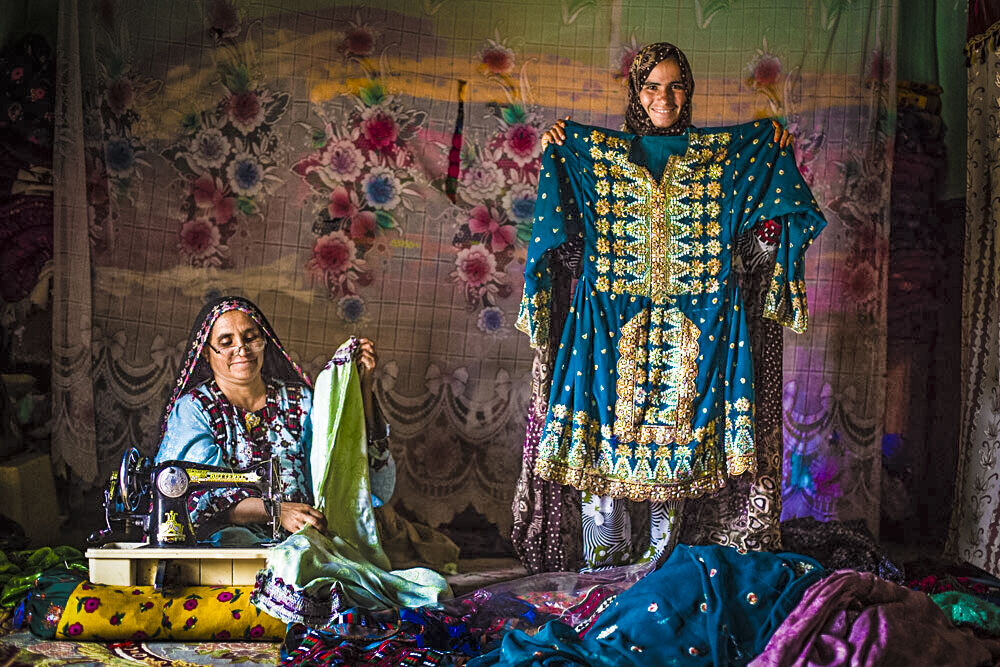
Tehran – The cultural heritage and handicrafts of Sistan Balchestan, especially the needle work created by women and girls in the Baroque, is a manifestation of Iran’s beauty, creativity and pure culture, said veteran actress Fariba Kusari.
She told Miras Eyya (CHTN) that preserving this precious heritage is considered a public obligation.
Kusari said: “I am a native of the beautiful province of Cistan Balchestan, and I am proud to be the birthplace of artistic men and women known and admired all over the world.
“The local costumes of Sistan Balchestan have a special and unique place among traditional Iranian clothing. I am trying to attend an open ceremony to wear authentic clothing from my hometown and make a small contribution to showcasing these precious cultural symbols.”
Pointing to the state’s historical and cultural status, she said Iran is filled with historical monuments and ancient buildings, which are considered a common heritage of all Iranians in particular. “Therefore, I believe I have an obligation to protect these cultural assets and I believe that all people in the country should also take serious measures in this direction.”
In conclusion, Kousari emphasized that future generations can also benefit from these precious treasures, as the preservation of cultural heritage is a national and universal responsibility and because all Iranians are obligated to preserve these spiritual and historical assets.
Needlework is a very common occupation among people in the Southeast. It is the art of drawing images on plain fabric by sewing delicate stitches using needles and colorful threads. They are mainly used to decorate women’s clothes. However, such pieces are applied to decorate bracelets, necklaces, bags and scarves.
Sistan-Baluchestan Province has special importance as it is located in a strategic transport location, especially in Chabahar, the only marine port in Iran and the easiest access route of mid-Asian countries. The vast state has several distinctive archaeological sites and natural charms, including two UNESCO World Heritage Sites: Shahr-e-Soukhteh (Burnt City) and Lut Desert.
KD