
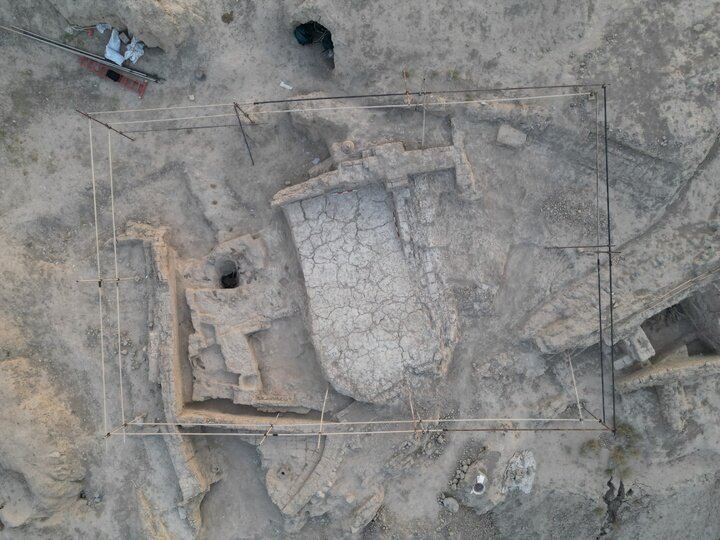
Tehran – Several workshops were chosen as the focus of the research in the fourth season of Tepe Sialq excavation in Kashan, central Iran. Continuing last year’s excavations aimed at a more accurate and deeper understanding of the latest layers of the site. So far, valuable findings have been obtained from these sections.
According to Mehr News Agency, one of the most important achievements is the discovery of workshop spaces from the third Sialk period (approximately 5,500-5,300 years ago).
The size of this space has been identified as approximately 2.5 x 3 meters, and the presence of horseshoe-shaped ovens with heated parts indicates workshops related to the metallurgical industry, particularly copper.
Also, what is discovered in this chapter is the Masterbutsu, which has been widely layered since the Sixth Sialq era (approximately 2800-2600 years ago).
This structure suggests that it is part of a median comprehensive and organized development programme, along with the construction of a large Adobe building and the construction of the clay waterworks identified in Chapter 2.
Other findings in this chapter include the discovery of residential spaces where Adobe walls may be under layered masterbuses. This has been identified so far and excavations are underway.
The third phase of the project reviewing Tepe Sialk began with the aim of answering basic archaeological questions and providing conditions to view artifacts to visitors, and is now in its fourth season.
The project was launched in 2001 as a long-term research program. The first phase of this project was completed between 2001 and 2005, and the second phase continued between 2008 and 2009.
The main goal of this stage is to answer professional and fundamental archaeological questions about the central region of Iran from the Neolithic period to the beginning of the Achemenid period.
Additionally, the agenda lists the creation of the necessary conditions and facilities to display the discovered artifacts to domestic and foreign tourists.
By the end of Chapter 4, it is hoped that a more accurate and comprehensive understanding of the lives of Siarqh residents in the final stages of reconciliation at this precious ancient site in Iran will be achieved. Understanding considered the fundamental step in reinterpreting the history of ancient civilizations on the Central Plateau.
KD