
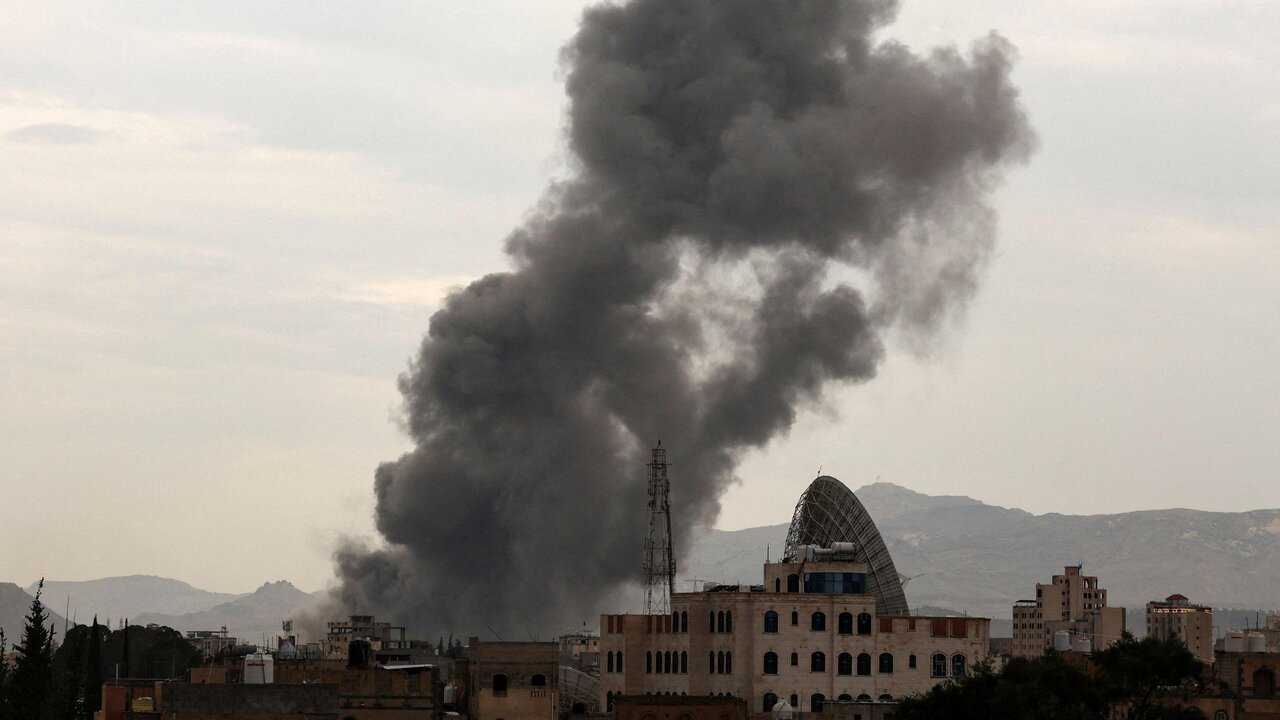
TEHRAN – The Committee for Protecting Journalists (CPJ) says the recent Israeli attack on Yemeni media offices is the second most historic for journalists in history.
According to the CPJ, the strike at the newspaper office on September 26th and the Yemeni newspaper in Sanaa, the capital, killed at least 31 journalists and media staff from two publications.
The organization classified the murder of Israeli journalists on September 10 as “intentional and targeted killings based on their work.”
It has been reported that 35 people were killed in total, with over 100 other people injured in the attack. A child who accompanied the journalist to the office was also among the dead, and 22 journalists were injured.
Nasser Al-Khadri, editor-in-chief of September 26, described the attack as “an unprecedented massacre of journalists,” and a series of strikes came around 4:45pm while staff completed the weekly edition for printing.”
“It was a savage and unfair attack targeting innocent people who were working in the media and with nothing but pens and words,” he told CPJ, saying many of his colleagues remained in pieces.
The most deadly attack on journalists recorded by the CPJ was the 2009 Massacre of Magindanau in the Philippines, where 32 journalists were killed in ambushed convoys.
Al Qadri called on the international community to take a decisive response. “The Israeli military has destroyed newspaper facilities, printing presses and archives. The September 26th archive is one of Yemen’s most important historical collections, documenting the country’s history since the last century, and its losses are heartbreaking,” he told CPJ.
The CPJ said the Yemeni regime’s attacks reflected attacks in Gaza, Lebanon and Iran, where they consistently blurred the line between military targets and journalists, and that labelled them as terrorists and propagandists, justifying the assassination without presenting reliable evidence.
Under international law, journalists must provide civilians with certain protections in military operations.
On September 10, the Israeli military posted a report on social media. Social media said it had hit “military targets” in Sanaa and northern Al Jauf.
Israeli forces said the strike was retaliation for the ongoing attack on Yemen.
Yemeni forces have been attacking missiles and drones on sensitive Israeli targets. The SANAA government has openly declared that these operations are in solidarity with the Palestinians in Gaza, facing genocide, choking blockades and the collapse of order based on international rules.
Abdulrahman Mohammed Mutahar, a journalist just 500 metres from the site, told CPJ that the Israeli strike caused a “major explosion.” He said about eight missiles reduced the building to tiled rubs, leaving some journalists buried under the shrapnel.
“Targeting journalists is an attempt to sound the truth,” Nabil al-Asidi, a board member of Yemen’s Journalist Syndicate, told CPJ, adding that some of the people killed have been members of the union for many years.
Before the Gaza genocide, CPJ’s 2023 Fatal Patterns Report claims that it outlines five cases where journalists killed by the IOF between 2004 and 2018 were falsely accused of in relation to armed groups.
The CPJ says it has extensively documented the Israeli pattern of presenting journalists as combatants to justify a deadly attack. The occupying regime has killed 247 journalists in Gaza since October 7, 2023, according to the United Nations Human Rights Office.
It is exempt from global protests over the systematic killing of journalists in Gaza.