
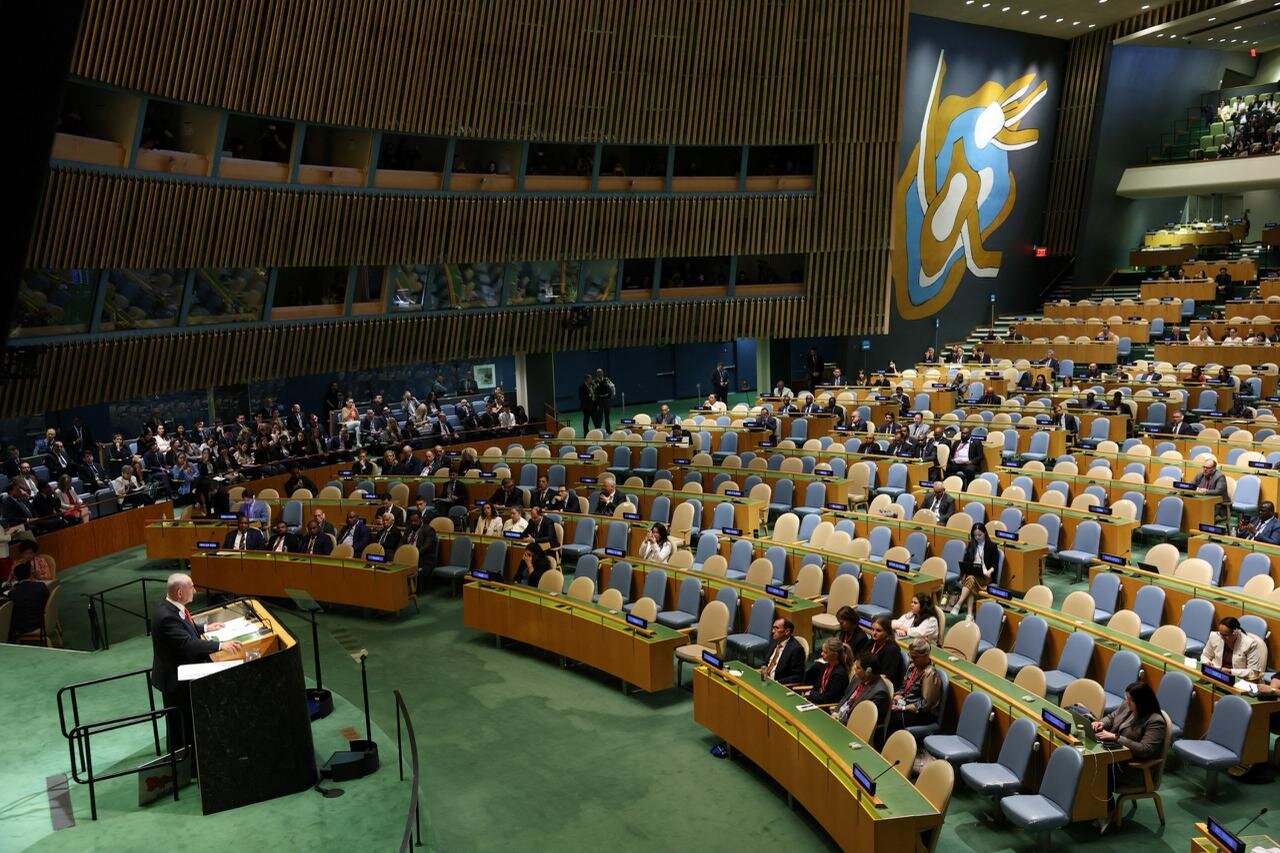
TEHRAN – Israeli Prime Minister Prime Minister Benjamin Netanyahu’s speech to the UN General Assembly on Friday was a careful and staged attempt at combative defense of Israel’s aggressive campaign in Gaza and broader military action across the region. However, this performance did not hide the wide bay between his story and findings of international, public health agencies, and human rights organizations.
Netanyahu adopted one prominent map with the prosperity of critics, considered to be critics, along with visual aid and rhetorical prosperity, repeating the phrase “Israel must finish his work.”
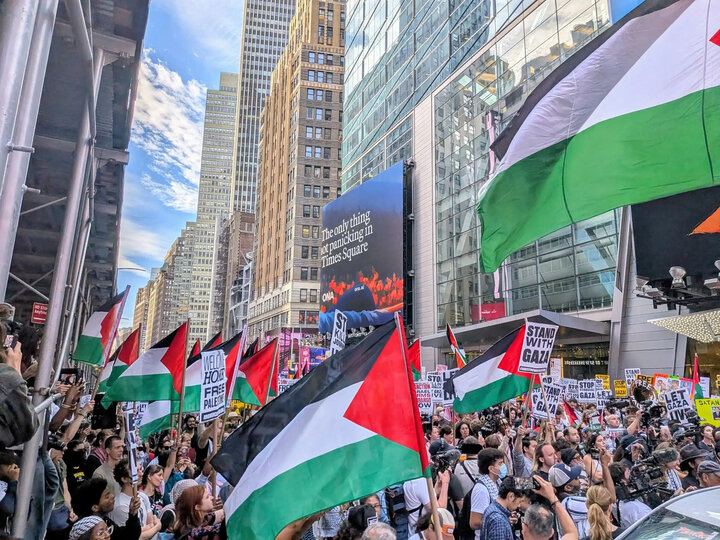
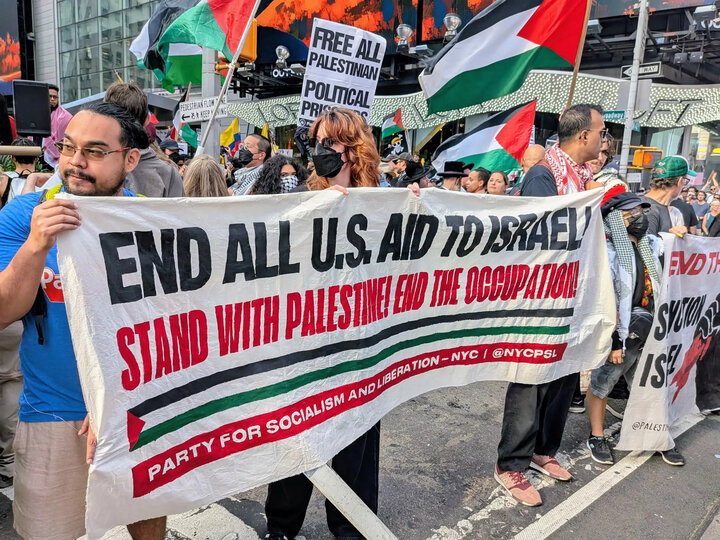
The line has landed amid visible diplomatic responsibilities. A dozen delegations left strikes and large sections of Congress gradually empty, while thousands of New York demonstrators went to the city demanding ceasefire and accountability.
Independent UN mechanisms and major rights groups paint far more harsh than what Netanyahu offers. In a September report, the UN Commission on Independent International Search concluded that Israel’s actions in Gaza meet legal standards for genocide.
Human Rights Watch and Amnesty International documented patterns of indiscriminate artillery fire, forced expulsion, and intentional deprivation of essential services that are equivalent to war crimes and crimes against humanity.
Using figures from the Ministry of Health in Gaza, public health agencies and UN partners estimate that more than 65,500 people have been killed since October 2023.
The war forced the evacuation of up to 90% of the population, but the hunger situation has been established in several regions. The World Health Organization has confirmed hundreds of deaths from malnutrition. Most of them are children.
Beyond Gaza, Israeli military operations have spread throughout the region, with fatal strikes in Lebanon, Syria and Iran, killing more than 1,065 people in the 12-day war. The attacks have also targeted sites in Qatar and other parts of West Asia, spreading the footsteps of the conflict and denounced what critics describe as a campaign of destabilization.
Netanyahu sought to counter such accusations by pointing to evacuation orders and intelligence reports claims, and portraying Iran as the backbone of the region’s “terror axis.”
These claims did not persuade critics who could exempt belligerent liability for operations struck by hospitals, shelters and schools, or effectively prevented life-saving aid.
A repetitive retreat to “finish work” in enclaves at risk that nearly two million civilians are read as a justification of action with devastating humanitarian and legal consequences rather than as a constrained military goal.
A particularly controversial decision during the emergence of the United Nations was to be communicated to Gaza through speakers through mobile devices, according to speeches through speakers through border speakers and multiple reports.
The broadcast, surrounded by Tel Aviv as communication targeting prisoners, was described by many humanitarian advocates and Palestinian journalists as forced psychological pressures imposed on a population already under fire and facing starvation.
The New York scene – a sustained street protest, including an empty UN column, a diplomatic strike, a massive march from Times Square to the United Nations and a demonstration outside the Manhattan Hotel in Netanyahu crystallized the political costs of the address.