
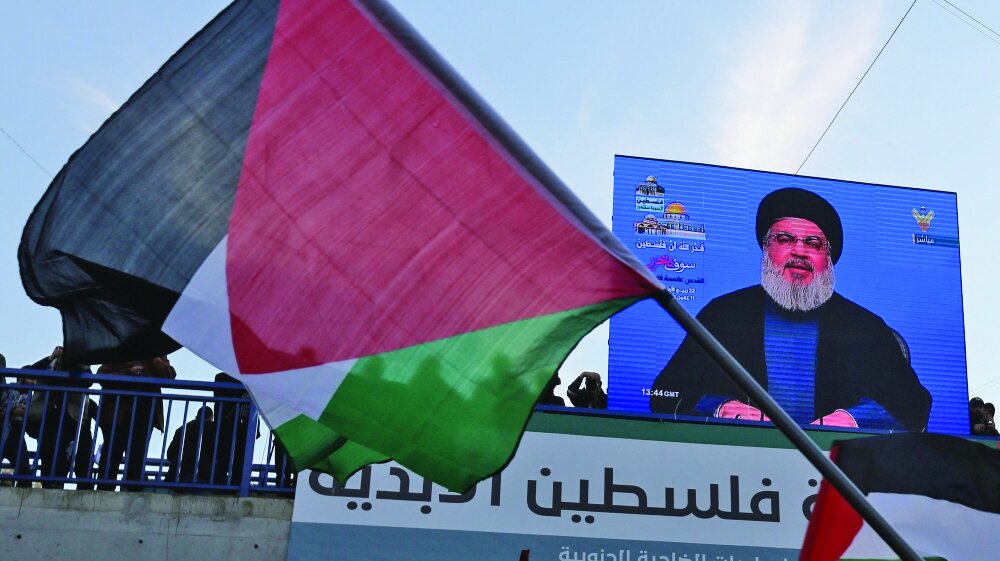
Tehran – Hezbollah Secretary Syed Hassan Nasrara was one of the most decisive figures in Western Asian politics and the unwavering champion of the Palestinian cause. For decades, he embodied the spirit of resistance and clarified his vision of dignity, justice and immobilization in the face of occupation.
His leadership transformed Hezbollah into a central force not only in Lebanon but throughout the region, inspiring the generation of Arabs and Muslims who saw a voice of rebellion and hope in him. His martial artists never wavered their commitment to the liberation of Palestine in Israeli airstrikes in Beirut on September 27, 2024.
Early commitment to the Palestinian struggle
From his earliest years as a leader, Nasrara emphasized that from the Palestinian lands, from the Mediterranean to the Jordan River, it is justly belonging to the Palestinian people. He consistently refused a settlement that reduced their rights or undermined their sovereignty. For him, the issue of Palestinianism was not merely political, but deeply ethical and spiritual, a struggle between justice and profession, dignity and oppression.
In his speech, Nasrala enclosed the issue of Palestinianism as the center of the fate of the Arab and Muslim worlds. He reminded the audience that the occupation of Jerusalem (Al-Quds) was not only a burden on the Palestinians, but also a wound in the heart of the entire region. He repeatedly condemned Israeli invasion as a humiliation to humanity, describing the Zionist Project as illegal and unstable in West Asia.
This unwavering attitude set him apart from other leaders who sometimes changed their position under political pressure. For Nasrara, support for Palestine was unnegotiable. It was a compass of resistance and the essence of Hezbollah’s identity.
Support during the Gaza War
Israel’s war with Gaza in October 2023 brought Nasrara’s commitment to Palestine to stimulating salvation. When Israel launched one of the deadliest campaigns against the besieged strip, Hezbollah launched a strike against Israel’s military status in the north, opening a support front to ease pressure on Gaza. These operations are not random, but rather carefully calculated acts of solidarity, designed to show that the Palestinians are not alone.
On October 8, 2023, Nasrala declared he was ready for Hezbollah’s intervention, revealing that Lebanese resistance was on par with Gaza. His words had weight not only on the Palestinians, but also on the entire Arab world, where many felt abandoned by a government that they didn’t want to act.
In November of the same year, he publicly praised Hamas Operation Al-Aqsastorm, describing it as a historic turning point in the fight against Israel. He emphasized that the operation was “100% Palestinian” and emphasized its credibility and ingenuity in resistance. For Nasrara, this event represented a new era. The Palestinians broke through the myth of Israeli security, and their actions electrified supporters of resistance across the region.
Military and strategic support
Under Nasrallah’s support for Palestine was not confined to words. That real effort strengthened the Palestinian fighters’ ability to resist Israeli attacks, demonstrating the role of the Lebanese movement as an active partner in the broader axis of resistance.
Hezbollah’s military engagement served both practical and symbolic purposes. In reality, they were forced to disrupt Israeli operations and fight the occupation in multiple ways. Symbodied, they reassured the Palestinians that their struggle was part of a larger, unified movement against the attacks of Lebanon, Syria, Iraq, Iran and Israel.
Nasrara often explained that this support is rooted in ideological solidarity rather than terms or transactions. He described resistance as a shared mission: human dignity against the defense and oppression of justice.
Diplomatic and political relations
Nasrara’s role expanded beyond the battlefield. He formed close ties with Palestinian leaders and provided them with political support and moral encouragement. In September 2024, shortly before his martialism, Hamas leader Yahya Singwar wrote to Nasrala to express his deep gratitude for Hezbollah’s continued support during the war between Israel and Gaza. The letter highlighted how Hezbollah’s actions, sacrifices and solidarity strengthened the morale of Palestinians under siege.
In 2024, following the assassination of Tehran’s former Hamas leader Ismail Hanie, an attack widely attributed to Israel, Nasrara expressed his sincere appreciation for his solidarity with the Palestinians. These gestures were not symbolic procedures. They reflected a common fate that united deep brotherhood with the movement of Hezbollah and Palestinian resistance.
Refusal to compromise
A critical aspect of Nasrara’s approach was his categorical rejection of political compromises that undermine Palestinian rights. He consistently opposed proposals that ignored the right to return to Palestinian refugees or justified Israeli rule over occupied territories. For him, the “solution” that did not restore full Palestinian sovereignty and dignity was unacceptable.
This principled attitude distinguished Hezbollah from local actors. Nasrara argued that the concessions encouraged the occupying and weakened the resolve of the oppressed. Instead, he argued that both military and cultural resistance was the only way to liberation.
martianism and heritage
Nasrala’s martialism in September 2024 marked the end of the era, but not the end of his influence. His speeches, strategies and vision continue to inspire Hezbollah and the wider axis of resistance. For the Palestinians, his legacy is one of unwavering loyalty. He is a leader who never gave up their cause, supported them in moments of despair, and treated his struggles as his own.
Nasrala is remembered as a symbol of dignity and rebellion throughout Lebanon and the Arab world. He is a man who challenged the most powerful army and government with courage and faith. His life exemplified the idea that resistance is not just a tactic, but a moral principle. It not only demands sacrifices, it promises honor and ultimate victory.
For the Palestinian people and everyone who opposes occupation, Nasrara remains a guided light, reminding us that dignity is unnegotiable, and that liberation is possible through immobility and faith.