
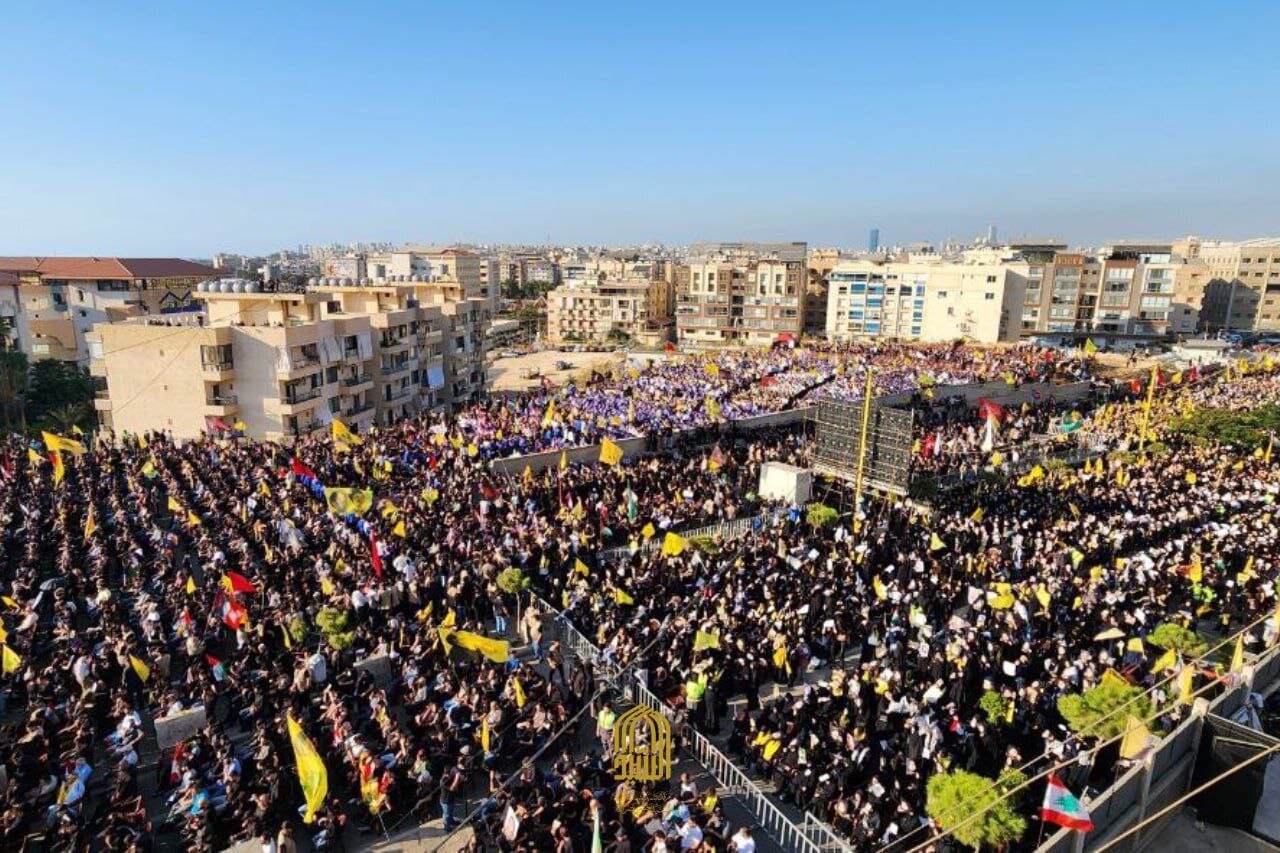
Beirut – The first anniversary of the assassination of Secretary-General Hezbollah Syed Hassannasrara brought together deep popular sentiments on the one hand and political and regional dimensions on the other.
The memorials and events that swept Beirut, Bekaa and the South were not merely commemorations of the deceased leader. Rather, they embodied the continuing presence of a supporter of resistance and a person who became a symbol of unity in allies.
The relationship that united Sayyed Nasrallah with his people was not weakened, but rather strengthened and solidified. A large crowd gathered at Hallett Fleek to participate in the “Night of Ascension” event at the site of his assassination.
The attendees were more than just formal. Rather, it expressed the depth of bond that many described as “exceptional.” They saw him as a collective conscience representing them and expressing their aspirations.
In this regard, Congress President Nabih Berri has issued a statement confirming the continuity of resistance, despite the Nasrallah martialists saying.
Beli’s choice with the phrase “There is no ending, you are the beginning” reflects the political reading that Nasrala’s martialism did not close the chapter, but opened a new horizon for Lebanon and regional resistance.
Showing that protecting civil peace was “the best aspect of the war against Israel’s absolute evil,” Beli united resistance options to protect Lebanon’s unity, balancing the national and regional dimensions.
On his part, Ali Larijani, secretary of Iran’s highest national security council, said what Nasrala had been warning for decades has now become a concrete reality. This statement does not deviate from the context of acknowledging Nasrara’s role as a visionary person who had an early understanding of the nature of the Zionist Project and the threats to the region.
He pointed to Israel’s recent attacks on Doha as new evidence of the impure motives of the Zionist regime.
The Iranian philosopher-turned-politician said, “Hassan Nasrara’s only sin was that he recognized Israel’s expansionist strategy earlier than others.”
He added, “Nasrara understood, prepared for, and acted on that understanding of the dangers posed by Israel several decades ago.”
Today, he said that Lebanon is a small country, but stands as a powerful country in the face of Israel. This strength comes from the “determination and willpower that Nasrala has instilled in the new generation.”
This language was elicited on this occasion, both in political speech and in public consciousness. They reflected the continued connection between Kalbala’s symbolism and the notion of resistance.
Beli also spoke to the martian Nasrara, saying, “O martyred master, o comrade, o efer-present one. Karbaraii, who portrays the perfect certainty from the blood of Imam Hussein and the perseverance of Mrs. Zainab (peace is in them). It is also Hussein’s victory and conquest.
This religious phor reflects a pattern deeply rooted in Hezbollah culture. Turning Martism into an open horizon for the Renaissance, organically linking it to the Palestinian cause as a natural extension of Haseni’s complaints.
The first anniversary of the martial teaching of Sayyed Hassan Nasrallah was more than just a supplementary service ceremony. Rather, it seemed like a unified event that recreated his character as an ongoing actor in the political and intellectual life of resistance.
The general, political message emanating from Beirut was not limited to the Lebanese. They resonated with the consciences of Tehran, Sanaa, Al-Kud and those who saw resistance as an alternative to defeat in the face of Israeli hegemony.
The majestic and popular scene marking the first anniversary of Hezbollah’s Secretary-General Syed Hassan Nasrara constituted excellence. It has become a collective action that transcends the scope of traditional commemorations and contradicts all attempts to question the legitimacy of resistance and speaks of its decline.
The crowds that filled the squares of Beirut, South, and Beka reflected the established truth.
This general interaction has two basic meanings: First, the relationship between resistance and its constituency is not a traditional leadership relationship but an organic integration that makes the leader’s absence an opportunity to replicate his presence. Second, discourse was promoted after Nasrara’s martialism on the “breaking of resistance” and then in fact collapsed in the face of the masses.
The anniversary showed that the true strength of resistance lies not only in its military weapons or political presence, but also in its deep influence on the minds and minds of people. For many, resistance is seen as a key pillar of identity, dignity and the right to live freely.
Therefore, the strict general commemoration served as a public referendum to confirm that the martialism of Said Nasrara did not weaken resistance, but rather recharged it with new symbolism, so in its members’ eyes there remains a solid option that will not fall with the martialism of the leader, but will be regenerated with their blood.
Therefore, on his first anniversary, Nasrara was present in politics and conscience, and testified that martialism was not the end, but rather the beginning of a long journey passed over generations.