
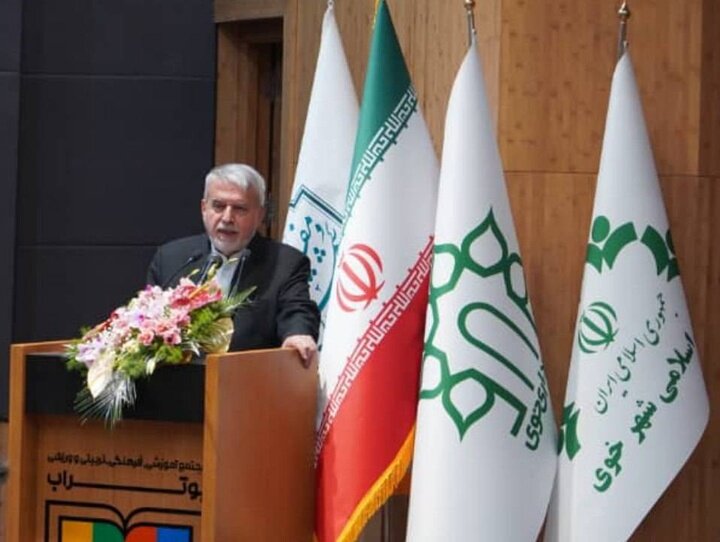
TEHRAN – Iran’s Minister of Cultural Heritage said on Tuesday that Western Azarbaijan could develop into a major tourism and cultural centre, citing its historic location and its role as a home to the tomb of Shamsu-ta-Tabrij in the town of Kui.
Reza Salehi Amiri, Minister of Cultural Heritage, Tourism and Crafts, told reporters during a visit to Shamz Spirit us in Koi that investment in the city’s cultural and tourism infrastructure would benefit the wider state.
“Western Azarbaijan is a symbol of unity and could be a destination for both domestic and foreign visitors,” Salehiamiri said.
He emphasized that Khoy is one of Iran’s historically important cities and that national investment is needed to strengthen its status as a cultural and tourism centre.
The Minister noted that Western Azarbaijan has three UNESCO registered sites and many other important monuments, as well as a diverse range of religious and cultural heritage. “When we talk about this state, we talk about the land of various religions and cultures,” he said.
Salehi-Amiri added that expanding tourism in the region could improve the economy and local infrastructure. He said the department will work with state authorities to accelerate cultural projects.
The Minister traveled to Khoy to attend the 11th International Conference on Rumi and Shams Tabrizi. Scholars from several countries gathered at the two-day event to mark the Rumi Days in the Iranian calendar and discuss the mystic heritage.
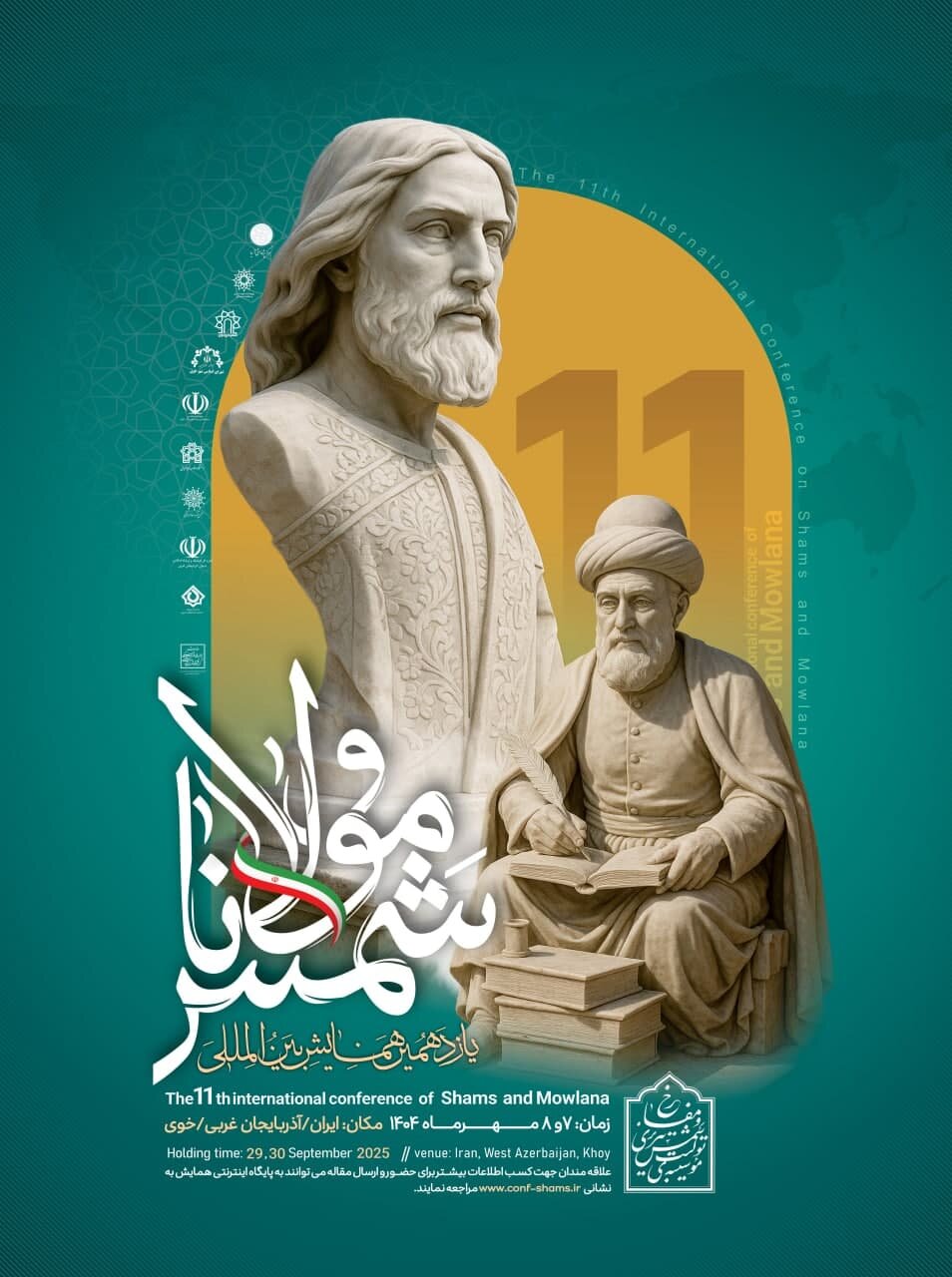
Poster for the 11th International Conference on Rumi and Shams Tabrizi.
The topics of the conference included Sham and Rumi’s views on peace, coexistence and dialogue, and the role of philosophy in eastern religions. Participants also looked into the historical accounts of the first meeting with Rumi and Shams.
Shams Tabrizi (1185–1248), who had a major influence on rumi, remains a central figure in Persian mystical literature. He is the name of Diva e Shams e Tabrizi of Rumi, and is traditionally believed to have spent 40 days in spiritual spiritual discourse with Rumi of Konya before departing for Damascus.
Sources say Rumi took on one or two trips to Syria. However, he was deeply influenced by Shams during his second visit to Konya on November 30, 1244. For months, the two men were constantly interacting, resulting in Rumi being ignored by her disciple and family. One night in 1247, Shams disappeared forever. This experience transformed Rumi into a poet. Shams’ Divan (a collection of Shams’ poems) truly translates his experiences into poems.
morning