
Tehran – Almost two years after the war on genocide with Gaza, US-backed Israel finds itself in a deadlock. Despite the relentless military campaign, Gaza resistance groups remained active and their networks have weakened, but far from defeat. The battlefield has failed to bring about the decisive victory that Israel had hoped for, and a new strategy is now emerging.
US President Donald Trump is eager to reaffirm himself as a global power broker, and Israeli Prime Minister Benjamin Netanyahu has struggled to maintain a fragile coalition at home, revealing Gaza’s ceasefire proposal. The real purpose of the plan sold as a humanitarian breakthrough is not a settlement, but a disarmament of Palestinian resistance groups. This is a ceasefire designed to rebuild it in court by Israel rather than settling a conflict, institutionalizing control while the Palestinians stripped their sole leverage.
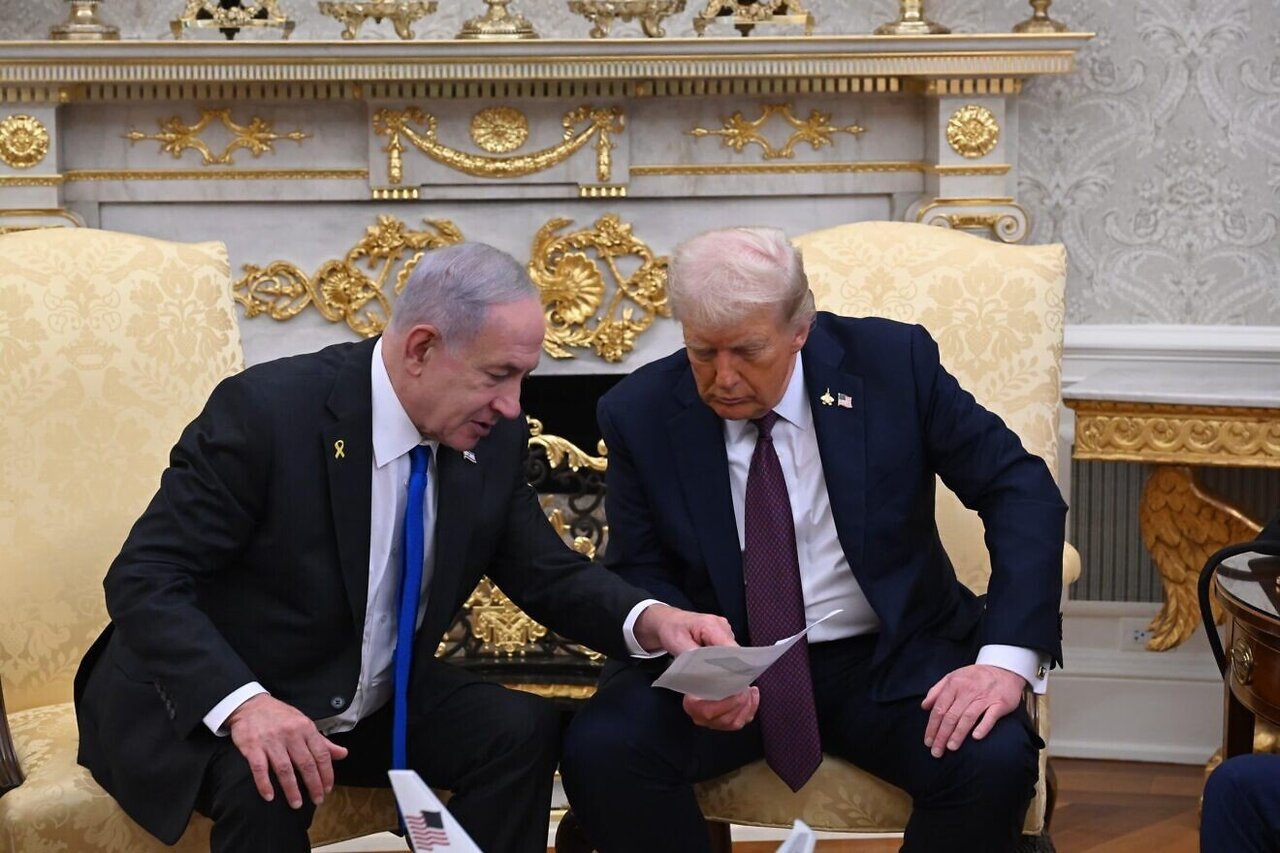
The White House published a 20-point proposal text on Monday when Trump and Netanyahu met in Washington. The proposal outlined the remaining prisoners of war, reconstruction, governance, and disarmament frameworks. However, despite its presentation as a peace initiative, the plan is overwhelmingly one-sided in Israeli favor. Important Israeli strategic goals, including the retention of the Philadelphi corridor, remain intact, ensuring Israel will permanently manage key access points in Gaza.
Israel’s political dilemma
Israel entered the war with the goal of eliminating Hamas after the resistance campaign launched a surprising military attack in southern Israel on October 7, 2023. However, despite deploying its full military weapons, Israel was unable to achieve this goal. Hamas and the Alliance Group continue to demonstrate resilience using asymmetric tactics that dull Israel’s traditional advantage.
Netanyahu said Israeli forces would remain in Gaza and candidly state that a complete withdrawal would “not happen.”
At home, Netanyahu faces growing political pressure. His fragile coalition has split, war fatigue has spread across Israeli society, and international criticism of Gaza’s humanitarian catastrophe has escalated. The war, which was to secure Israel’s control, instead revealed its vulnerability.
In this context, ceasefire plans appear not as good-willed acts, but as political lifelines. For Israel, it offers a way to remake failure as a compromise. It’s Trump’s chance to return to the Middle Eastern stage as a peace director, even if peace is the last thing the plan guarantees.
Diplomacy as a weapon
The central logic of the proposal is clear: a gun that exchanges for a promise. Important regulations include:
Immediate Certain Fire: Hamas releases prisoners within 72 hours in exchange for Palestinian prisoners.
Disarmament: Resistance groups must dismantle tunnels, surrender weapons, and end all military activities.
International Surveillance: Foreign troops were replaced by Israeli forces, tasked with enforcing disarming.
Security Buffer Zone: Israel holds a permanent presence within Gaza under the vague term security perimeter, maintains control of the Philadelphi corridor, ensuring continued access and influence.
Governance: Transitional authority overseen by the “Committee of Peace” controlled Gaza, with figures such as Tony Blair floating controversially as potential leaders.
Although it is framed as a roadmap for stability, the plan is heavily leaning towards Israel’s interests. It secures Israel’s military and territorial purposes through diplomacy, providing the Palestinians with much more than aid and reconstruction.
From skepticism to anger
The proposal has received support from several countries, but it also sparks sharp criticism.
Hamas and others have already completely rejected the disarmament clause, claiming that armed struggles will remain correct until the occupation is over. They fear that once prisoners are released and leverage is lost, Israel will be able to resume war.
Reuters cited Hamas sources that call Trump’s plans biased and impossible, but Palestinian officials said it adopts the entire Israeli situation.
Former British Labour leader Jeremy Corbyn criticized Blair’s involvement, saying the former British prime minister’s “devastating decision to invade Iraq costs thousands of lives.”
“The only role in the Middle East should be to be defendants in the trial to launch an illegal and tragic war of Iraq that has destroyed millions of lives,” Australia’s Senator David Chebridge said.
Additionally, Balakrishnan Rajagopal, the United Nations Special Rapporteur on Housing, warned that it would be equivalent to a grip on land that was peacefully disguised by buffer zones and foreign transition authorities.
The Illusion of Peace
Trump Netanyahu’s ceasefire proposal is not a path to peace, but a strategic manipulation that neutralizes Palestinian resistance through non-military means. It represents the transition from bombs to boardrooms, but the underlying goal remains the same. It is to deny Palestinian sovereignty while unifying Israel’s rule.
For Palestinians, disarmament without independence is not peace but surrender. For the international community, the plan reminds us that true stability in the region cannot be designed through enforcement or external control. True peace only occurs when Palestine’s rights, freedoms and justice are recognized. It is not when resistance is stripped under the false promise of reconstruction.
Islamic jihad Ziad al-Nakhala said the proposal reflects Israel’s full position, imposing what could not have been a war through Washington, putting the region at risk.
A ceasefire or reconstruction plan requires Palestinians to truly control Gaza, including their borders and governance. Palestinians should be allowed to protect themselves, and disarmament should be voluntary and tied to a fair political agreement.
Israel should not maintain its ability to resume its buffer zone, the Philadelphi corridor, or military operations. International authorities need to support, not replace, Palestine governance, and their actions should be transparent and accountable.
Mediators must be neutral and reliable, and avoid numbers with a controversial history of Middle Eastern interventions in their operational strength positions over Gaza. Rather than using aid as a tool for political domination, aid and reconstruction efforts should focus on reconstructing hospitals, schools and infrastructure while strengthening Palestinian independence.