
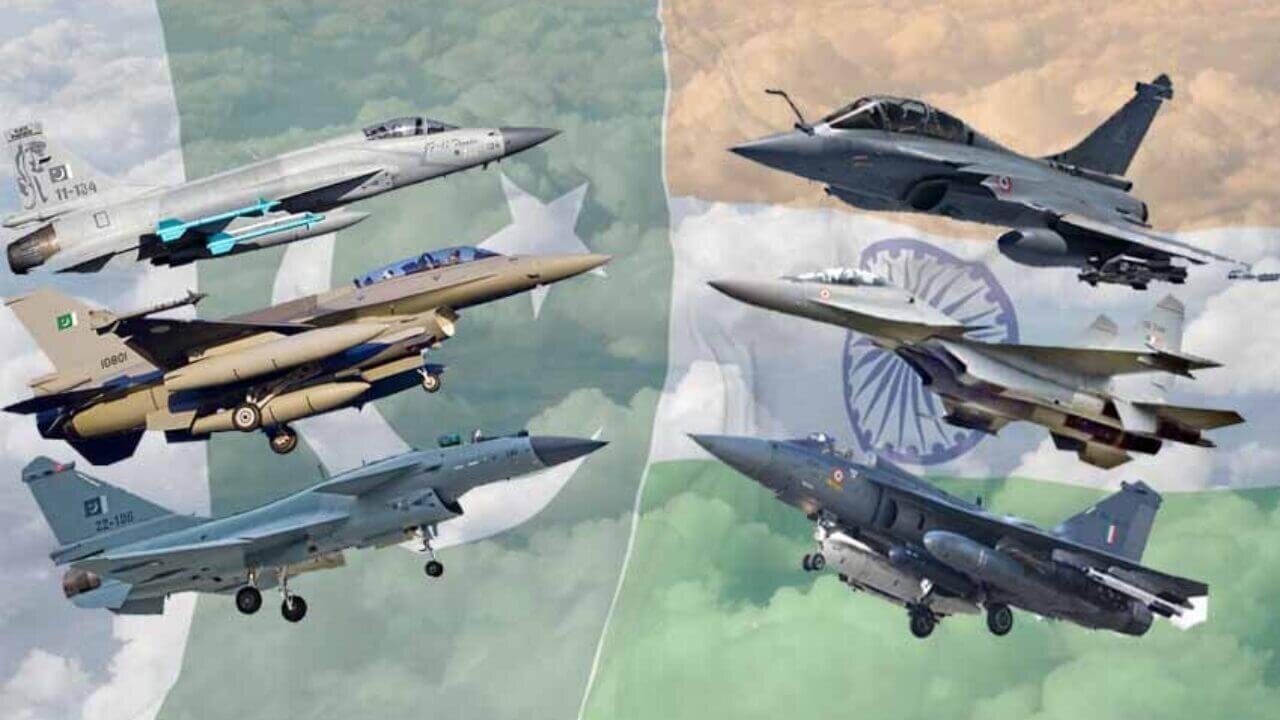
New Delhi and Islamabad continue to advance a largely contradictory explanation of the Indian-Pakistan conflict in May, with both governments claiming serious airlines but providing little verifiable evidence.
Indian Air Force Amar Preet Singh on Friday insisted that the Indian forces down five Pakistani fighter jets considered F-16 and JF-17 types, but would hit radar arrays, command centres and runways.
Speaking at the Air Force Day parade, he praised the integrated air defense known as record-breaking surface-to-air engagement, including the tally expanding and additional aircraft destroyed to the ground.
Pakistan has consistently rejected this version. Prime Minister Shebaz Sharif told the UN General Assembly that Pakistani pilots “turned seven Indian jets into scraps,” but a military spokesman claimed that J-10C fighter jets armed with PL-15 missiles had defeated Rafales, MIG-29 and SU-30MKI.
Islamabad has distributed footage of crash sites to support its story, portraying the action as a defensive response to India’s strike.
Independent verification remains elusive. Media including Reuters, BBC Verification and AFP have found that some widely shared videos and images have been recycled or misunderstood.
France’s Dassault Airlines has denied reporting of Rafale’s losses, but US officials have expressed concern about possible damage to the F-16. Meanwhile, China has downplayed its involvement despite the praise of its J-10C and PL-15 systems in Pakistani media.
Analysts warn that untested claims risk eroding deterrent in nuclear-armed rivalries. As India pursues the acquisition of new fighter jets and deepens Pakistan’s ties with Beijing and Riyadh, the contested legacy of the conflict in May highlights how the air battle in South Asia will be fought through competing stories like the sky.