
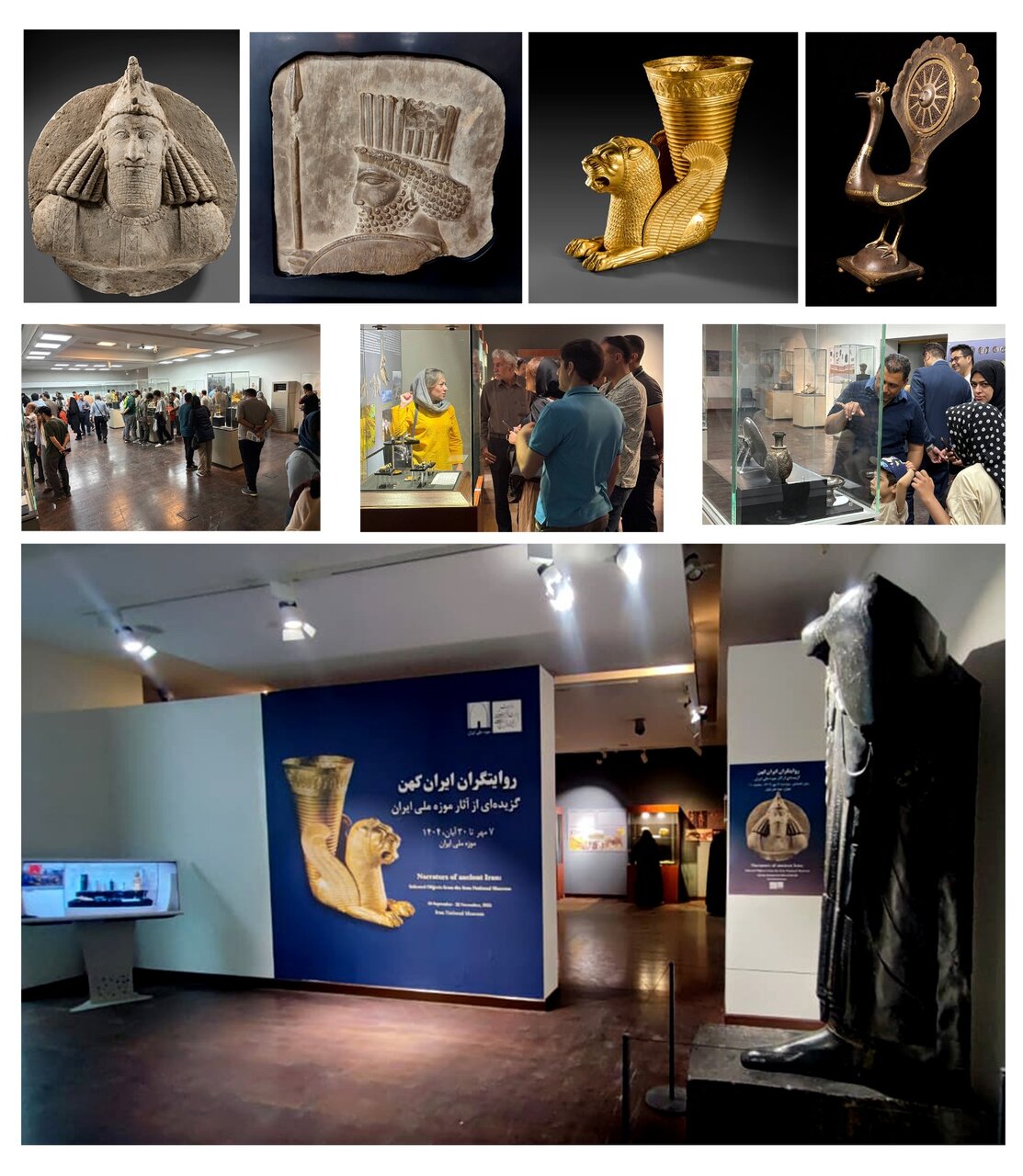
Tehran – The new exhibition entitled “Ancient Iranian Narrator: A Selection of Objects from the National Museum” has been opened to the public at a vast and prestigious museum in downtown Tehran.
The opening ceremony was attended by Ali Dharabi, Deputy Minister of Cultural Heritage, on September 29th.
Featuring over 330 objects from nearly 80 ancient sites, an overview of Iranian history provides an overview from the earliest evidence of human settlements to the most recent century.
According to Nokandeh, the exhibition will run until November 22nd, but it is one of the biggest held at the museum in terms of the number of objects displayed.
Regarding the collection on display, he said: “The exhibition includes the selection of less-than-eyed objects from the Iranian National Museum repository, objects on display from the Ancient Iranian Museum and the Islamic Archaeological Museum and the Iranian Art Museum, and the recently exhibited artifacts exhibited at the Museum Museum.
According to Nokandeh, the exhibition includes three major galleries dealing with the evolution of technology, art, society and culture in the Iranian Heights.
The first gallery of the exhibition is dedicated to Iran’s prehistoric period, particularly the Paleolithic, Neolithic and Stone Age periods. Important sites where objects are displayed include Wezmeh Cave, Abdul Hosein, and Sang-e Chakhmaq. The Director added: “Visitors can see the bone flute of Sang-e Chakhmaq, the oldest known instrument in Iran, today.”
Regarding the gallery of historic times, he said: “This gallery is the largest space in the exhibition and is dedicated to the ages of Bronze and Iron, Ellamite, Achemenid, Seleucus, Parthia and Sasanian.” Notable works from the gallery include artifacts from the Bronze Age of Shahr-E Sukhteh, Shahdad and Jiroft in southeastern Iran. From the Iron Age, notable works from sites such as Malik, Hasanru, Kalaich and Lorestan are on display, including the Golden Bowl of Hasanru and Malik, one of the most well-known works of art from this period, at the Iranian National Museum. The artifacts of eramite and central civilization are other features of this gallery. Regarding Ellamite Works, Nokande also stated that Chogazanville’s second Guardian Bull statue is on display, along with known Ellamite objects like the Jubaji Collection. He went on to point out that the works of the well-known Achemenid, Seleucus, Parthian and Sasanian are other sections of the gallery.
The third gallery of the exhibition is dedicated to artifacks of Islamic times in Iran. The gallery consists of two sections and displays a selection of Iran’s rich heritage from the Islamic era, in fields of calligraphy, metalworking and textiles. The first section of this gallery contains outstanding works from the early centuries to the Qajar era. This includes the Quran (Masalik va Mamalik, “Ilkhanid Mihrab Tiles, manuscript of astelolabe and the elestiale) written in the Muhakkak script of the Ilhanid period of 704 AH (1305 CE).
He continued: “The second section of the gallery is dedicated to displaying exquisite Safavid-era textiles and presenting some fantastic examples of Iranian textile art.” In this section, works such as silk brocade (Zarbaft), with delicate Gol-O-Morgh (flowers and birds) patterns, satin fabrics with golden backgrounds, and brocaded borders (Zari) are all woven in workshops in Safavid’s artistic capital, Isfahan. These precious textiles are made with incredible delicateness using silk and gold threads, and have witnessed the splendor and artistic taste of the safavid coat and textile industry.
The photo exhibition, which presents the activities of the Iranian National Museum during the 12-day war, is another section exhibited in the side gallery. It also features replicas of two artifacts. It is a model for the great statue of Sousa Darius and the Talikané mosque of Donggan. It is noteworthy that the mosque model mentioned was built in the 1930s.
The “Ancient Iranian Narrator” exhibition is open Saturday through Wednesday from 9am to 5pm and Thursday and Friday from 9am to 6pm.
morning