
Tehran – The pro-Palestinian protests across Europe reflect Israel’s deep isolation in Western public opinion.
Europe witnessed a huge wave of pro-Palestinian protests over the weekend, with hundreds of thousands of people taking them to the city to condemn Israel’s genocide in Gaza, and condemning their own government’s continued support for the Tel Aviv regime.
These protests, the biggest one seen since the War of Genocide, began two years ago on October 7, 2023, reflect not only the outrage at the scale of Gaza’s devastation, but also the widening rift between European citizens and their political leaders.
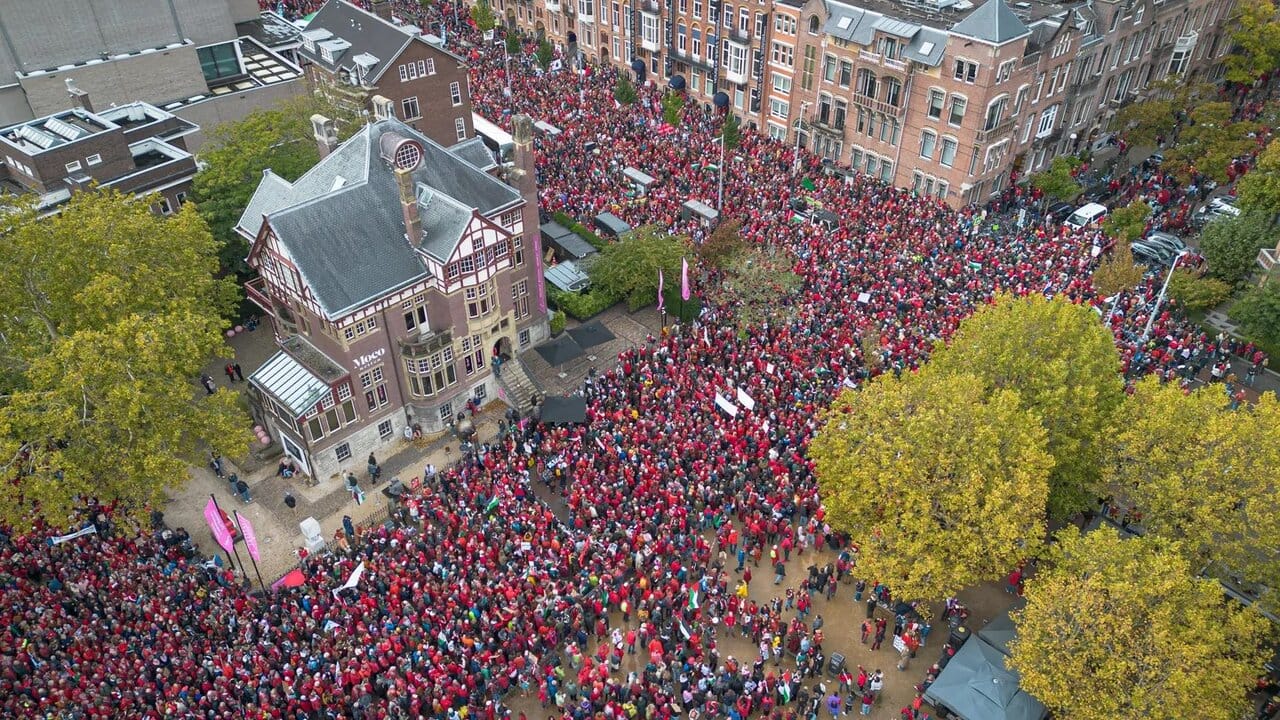
In Amsterdam, 250,000 people joined the Pax Netherlands Red Line March, demanding that the sale of arms be terminated to the Israeli occupation regime.
In Italy, over 2 million people participated in the general strike, and around 300,000 people marched in Rome. In Spain, the cities of Madrid and Barcelona attracted crowds of 90,000 and 70,000 respectively.
Other cities on the continent, from Paris and Berlin to Lisbon and Athens, have also seen major demonstrations calling for the immediate termination of genocide and sanctions for Israeli war crimes in Gaza.
The magnitude and adjustment of these protests strongly indicate a significant change in public opinion. The anger is no longer directed towards the genocide campaign of the Gaza occupation regime, but it is also increasingly in Western governments that continue to support illegal occupation politically and militarily.
The protesters carried banners that read, “Our government supports genocide” and “Supporting the genocide,” highlighting the broad belief that European leaders ignored national sentiment and international law.
This mutilation is particularly pronounced in countries like Germany, with recent polls showing that 62% of citizens believe that the actions of the Zionist regime in Gaza amount to genocide.
The majority support the suspension of trade agreements with the administration, and two-thirds hope Berlin will increase diplomatic pressure on Tel Aviv.
A similar pattern has appeared throughout Europe. There, public support for the occupation regime has been dramatically eroding since the start of the war of genocide in Gaza. Nevertheless, the Western government continued to sell arms, blocked requests for sanctions, and protected the government from international accountability.
In its third year, Gaza genocide is characterized by massive civilian casualties, the destruction of hospitals and schools, and multiple war crimes recorded by UN agencies.
These include collective punishment, the use of hunger as a weapon, and indiscriminate bombing of densely populated areas. As Gaza’s image is widely circulated on social and international media, the Western narrative of the Israeli regime being the victim and the defense itself being disintegrated in the eyes of many Europeans.
The administration once enjoyed Western sympathy shortly after the attack on October 7, 2023. However, that sympathy has been eroded over the past two years as the military response of the occupation has led to massive civilian suffering in Gaza.
The moral framing of Israeli actions has changed and is no longer seen as a genocide with immunity, as a result of many in the West defending itself.
At the heart of this growth movement is frustration with political establishment. The protesters don’t just express solidarity with the Palestinians. They stand directly against their own government to enable the regime’s massacre campaign.
The weekend protests were just as much about domestic policy as diplomacy. For many, their government’s refusal to halt arms exports, cut off diplomatic relations, or call for violations of the Israeli regime’s international law represents a major moral failure.
This serious gap between the government and its people poses political risks, and ultimately can overthrow the government, especially when protests of this magnitude become impossible to ignore.
What began as isolated demonstrations became a pan-European movement that challenged both the Israeli regime and the Western accomplices that kept it.
The political cost of ignoring public opinion is rising as Gaza continues to suffer and the occupation regime’s military campaign shows no signs of an end.
For European leaders, the message from the streets is clear. The profession and continued support for attacks in the face of increasing evidence of war crimes is not just a foreign policy attitude, but a crisis of legitimacy at home.