
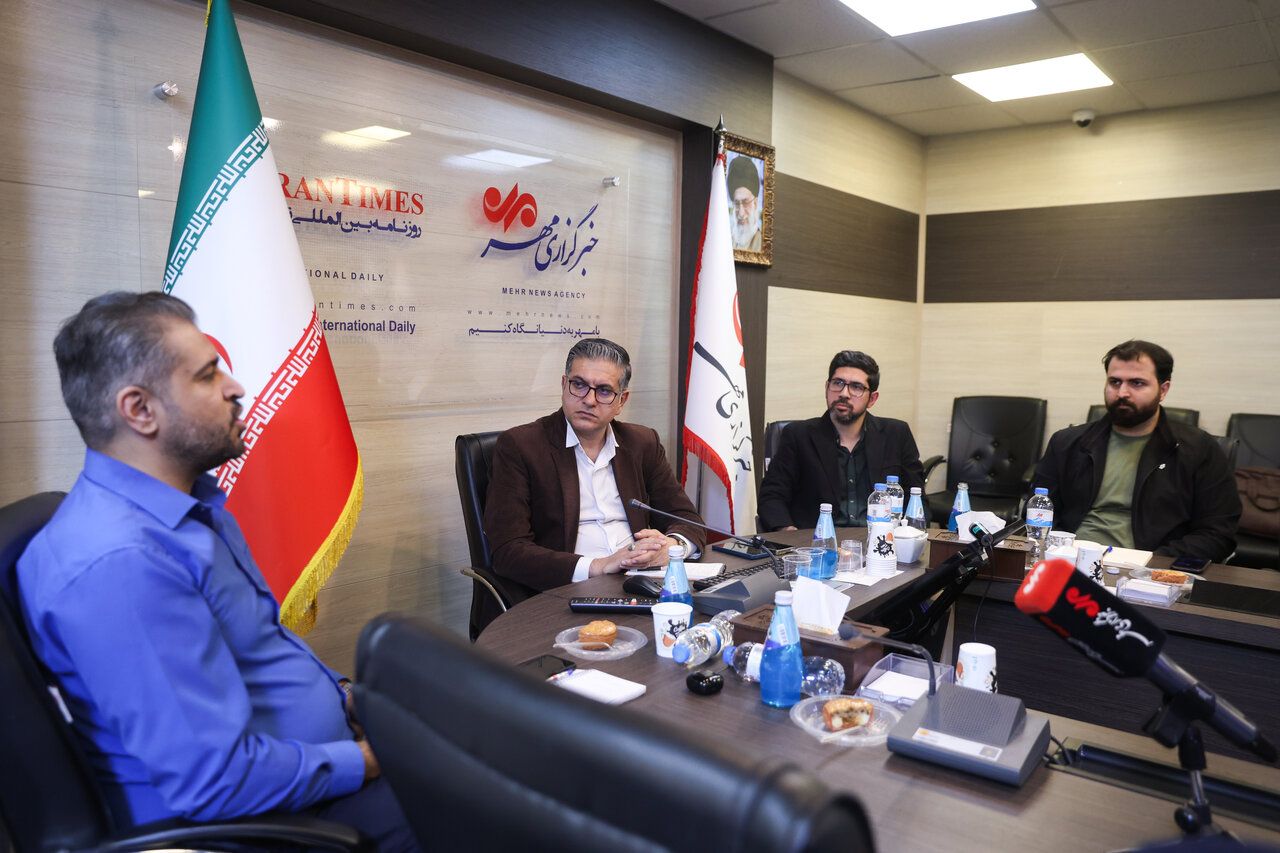
TEHRAN – Mehr Media Group held a meeting on Tuesday to discuss the issue of Palestine on the second anniversary of Hamas’ surprising military operation in southern Israel, operating the Al-Aqsa Storm, restructuring the dynamics of the region and highlighting the plight of Gaza.
The forum entitled “The Future of Gaza in Light of Trump’s Plans” coincided with negotiations between Hamas, Israel and the US representatives on Hamas, Israel and Gaza’s 20-point ceasefire plans. The plan envisages an immediate ceasefire, the release of all prisoners within 72 hours, Israel’s withdrawal from Gaza, and the release of hundreds of Palestinian prisoners. It also provides for humanitarian assistance, reconstruction, and the right for Palestinians to remain or return freely in Gaza.
Experts and analysts attending conferences, including Israeli affairs researcher Mansour Barati. Mohammad Bayat, International Relations Expert. And US affairs analyst Hossain Huthmand agreed that Operation Al Aksa Storm revived the Palestinian cause after years of alienation and pushed it back to the global stage.
Opportunities and challenges
Barati analyzed the potential benefits and challenges of the proposed ceasefire. Positively, he noted that the plan demands an end to Israeli war with Gaza and refuses to force expel Palestinians. Palestinians are in demand supported by Israeli ministers Itamar Ben Gwil and Bezarel Smotrich. Bharati also emphasized that Israel should not occupy Gaza based on the ceasefire plan, and that Democrats could remain in the hands of the Palestinians and promote greater unity among Palestinian factions.
Bharati also highlighted the potential challenges, warning that the plan could promote further normalization between Israel and certain Arab countries and oppress Palestinian resistance to disarming. He pointed out that if Hamas releases the remaining Israeli prisoners, Israel may reduce its commitment to a ceasefire and resume hostilities.
The Dynamics of “King Maker”
Bharati discussed political instability within the Israeli government, noting that Prime Minister Benjamin Netanyahu faced pressure from far-right coalition partners who are threatening to leave the cabinet. He explained that Netanyahu’s survival could depend on escalation policies, such as annexation of the West Bank, facing Hezbollah, or further military operations.
Bharati further emphasized the dynamics of the “kingmaker.” The far-right ministers set out and opposition leaders Benny Gantz or Hardline politicians could determine the balance of power and force Netanyahu to make concessions and adjust strategies. This dynamic highlights the vulnerability of Israel’s coalition politics and its impact on the continuation of occupation and hostility.
The Palestinian cause
Bayat emphasized that Operation Al-Aqsa Storm restored global attention to the Palestinian struggle and countered efforts to alienate Gaza. He said that while the ceasefire plan was not perfect, he implicitly admits that Israel had no full control of Gaza and implicitly accepts challenge to the vision of “great Israel.”
Bayat explained that if implemented seriously, the plan could improve humanitarian conditions and pave the way for reconstruction. However, he stressed that sustained stability would require ending the occupation and lifting the lockdown imposed by Israel for nearly 20 years.
Our role and international pressure
Hooshmand analyzed the evolving role of the United States. He said the Trump administration has rejected a solution for the two states, but increased pressure from Arab countries encourages proposals for a ceasefire. Hooshmand also suggested that Trump’s motivations could include personal fame and potential international acclaim, including the Nobel Peace Prize. Hooshmand further highlighted the changing global attitudes and observed that countries that traditionally line up with Israel, such as the UK, France, Canada and Australia, recognize the Palestinian state due to domestic pressure on the Gaza genocide.
The Forum concluded that the Palestine issue remains a central test of justice and international responsibility.
While ceasefire plans have both opportunities and challenges, analysts stressed that sustainable peace must begin at the end of occupation, recognition of Palestinian sovereignty and respect for the right to return.
They agreed that Operation Al Aksa Storm had marked a turning point. The Palestinian struggle cannot be silent, and resistance continues as long as the occupation continues. The Israeli political landscape, shaped by far-right pressures and the dynamics of the “kingmaker” described by Bharati, will continue to influence the outlook for peace or new conflict.