
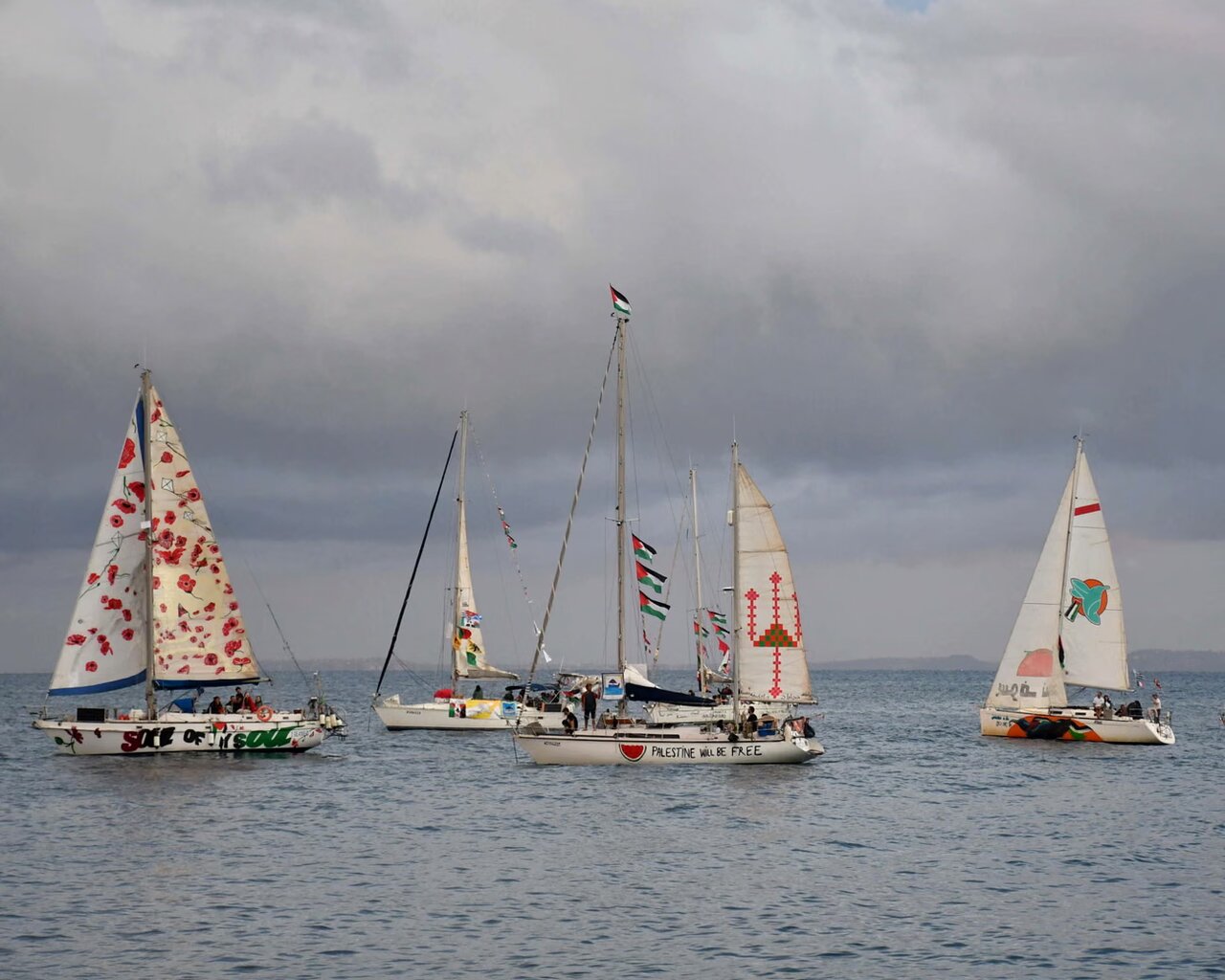
TEHRAN – Israel’s blocking of two international aid convoys heading to Gaza in quick succession has sparked global condemnation and increased legal scrutiny, shedding new light on the blockade of the Palestinian enclave. The seizures, which took place in international waters, targeted the Global Smud Flottra a week ago and the Freedom Flottra Coalition (FFC), which included the capital ship Conscience, on Wednesday.
On October 1, 2025, the Israeli Navy intercepted part of the Global Sumud convoy, a 40-vessel relief convoy attempting to deliver humanitarian supplies to Gaza. Over the next two days, Israeli forces boarded additional ships, and the last ship, Marinette, was captured on Friday, October 3, about 42.5 nautical miles off the Gaza coast. More than 450 activists were detained during the multi-day operation. Among those seized were Swedish environmental activist Greta Thunberg, French-Palestinian lawmaker Rima Hassan and American activist David Adler.
Several detainees later described their treatment in Israeli custody as abusive, alleging beatings, strip searches, blindfolding, and denial of clean water and medical care. These testimonies have raised concerns about Israel’s treatment of detainees and the legality of its actions at sea.
The second naval attack occurred when Israeli forces intercepted a Free Fleet Coalition convoy in international waters. The lead ship, The Conscience, carrying 93 journalists, doctors and human rights defenders, was the first to be attacked, followed by the seizure of three smaller boats, FFC said. The convoy was transporting more than $110,000 worth of essential medical and nutritional supplies for Gaza’s collapsed hospitals.
Israel’s Foreign Ministry acknowledged both attacks, calling them enforcement of a “legal naval blockade” and insisting all passengers were safe and would be deported. However, the legality of such operations is strongly debated. “Israel has no jurisdiction over the high seas,” the FFC said. Türkiye’s Foreign Ministry condemned the attack as a “serious violation of international law” and “an act of piracy,” and the Malaysian prime minister called for the immediate release of the Malaysian nationals on board.
The flotillas were part of a growing global civil society movement to challenge Israel’s blockade, which rights groups describe as collective punishment for the Gaza Strip’s 2.2 million residents. These missions are aimed at delivering humanitarian aid directly to Gaza and countering the legal basis for Israel’s siege.
Legal experts cited a possible violation of the United Nations Convention on the Law of the Sea and said intercepting civilian humanitarian vessels in international waters violates established maritime principles. “These were civilian aid vessels, not combat vessels,” said the maritime law scholar. “Their interception highlights Israel’s use of force outside its territory in disregard of international law.”
International reaction was swift. Türkiye and Malaysia have lodged formal protests. World human rights organizations have condemned Israel’s actions. The diplomatic fallout was further extended by the detention of parliamentarians, medical experts, and prominent activists.
Israel continues to observe the blockade as a security necessity. Critics counter that this framework ignores the humanitarian catastrophe in Gaza. Gaza faces a severe hospital shortage, malnutrition is widespread and infrastructure is crumbling under siege.
The near-consecutive targeting of Global Sumud Flotilla and The Conscience marks a sharp increase in Israeli maritime law enforcement. What Israel calls “blockade enforcement” is increasingly condemned internationally as an unlawful obstruction of humanitarian aid, and this conflict is currently playing out on legal, diplomatic, and moral fronts around the world.