
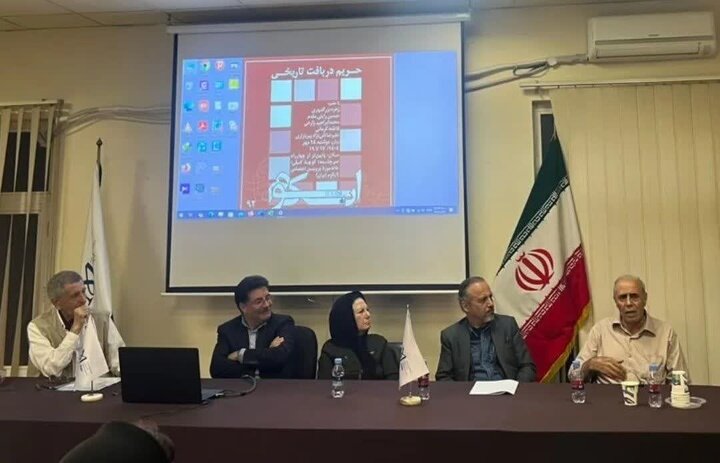
[TEHRAN]Mohammad Ebrahim Zarei, director of the Institute of the Ministry of Culture and Heritage, asserted that urban archeology needs to know the identity of cities.
According to Mr. Mirash Aliya (CHTN), speaking at a specialized meeting entitled “Privacy in Historical Texture” held at the venue of ICOM (Iranian National Committee of Museums), he pointed out the importance of understanding the historical layers of cities, saying, “We have two types of archeology: urban archeology and urban archeology.”
He further added, “While urban archeology is concerned with the exploration of different parts of a city, urban archeology involves the examination of maps, documents, excavations, and other historical evidence so that we can understand the structure and identity of a city.”
Mr. Zarei clarified that “To accurately understand the historical texture, it is necessary to use an urban archeology approach.”
Referring to various examples and presenting historical and old images of these works to date, he said: “For example, in one image we can see that Hamedan’s ancient citadel (Hegmatane Hill) and caravanserai are intact and the links with the market are still established. However, throughout history, especially in urban development, these textures have undergone change and transformation.”
He cited several examples of Iranian cities, and emphasized that Hamedan is a city where no direct traces of the Median period have been found, but pottery and architecture from that period have been discovered, indicating that an urban structure existed at that time.
It is worth mentioning that the meeting was held at ICOM under the chairmanship of Mr. Seyed Ahmad Mohit Tabatabai and in the presence of Mr. Zarei, Mr. Zoreh Bozorgmeli, Mr. Hossein Laiti-Moghaddam, Mr. Fariba Kermani and Mr. Alireza Golinejad Pir Bazari.
KD