
The reliefs of Achaemenid architecture are much more than mere decoration. They are a powerful and sophisticated visual language designed to convey imperial ideology, unity, and grandeur.
Carved with extraordinary precision and detail on the limestone steps and palaces of ceremonial capitals like Persepolis, these reliefs served their primary purpose: propaganda. They depicted a vast, orderly, and harmonious empire in which diverse nations, identified by their distinctive clothing and offerings, were willing to pay tribute to a benevolent “King of Kings.”
This image reinforced the monarch’s legitimacy and divine mandate to rule. Stylistically, the reliefs synthesize artistic influences from across the empire, including Mesopotamian, Egyptian, Ionian-Greek, and Median traditions, creating a distinctive and consistent imperial style. The repeated dignified figures and ceremonial scenes were not intended to depict the actions of individuals, but to represent the empire’s eternal and stable power and the unwavering support of its subjects.
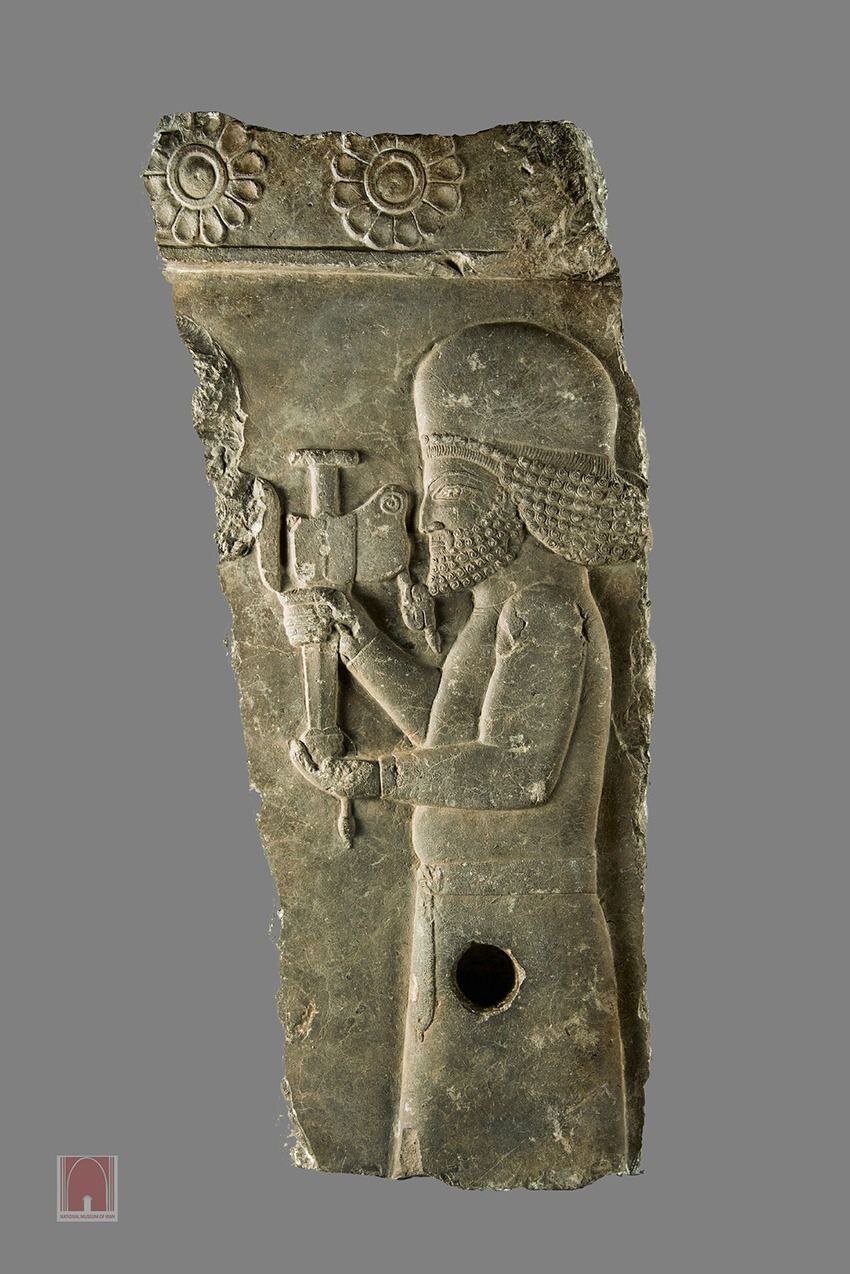
This stone relief from Persepolis depicts a figure wearing a domed hat and a garment fastened around the waist with a central belt, holding a short sword and a scabbard known as an akinake. The border of the rosette motif is visible at the top of the relief. It probably belonged to the palace of Artaxerxes III (Palace G) or to the western staircase of the Apadana.
The most famous example of Achaemenid stone relief is at Apadana in Persepolis. The north and east facades have double staircases decorated with intricate mirrored reliefs. One side of each façade depicts 23 delegations from all over the Persian Empire bringing tribute and gifts, while the other side depicts Medo and Persian nobles, guards, and retinues. Originally, panels depicting the enthroned king occupied the center of each facade, but these were later removed and replaced.
Other buildings with staircase reliefs in Persepolis include the central building, the Palace of Xerxes, Palaces G and H, and the Palace of Darius. These reliefs depict a group of noblemen in Medo or Persian costume and figures climbing a staircase carrying food, drink, and live animals. All these reliefs are believed to be original paintings.
Persepolis, also known as Parse (or Takht-e Jamshid, which means “Throne of Jamshid” in Persian), is an archaeological treasure located in the fertile plains of Marvdasht in northern Fars province. Founded by Darius I around 518 BC, it served for many years as the grand ceremonial capital of the vast Achaemenid Empire, primarily used to celebrate the Persian New Year (Nowruz) and to host delegates from across the empire’s vast territories. This majestic complex of palaces, treasuries, and audience halls stands as a powerful symbol of ancient Persian power, architectural genius, and artistic achievement. Its immense historical and cultural value earned it worldwide recognition with its inscription as a UNESCO World Heritage Site in 1979, solidifying its status as one of Iran’s most important and cherished historical monuments. Despite being sacked by Alexander the Great in 330 BC, today its majestic ruins, including its towering columns, intricate stone carvings, and monumental staircases, continue to attract scholars and visitors from around the world, offering a breathtaking window into the grandeur of the First Persian Empire.
morning