
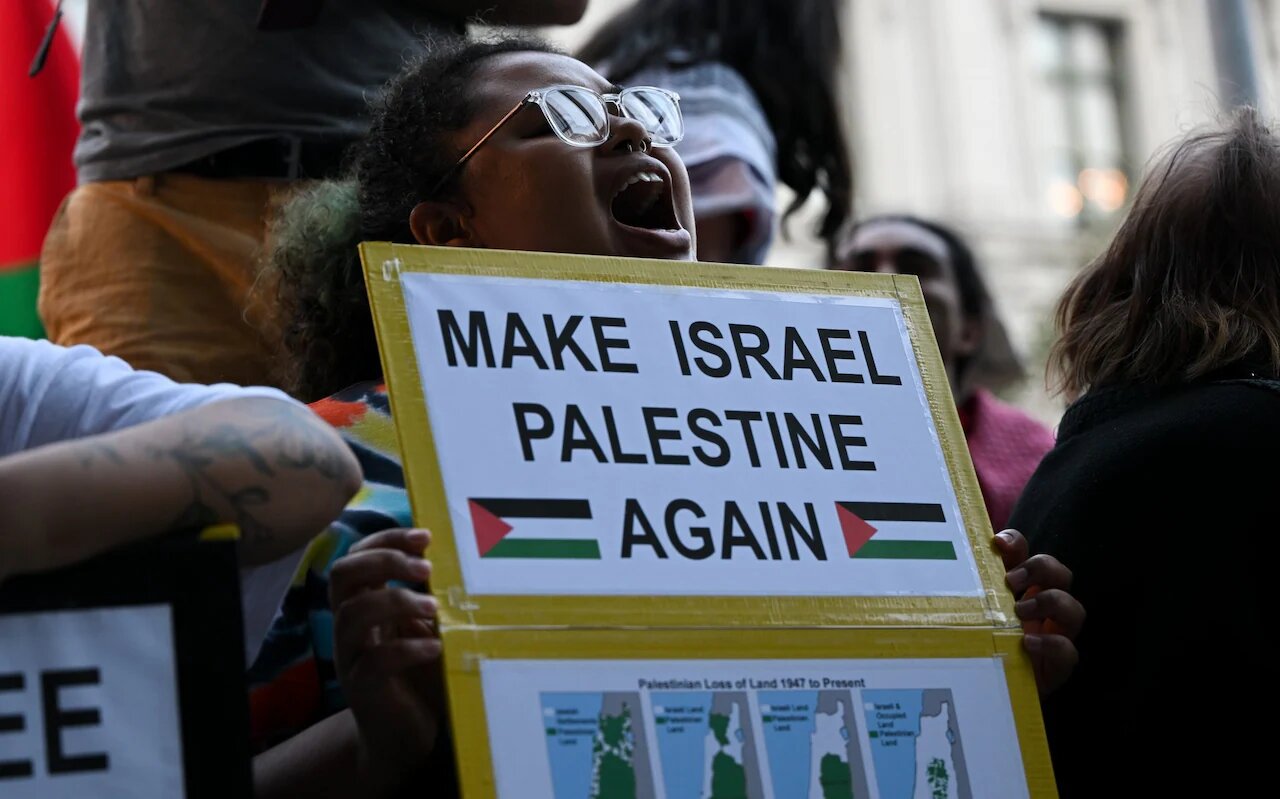
With an agreement to implement the first phase of the Gaza peace plan reached in Sharm el-Sheikh, Egypt, and the first steps to implement that phase already being taken, it is timely to examine the outcome and scale of the bloody Gaza war over the past two years.
This war is not only one of the deadliest humanitarian crises in recent decades. It is also a turning point in the formation of a major change in world opinion and a marked increase in hatred towards Israel.
This transformation primarily stemmed not from a formal national strategy, but from social media, digital activism, and the disintegration of Israel’s traditional propaganda apparatus known as “hasbara.”
For years, the organization, supported by huge budgets, has sought to frame Israeli crimes as “legitimate defense.” But when faced with raw, unmediated images and videos of children being killed, civilian infrastructure destroyed, and Gazans under total siege, Gaza proved to be extremely vulnerable and deeply discredited. The growing global hostility towards Israel is evidence of this reality.
Official statistics and international organizations make the scale of this catastrophe unmistakable. More than 67,000 martyrs and 169,000 injured, shelling of hospitals, schools and refugee camps, and complete cutoff of water, electricity, food and fuel.
In response to that very act, South Africa sued Israel at the International Court of Justice, alleging genocide.
Changes in world opinion confirm this rhetorical orientation toward Israel.
A Pew Research Center 2025 poll found that a majority of Americans in 20 of the 24 countries surveyed had a negative view of Israel, including 93% in Turkey, 80% in Indonesia, 78% in the Netherlands, and 75% in Spain and Sweden. Even in the United States, a long-time strategic ally of Israel, negative opinions rose from 42% in 2022 to 53% in 2025. Among Democrats, the number rises to 69% and to 71% among those under 30.
Young people, especially in Western countries, are bypassing traditional media filters and accessing raw images of war directly, leading them to see Israel not as a victim but as a perpetrator of occupation, racism, and apartheid.
Israeli media coverage similarly clearly confirms this isolation. Yediot Aronos pointed out that two years after the Gaza war, Israel is at the center of a tide of hatred that is deepening due to the development of Operation Iron Sword.
The dispatch of aid convoys to Palestine, such as Sumud, and the wave of recognition of Palestine even among some of Israel’s Western allies, further demonstrate this growing global hostility towards the Zionist regime.
Now that active fighting has ceased, the Zionist regime faces historic isolation in public opinion, diplomacy, and the world political arena. Its isolation, unlike past episodes, is based on an obvious and undeniable reality.
Even Donald Trump, the US president and prime supporter of Prime Minister Netanyahu during the Gaza war, acknowledged this reality and pledged support to the Zionist regime in response.
Source: Sedaye Iran, online newspaper of the office of Islamic revolutionary leader Ayatollah Khamenei, October 10.