
TEHRAN – Tensions between Caracas and Washington are rising as the White House continues to push for regime change in Venezuela.
The United Nations Security Council held an unusual meeting on Friday after a US military attack on a Venezuelan fishing boat in the southern Caribbean claimed 21 lives. United Nations officials warned that the attack could increase tensions in the region and threaten peace.
Russia and China strongly criticized the United States at the meeting. Russia’s U.N. ambassador, Vasily Nebenzia, told the 15-member U.N. Council that “a boat with people on board was simply fired upon in international waters, without a trial or an investigation.” Nebenzia added that this was done “according to the cowboy principle of ‘shoot first,’ and now we are being asked to retroactively believe that there were criminals on board.”
The US invaded under the pretext of drug smuggling. However, Venezuelan authorities view the attack as provocative and a violation of their sovereignty.
Venezuela’s ambassador told the conference that given the U.S. military buildup in the region and Washington’s “belligerent actions and rhetoric,” the country “faces a situation in which it is reasonable to expect an armed attack against Venezuela in the very short term.”
On October 9, Venezuela’s Permanent Representative to the United Nations said in a letter to the Security Council that the “hidden purpose” of US actions continues to be “to advance regime change policies.”
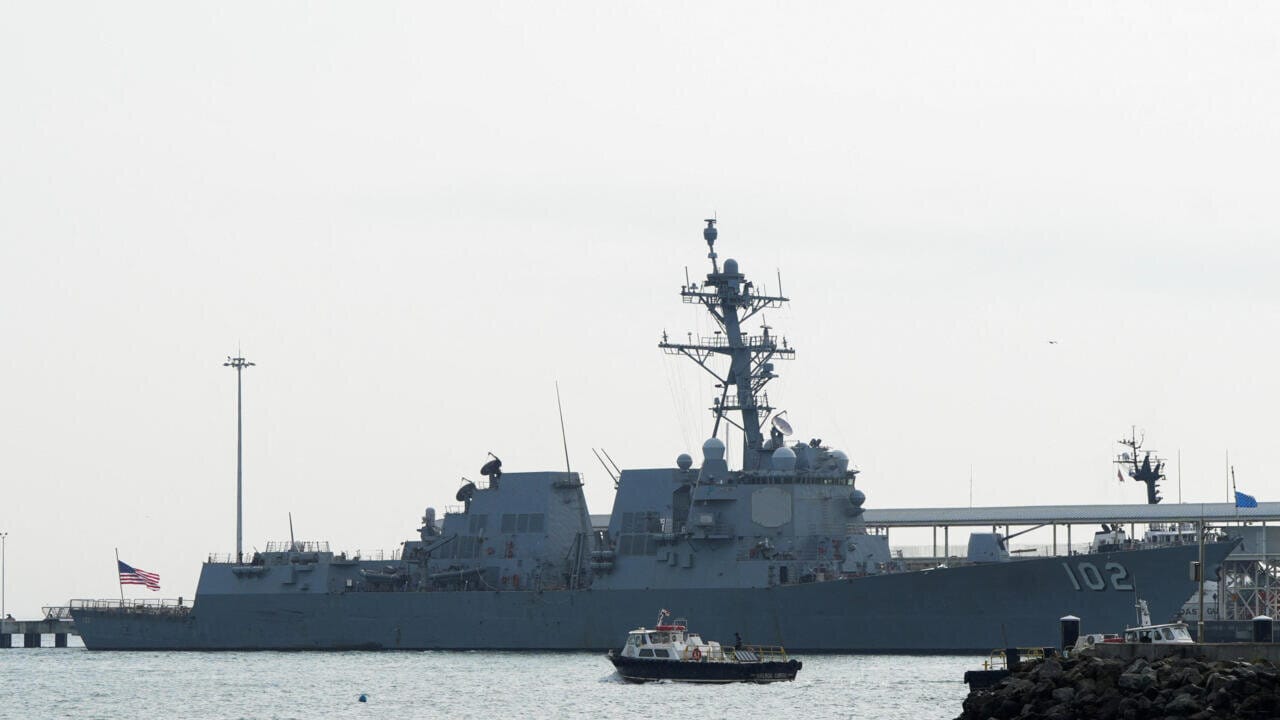
Caracas also reported that U.S. warplanes flew over near the Caracas coast and a fishing boat was seized in Venezuelan waters, while Washington claimed that two Venezuelan military planes flew over a U.S. Navy ship in international waters.
According to the New York Times, President Maduro’s government is trying to open the door to improved relations with the United States, proposing to allow American companies to invest in Venezuela’s oil and other mineral resources, cut energy contracts with Russia, China and Iran, and offer preferential contracts to American companies.
However, US President Donald Trump’s administration rejected the move last week and ended diplomacy, according to the New York Times. Other news outlets have suggested that what the US wants is none other than the removal of Maduro’s government, a complete political takeover under the guise of a “return to democracy.”
Analysts say this proves what many in Latin America already know: Washington’s obsession with Venezuela is not about freedom or human rights. It’s about oil, power, and control. Venezuela has the world’s largest proven oil reserves and a government that refuses to bow to foreign interests.
This is not the first time the United States has attempted to overthrow the Venezuelan government. In addition to the 2002 coup against Hugo Chavez, which U.S. officials openly supported, there was also an attempt during President Trump’s first term. Both Democratic and Republican administrations have waged campaigns of sanctions and economic pressure against Venezuela.
These sanctions have frozen billions of dollars in Venezuela’s assets and hampered its oil industry. They create shortages and inflation, punishing ordinary Venezuelans while Washington blames the crisis on the Maduro regime.
For many Venezuelans, this is nothing new. They recognize patterns that go back decades. Every time a Latin American country asserts independence or nationalizes its resources, Washington tries to bring it back under control.
Despite years of economic pressure and international attacks, President Maduro remains deeply popular among large segments of the population. His supporters believe he has defended Venezuela’s sovereignty, preserved its social programs and stood firm against what they call “imperialist threats.”
Amid the U.S. threat, President Maduro has put the national army and Bolivarian militia, which has 4.5 million members, on high alert and vowed to protect every corner of the country.
Massive demonstrations have filled the streets of Caracas and other cities in recent weeks. Workers, students, and community organizations rallied to defend the Bolivarian Revolution. Their message is clear. Venezuela will not accept the puppet government installed by the United States.
Analysts suggest the United States is likely to continue its intervention and coercive actions amid a military buildup near Venezuela.
President Maduro recently said Venezuelan security forces thwarted a “false flag” plot to plant explosives at the former U.S. embassy in Caracas, which has been closed since 2019, with the aim of provoking a conflict with the United States.
Despite these provocations, millions of Venezuelans regularly flood the streets to show support for their democratically elected president.