
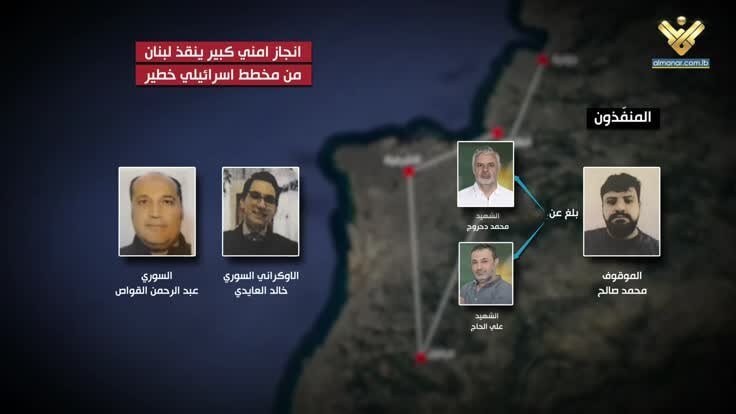
BEIRUT — The General Security Directorate’s announcement regarding the dismantling of a foreign-run spy network operating on behalf of Israel’s enemies was an important step as the challenges facing Lebanon intensify.
The arrest of several members of the network, initially carried out by Hezbollah’s security services, is a turning point from a security perspective and a pre-emptive measure to thwart a terrorist plot that could seriously destabilize internal stability.
The announcement revealed that the terrorist operation will be carried out to commemorate the martyrdom of Hezbollah leaders Saeed Hassan Nasrallah and Saeed Hashem Saffieddin.
What is surprising about the details of the incident is that the network was not just planning the bombings, but had also been involved in past assassinations targeting party officials associated with Islamic organizations.
This reflects the changing nature of Israeli policy, which is no longer just targeting Hezbollah and its military core, but is now encompassing a broader range of Islamic nationalist groups that reject normalization and align with the resistance.
Meanwhile, according to investigative journalist Radwan Mortada, the main detainees (Syrian-Ukrainians) are in the hands of Hezbollah and could be exchanged with Israel for the release of Hezbollah prisoners.
From a security perspective, the revelation of the involvement of transnational elements shows that Israel is moving away from traditional methods in network management and adopting sophisticated recruitment methods.
Espionage is no longer limited to information gathering. It evolved to include direct security operations, assassinations, and bombings.
In other words, the enemy now operates “field weapons” capable of carrying out complex attacks deep in Lebanon.
More seriously, this network was armed with sophisticated equipment, demonstrating the extent of the logistical and intelligence support provided by Israel’s enemies.
This suggests that the Israeli regime intended to change the rules of engagement or impose new facts.
However, the remarkable collaboration between Hezbollah and the General Directorate of Security, the Military, and the Directorate of Intelligence in tracking this spy network demonstrates the high degree of coordination and security capabilities of public authorities.
This security outcome cannot be separated from the local context. Since October 8, 2023, Lebanon has experienced intermittent military tensions on its southern border.
Amid this tension, domestic security violations could have a dual effect, potentially contributing to turning Lebanon against the resistance, or pushing the country into security chaos that would justify a broader invasion.
The repeated dismantling of the spy network (more than 30 arrests in recent months) shows the scale of the enemy’s machinations.
Some 4,700 violations have been recorded since the ceasefire agreement was signed late last year.
If the terrorist plot had been carried out, thousands of people attending the ceremony commemorating the martyrdom of Hezbollah’s two secretary-generals would have been martyred. That would have led to genocide instead of ethnic cleansing of the resistance community!
Unfortunately, however, the complicit government will not leverage this achievement in Lebanon’s interests in front of the international community and its brave envoys.