
TEHRAN – More than two years after the start of a brutal Israeli military operation in the Gaza Strip, a comprehensive report from the Gaza government media office reveals the devastating human, social and infrastructure damage inflicted on the enclave’s residents.
The report covers 735 days of relentless shelling, starvation and deprivation and declares the conflict to be one of the most horrifying genocidal operations in modern history. However, despite the devastating destruction and loss of life, Israel was unable to eradicate Hamas or secure the unconditional release of the hostages, while facing unprecedented international isolation.
The outcome is characterized by untold human costs and diplomatic consequences, and highlights a major strategic miscalculation.
Escalation and military operations
After the October 7 attacks, the conflict escalated rapidly, and Israeli Prime Minister Benjamin Netanyahu declared war goals centered on dismantling Hamas’ military and governance capabilities, recapturing all prisoners, and ensuring Israel’s long-term security.
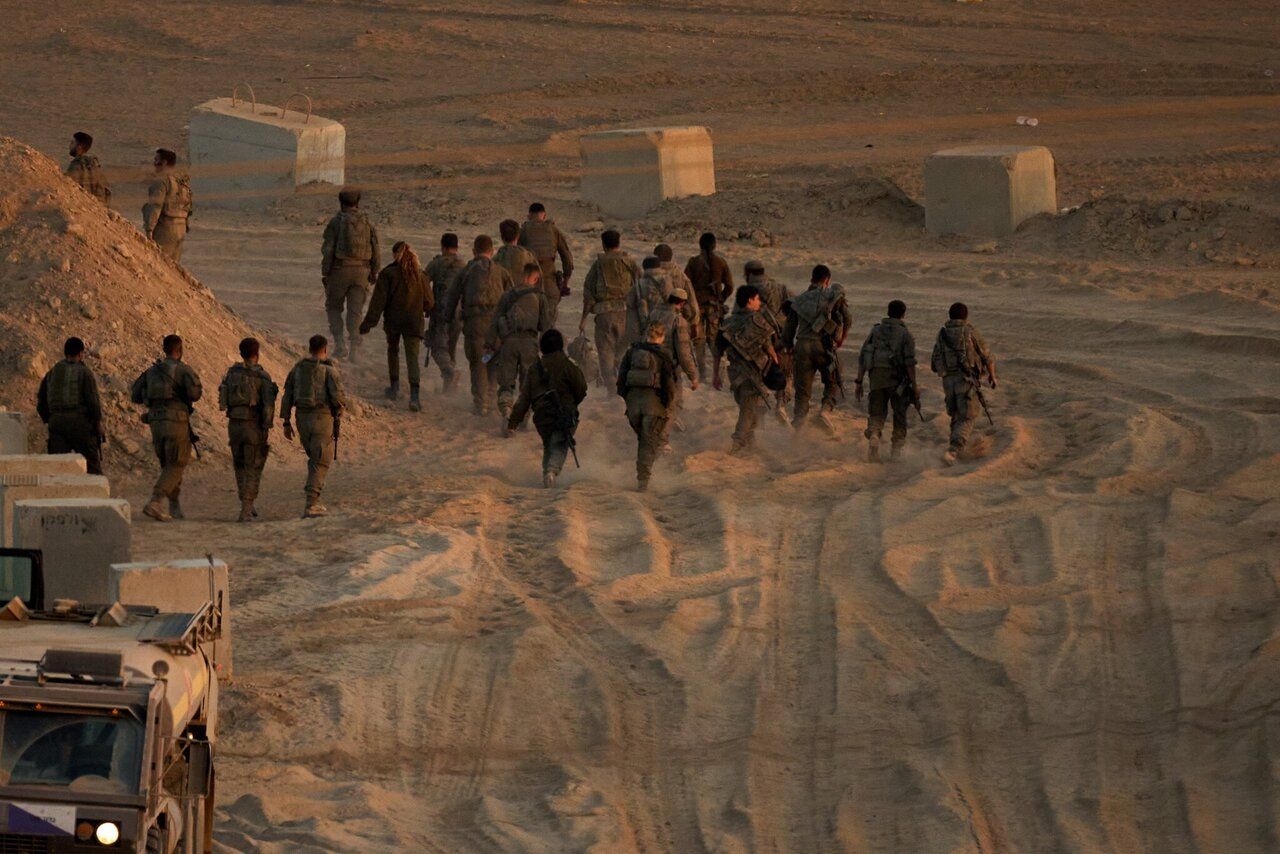
The operation, dubbed the “Iron Sword,” included massive air strikes, ground invasions, and the imposition of severe restrictions on aid and movement. By mid-2024, Israel controlled key areas of the Gaza Strip, including the Philadelphia Corridor along the Egyptian border.
Key events included the invasion of Gaza City in late 2023, more than 150 shellings of designated safe areas such as Al Mawashi, and the closure of crossings for more than 600 days, exacerbating the humanitarian crisis. The war lasted 735 days until a cease-fire agreement was approved on October 9, 2025, facilitating Israel’s partial withdrawal and the release of hostages.
Human and infrastructure strain
The Gaza Media Office’s report details the severe human and infrastructure damage caused by the Israeli operation, noting that more than 150 bombings were carried out in the Al Mawashi area, officially a “safe humanitarian zone,” and more than 200,000 tons of explosives were dropped on Gaza’s 2.3 million residents.
The report states that this was not an accidental but systematic targeting of civilians, resulting in approximately 77,000 deaths or disappearances, including more than 20,000 children, 12,500 women, and 1,000 infants (including 450 newborns). More than 39,000 homes suffered devastating damage, many of them completely destroyed.
The attack claimed the lives of 1,670 medical workers, 254 journalists, 140 civil defense personnel, as well as more than 1,000 police, municipal and humanitarian workers, and injured 170,000 people, including thousands of severe injuries and amputees.
In addition to repeated attacks on ambulances, 38 hospitals, 670 schools, 165 universities, dozens of health centers, and 835 mosques were destroyed, and infrastructure was destroyed. The office stressed that these attacks aim to eradicate the consciousness of the Palestinian people by denying them access to education and health care, underscoring the broader and systemic impact of the campaign.
Civilian infrastructure suffered widespread damage, with 90% of hospitals, schools, and mosques destroyed. These numbers require independent verification by agencies such as the United Nations and humanitarian agencies, but are consistent with assessments by Amnesty International and a United Nations commission that conclude that Israel committed genocide in Gaza.
The failure of expulsion and the resilience of Hamas
Central to Israel’s failure is its unmet goal of forcibly expelling Palestinians from Gaza. Initial plans discussed among Israeli officials and reported by the Associated Press and elsewhere included resettling Palestinians in countries such as South Sudan or concentrating them in concentration camp-like camps in southern Gaza, such as the Rafah ruins.
The UN report emphasized Israel’s intention to seek permanent control and demographic change to establish a Jewish majority in the occupied territories. However, despite capturing more than 80% of the Gaza Strip and evacuating nearly 2 million people to makeshift tents, mass expulsions have not materialized.
These efforts were thwarted by international pressure, including from the International Court of Justice (ICJ), which mandated prevention of genocide, and resistance on the ground. The partial withdrawal of the ceasefire highlights this setback, as Palestinians remain in Gaza as calls for reconstruction continue.
The goal of completely destroying Hamas was similarly not achieved. Israeli authorities claim the group’s military structure will be disbanded by 2025, and former army minister Yoav Gallant said the military had achieved all its objectives. However, ACLED and Al Jazeera analysis shows Hamas has recruited up to 30,000 new fighters and is adapting and maintaining operational capabilities through underground networks.
Far from eradicating it, this campaign inadvertently propelled the Palestinian cause to global prominence. With protests surging in solidarity around the world, from Western cities to Arab capitals, the Sharq Forum pointed to a breakdown in the narrative supporting Palestinian rights and a shift in policy. The globalization of protests stems from media coverage of civilian suffering, amplifying calls for a two-state solution and human rights.
Diplomatic implications and global condemnation
The operation caused deep embarrassment and international condemnation for Israel and damaged its diplomatic standing. Global anger intensified, with CNN reporting widespread dissent on the Gaza border, and UN experts criticizing Western aid amid revelations of genocide.
Diplomatic fallout included isolation at the United Nations, with Pacific islands offering rare support amid widespread condemnation. The ICJ’s provisional measures and Amnesty International’s report treated the incident as consistent with genocide, sparking boycotts and alliance tensions.
“Israel’s fighting methods in Gaza are consistent with the characteristics of genocide,” the UN Special Committee said, highlighting the high number of casualties and life-threatening conditions.
Hamas’ refusal to release prisoners unconditionally further highlights Israel’s setbacks. The release of former prisoners was sporadic through negotiations, culminating in a 2025 cease-fire agreement in which prisoners were exchanged for Palestinian prisoners. Rather than a unilateral surrender, this conditional framework reflects Hamas’s enduring influence despite military pressure.
Taken together, these failures have reshaped regional power relations, strengthened Palestinian mobilization through heightened global awareness, and weakened Israel’s position amid demands for accountability.
The annual report of the United Nations Committee on Palestinian Rights calls for an investigation and reconstruction, and calls for a real ceasefire that addresses the blockade and dignity. As Gaza faces $70 billion in losses and a humanitarian rock bottom, the legacy of the conflict warns of the risk of a protracted war without a viable political outlook.