
TEHRAN – Hannah Arendt’s phrase “banality of evil” describes the frightening everydayness of a system that normalizes atrocities. In October of this year, those words became flesh and blood in Gaza.
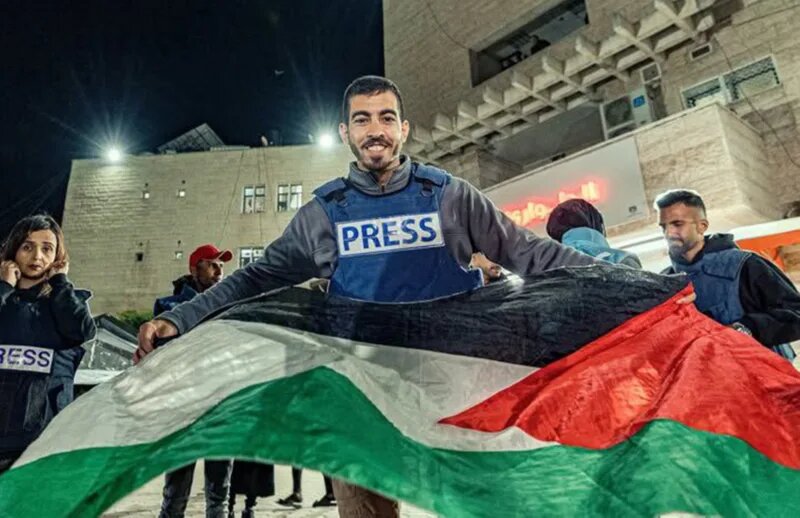
Saleh al-Jahrawi, a 27-year-old freelance journalist who was one of the most visible witnesses in Gaza to Israel’s two-year massacre, was shot dead in Sabra days after the ceasefire.
Reporters said he was wearing a press vest and was killed by members of an Israeli-backed armed militia operating in the Gaza Strip. This is not the roar of artillery fire. This is the soft mechanism that keeps crime functioning when the world temporarily looks away.
Saleh’s life was proof of that. He broadcast from bombed-out areas and hospitals, photographed children during power outages, and translated rubble into names and faces the world could not ignore.
Saleh’s last public words were simple and urgent. It was a thank you to the millions of people who have protested, supported and exacerbated the suffering in Gaza, and a warning that “the military war is over, but many other struggles will be waged in the coming days.”
These lines were not a dirge, but a lesson that the fight for truth and memory does not end even when the bombs slow down. It persists in a silent battle over who will testify, who will survive, and who will be erased.
Its erasure is strategic. The intentional use of proxy militias and networks of collaborators to settle scores, intimidate communities, and silence critics turns atrocities into policies with plausible deniability.
When a regime outsources killings to local proxies, it appears distant while reaping daily benefits such as social division, civilian terror, and the quiet elimination of inconvenient witnesses.
Israel’s own recent admission that it has empowered local actors to undermine Hamas has removed any illusions of anarchy. What may once have been dismissed as confusion is now considered a deliberate tactic.
The regime’s systematic targeting of journalists has reached a point where the numbers themselves are evidence of intent. According to a September report by the Committee to Protect Journalists, at least 235 journalists and media workers have been killed since October 7, 2023, the highest-ever death toll for the press in a modern conflict. This figure includes journalists killed not only in Gaza but also in Yemen, Lebanon and Iran.
In 2024 alone, 85 of the 124 journalists killed around the world were linked to Israel, making it the deadliest year in the commission’s 40-year record.
When those who record atrocities are targeted, the archive of evidence dries up. Impunity has room to grow.
What followed Saleh’s death was a moral perspective for the internet age. The complicit silence of the commercially dominated Western mainstream media echoed with dirges and funeral processions, as screenshots of Israeli users gleefully posting about his murder circulated.
To rejoice in the murder of the 27-year-old Gazan journalist – who was visibly marked with “press” markings and had already survived a two-year genocidal campaign by Israel – is to revel in the erasure of the witness itself. That smiling sight is no coincidence. It exposes the social license to erase, distort, and normalize the intolerable.
That public jubilation is no coincidence. It means social permission to erase, distort, and banalize the intolerable. This kind of dehumanization is not an afterthought. It is a prelude and a justification for exclusion.
We must treat his murder as more than just an isolated tragedy. The legal and moral demands are simple and urgent. An independent international investigation into attacks on journalists. Protection measures for reporters and media workers. and intense scrutiny of a brutal regime that turns ceasefires into seasons of quiet retaliation.
Arendt’s warning was not that evil is always ostentatious, but that evil triumphs whenever ordinary organizations and people fail to notice, name, and act.
Saleh called on the world to stay in Gaza. His last words were both gratitude and instruction. If we believe in the truth, and if we believe in the proposition that a free press is the first line of defense against forgetfulness, then honoring him is more than just mourning. It is about documenting, investigating, protecting and advocating for the dissemination of Saleh’s message.
Otherwise, the lull would not be peaceful at all, but merely a hiatus in which memories are buried and commonplace evil resumes its activities.