
BEIRUT—West Asia is entering a critical phase following the ceasefire agreement in the Gaza Strip brokered by U.S. President Donald Trump. But what appears to be the end of a bloody phase in the Strip opens the door to a very sensitive phase for Lebanon.
While Gaza signed a three-phase cease-fire agreement, Lebanon sent a political and military message that was not without direct threat following heavy Israeli airstrikes in the Musairi-Zahrani area.
Unusually, Lebanon considered the bombing a serious violation of Resolution 1701 and for the first time formally lodged a complaint with the UN Security Council.
This sudden move has two implications, albeit belatedly. First, a belated recognition of the seriousness of the coming stage, and second, an attempt to reaffirm the state’s sovereign role in the face of developments in the sector, led by Israel and blessed by Washington.
On the other hand, Israel’s colonial entity did not wait long after the Gaza ceasefire. He confirmed his intention to use fighter jets rather than drones, raise the threat level, and gradually change the rules of engagement.
According to some observers, what happened in Gaza does not mean the end of the fighting, but rather the preparation for the next conflict: Lebanon.
A dangerous paradox emerges here. The closer Israel gets to a ceasefire with one party, the more it will turn its guns on the new party.
What is even more worrying is that the American and Israeli visions for Lebanon are aligned.
Although President Trump has sought to portray himself as a peace negotiator, he has tacitly supported a “controlled” escalation against Hezbollah as part of a broader strategy to weaken Iranian influence in Lebanon.
This convergence could give Israel wide latitude in southern Lebanon, especially since the White House is focused on other international issues and international sympathy for Beirut is tenuous.
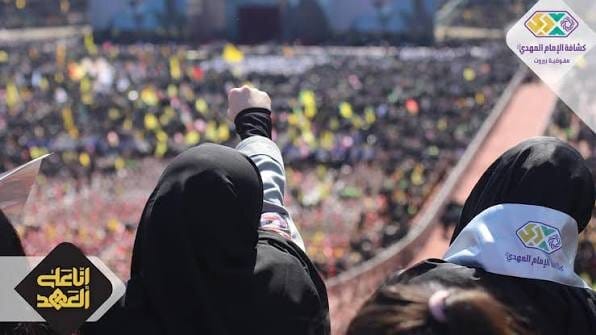
On the other hand, Hezbollah is not sitting idle. The recent large-scale event by Imam Mahdi Scouts was not just a cultural activity, but rather a message of internal and organizational strength, confirming that Hezbollah is still present on the streets and capable of operating despite pressure, sanctions, and blockades. The clearest message was that anyone who thought Hezbollah was finished should reconsider their calculations.
Indeed, it appeared to signal the beginning of a new phase of recovery and preparedness, involving not only the response but also the repositioning of domestic politics and security.
Simultaneous Iranian and Saudi moves in Lebanon open the door to contradictory scenarios.
Tehran, through its security leadership, has sent signals regulating Hezbollah-state relations and confirmed its commitment to an alliance with National Assembly Speaker Nabi Berri.
Meanwhile, Riyadh is encouraging openness on the Lebanese issue, as demonstrated by the Syrian foreign minister’s visit to Beirut.
These moves suggest that although regional parties still see Lebanon as an important strategic arena, they lack a clear vision.
Meanwhile, Lebanon faces two difficult choices. Either it undertakes a conditional and possibly costly regional settlement project, or it prepares for a military conflict that could erupt at any moment in the name of deterring Hezbollah.
In both cases, the Lebanese government faces an existential challenge. Action in the Security Council is a step, but it is not enough.
What is needed is a national plan that strengthens internal unity, regulates relations between the government and the resistance, and prevents internal and external parties from dominating Lebanon’s decision-making.
Lebanon is no longer a neutral zone. Despite being undeclared, it is currently the center of conflict.
There is no doubt that the post-Gaza phase is not a moment of peace, but a moment of transition. Lebanon currently stands between two fires: Israeli escalation and narrow domestic options. The next steps will be crucial in determining the country’s direction for the coming decades.