
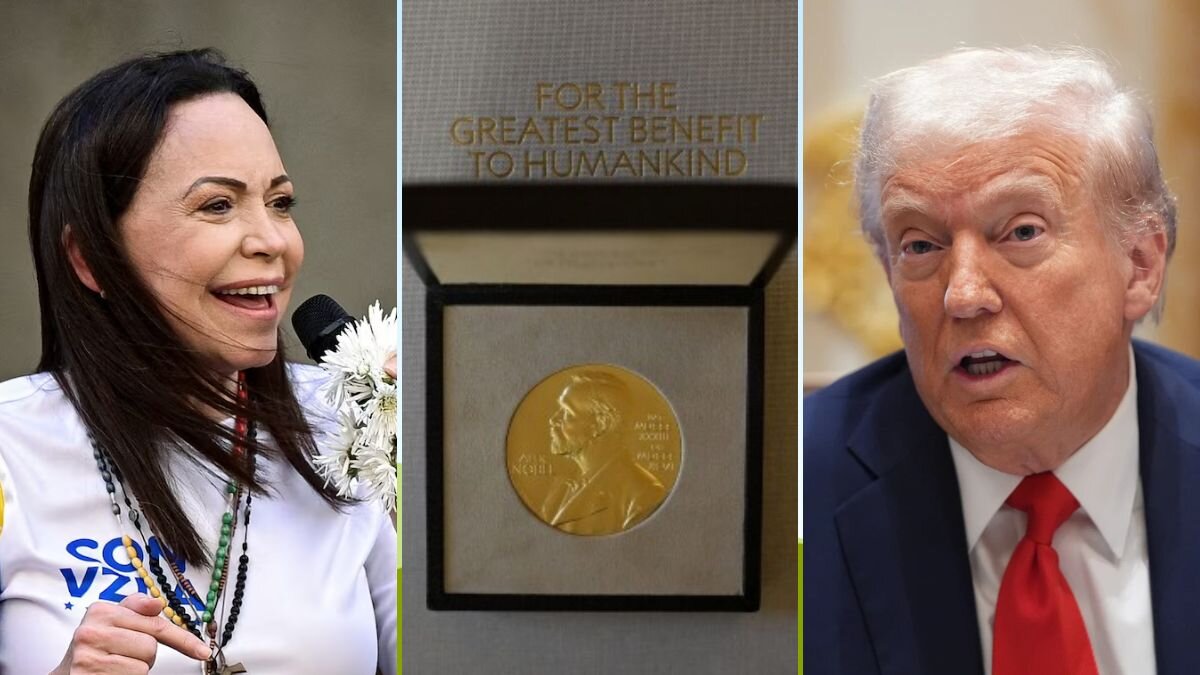
TEHRAN – Established in 1901 under the will of Alfred Nobel, the Nobel Prize was intended to be awarded annually to the “individual or organization who has done the most or the best work for the benefit of humanity” regarding peace. However, the interpretation of that standard has been in the hands of the Norwegian Commission from the beginning, and its decisions have repeatedly sparked controversy, especially in politically sensitive cases.
This history shows that the “peace standard” has never had a clear definition, and that today’s political interpretations of “peace efforts” have stripped the award of its original meaning.
The list of choices, from Aung San Suu Kyi to Shirin Ebadi to the current laureate, Maria Corina Machado, shows that the criteria are increasingly political and power-driven. These choices often justified radical, politicized, and even militaristic actions rather than celebrating true institutionalized peace.
In fact, they have been seeking peace through war, not peace itself! –And such peace can never have any real meaning.
Indeed, if “peace through war” is accepted as meaningful, there is no such thing as human peace or moral peace any more.
There are countless examples of apparent contradictions between the title of “peace” and the actions of those who have received this award.
Born into a prominent Burmese family, Aung San Suu Kyi was long recognized as a symbol of nonviolent resistance in exile and house arrest, and won the Nobel Prize in 1991. But after taking power, her government’s response to violence by military and armed groups in Rakhine state and the Rohingya crisis became the subject of extensive international coverage.
The United Nations Fact-Finding Mission (2018) documented widespread human rights violations and the military’s role in them, a historical stain and a bitter irony for a man once honored as a champion of peace.
Once a symbol of nonviolent struggle, Suu Kyi was later accused of government actions against the Rohingya minority and complicity in state repression. Her record raises fundamental questions. How can we apply the label “peaceful” to individuals and governments who ultimately act weakly or even cooperatively in the face of massive persecution and human rights violations?
Another example is Henry Kissinger, the 1973 Nobel Peace Prize winner, whose selection immediately caused outrage. Critics held him responsible for policies that prolonged the Vietnam War and caused mass civilian casualties. Two members of the Nobel Committee also resigned in protest. This historic incident is cited as a textbook example of the “unusual peace” that undermined the credibility of this award.
Barack Obama is another case. His 2009 award has been described as an “advance award” given for intentions and hopes rather than accomplishments. Many thought it was premature, and his administration’s military and foreign policy performance subsequently drew criticism from those who had expected concrete results. Even by American accounts, his government has overseen the most military operations since George W. Bush, proving that his peaceful rhetoric and real-world actions are deeply contradictory.
Finally, many argue that Shirin Ebadi’s selection was purely political and an opportunistic use of the “peace” label. Critics say her subsequent positions and advocacy of active intervention in Iran align her with advocates of confrontation rather than true examples of nonviolence.
In recent years, Donald Trump’s name has been floated by various individuals and groups as a candidate for the Nobel Peace Prize, a proposition that seemed more ridiculous than serious. The man who could be called the world’s warmaker called himself the “President of Peace.”
Despite persistent efforts by him and his inner circle to brand him as such, the award – now meaningless in itself – remains elusive.
In a world where Mahatma Gandhi once stood as a symbol of peace and nonviolent resistance, we have reached a stage where international arsonists disguise themselves as symbols of peace and hide their atrocities behind the Nobel Peace Prize.
Has the prize, which once symbolized anti-colonialism and nonviolent resistance, become a tool to legitimize today’s geopolitical power games? Historical and contemporary examples alike demonstrate that political interests, national pressures, and strategic calculations have often overshadowed the decisions of the Nobel Committee, leaving the very concept of “peace” empty and lacking truth.