
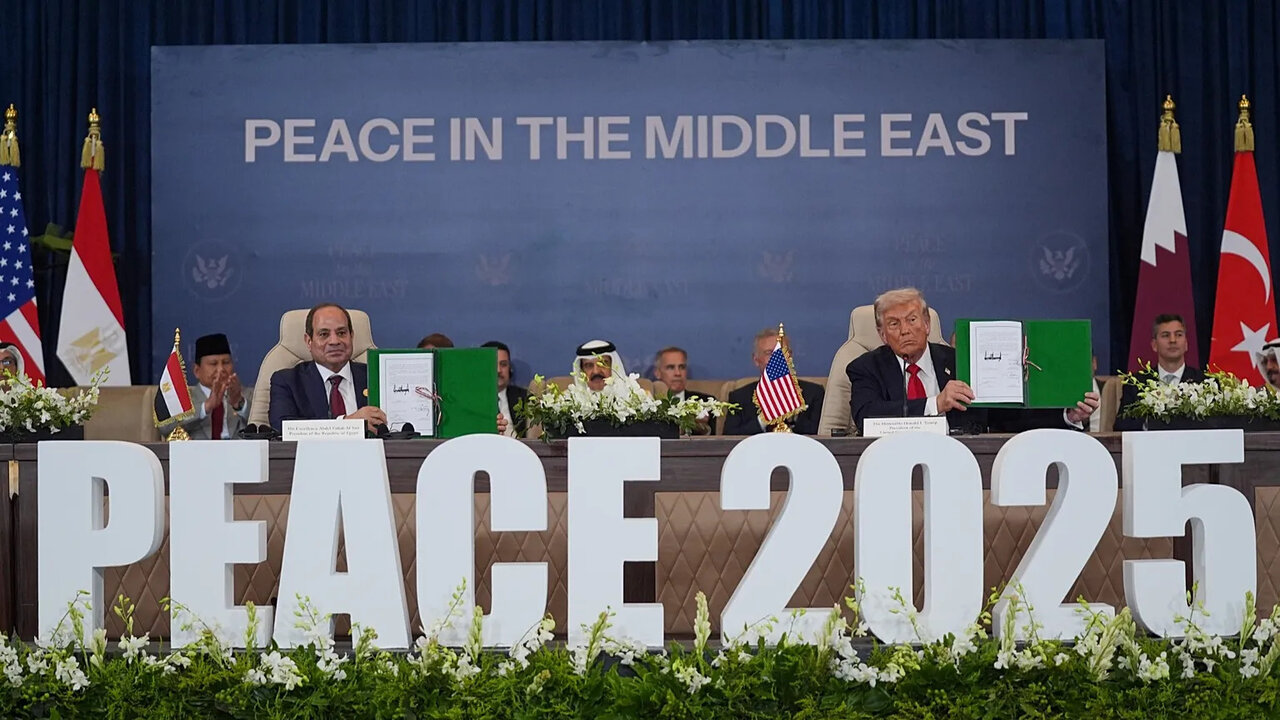
TEHRAN — The October 13 summit in Sharm el-Sheikh, Egypt, unfolded as a staged drama. Leaders posed, ceasefires were called, and promises of recovery were made, but there were also clumsy flattery aimed at President Trump, who blurred diplomacy as theater.
But as the ceremonial confetti subsided, a much louder reality took shape on the ground and in the mouths of experts, rights groups and Palestinian leaders. The agreement treats immediate relief as if it were a substitute for justice, and the gap is dangerous enough to unravel temporary tranquility.
The structure of this agreement rests on three fragile pillars. First, while there are calls for the demilitarization of Palestinian groups, there is a significant lack of concrete and impartial coercive measures.
Diplomats and observers, including Robert Murray, have expressed disbelief that the broader 20-point plan will be implemented as written. They expect only the most immediate measures to be effective.
Expecting asymmetric actors to hand over their weapons without mutual guarantees leads to either perfunctory obedience or the maintenance of covert forces. Both outcomes threaten a return to violence.
Second, it lacks legitimacy. The summit’s carefully staged agreement was reached without either Israel or Hamas attending the signing.
On October 14, Egypt announced a proposed interim government of technocrats. Reportedly, 15 names have already been vetted by Israel and approved by regional mediators. For many Palestinians, this has raised fears of outside control over their political future.
Palestinians and local journalists called the ceremony an “empty choreography.” For this ceremony sidelines the very people whose consent is crucial for lasting peace. The imposition of technocracy, even if it claims neutrality, risks entrenching dependence rather than restoring sovereignty.
Third, responsibility was largely deferred. Human Rights Watch warned that while a ceasefire is essential, it is “not a substitute” for action on aid, justice, and lasting political change.
For many Palestinians, a ceasefire that does not explicitly lift the blockade, guarantee rights, or open a credible path to accountability amounts to a moratorium on maintaining structures of control.
Israeli forces violated the armistice agreement on October 14, killing nine Palestinians in the Gaza Strip and setting fire to homes and stores during their retreat. There are growing concerns that a “ceasefire” does not provide real security.
These structural questions lead to grim scenarios. If optimism prevails, phased implementation could result in limited recovery and a fragile political transition, although this is unlikely without robust UN verification and the political will of the great powers.
More likely, a temporary lull would be followed by a prolonged stalemate. Reconstruction is progressing slowly, the struggle for governance has stalled, and the Palestinians remain under limited sovereignty.
Israel has also stepped up its siege, blocking aid and keeping Rafah closed until Hamas returns the bodies of prisoners, even though many have died in Israeli airstrikes and are buried under rubble. For Palestinians, this signals continued collective punishment under the guise of a ceasefire.
Tragically, the worst possible case is that the collapse returns to full-scale hostilities, with Gaza’s civilian population once again bearing the highest human costs.
The voices of Gaza and its defenders see this for what it is. That is, emergency humanitarian aid wrapped in a diplomatic package that circumvents the structural remedies demanded by the Palestinians.
Without addressing occupation, responsibility, control of borders and resources, as historian Rashid Khalidi and leading journalists have argued, Sharm el-Sheikh risks being remembered not as the beginning of justice, but as a new interlude, a pause to readjust the apparatus of dispossession.
If the world is to truly break this cycle, it must treat the ceasefire not as a settlement but as a foundation for enforceable rights, including an independent inquiry, unconditional humanitarian access, and a political horizon that recognizes Palestinian self-determination.
Otherwise, the summit’s applause will only echo over the rubble and anxiety, and the people of Gaza will be left asking themselves whether the brief respite was a relief or just the calm before a new storm.