
BEIRUT – A financial blockade has intensified in Lebanon for weeks after local money transfer company WishMoney closed the accounts of groups and activists supporting reconstruction projects.
At first glance, the move appeared to be technological or banking-related, but it soon became clear that it was part of a broader context, part of a system of economic and security restrictions aimed at thwarting civilian or local efforts to restore life in areas devastated by Israel’s September-October 2024 assault on Lebanon, which continues to a lesser extent.
Since the signing of the cease-fire agreement last year, the southern region has been transformed into a site of large-scale civil society efforts led by villagers and local organizations to make up for the lack of state and international aid.
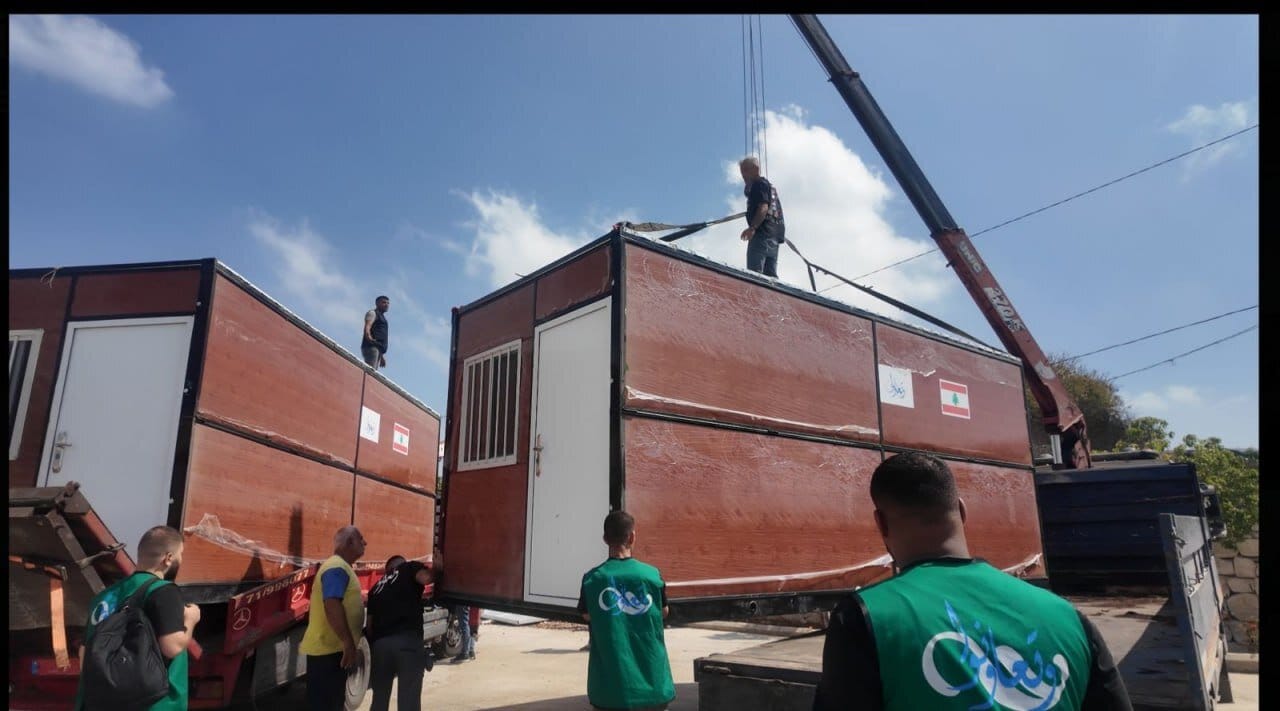
A modest but effective effort has begun, relying on domestic donations and remittances from expatriates, to provide shelter, education and basic needs to families who have lost their homes and livelihoods.
However, these volunteer efforts soon faced a series of organizational obstacles, starting with assassinations of engineers and threats against activists participating in reconstruction efforts, and ending with the cutoff of community funding through local financial platforms.
The closure of the Whish Money account was not an isolated incident. Rather, it coincided with a series of Western and US measures and pressures on Lebanon aimed at sealing off the resistance environment and blocking the flow of funds to border areas.
Lamia City Councilor Hussein Saleh’s account was closed based on Circular No. 170 issued by Free Bank, which questions the nature of the relationship between the bank’s internal decisions and external instructions by international financial institutions.
It was later revealed that dozens of other accounts belonging to relief groups and local associations had been shut down, sparking a wave of anger among southerners who saw the measures as a new form of collective punishment.
Wa Taawano Cooperative expressed regret over the closure of the donation account and said it had submitted all the necessary legal documents to reopen it, but the company insisted on the closure without any clear reason.
The volunteer association, which played a central role in restoring damaged homes and setting up temporary education centers, considered the move part of “a series of actions aimed at suspending recovery efforts and supporting residents.”
The association said the move signified a dangerous alignment by Lebanese companies with international and Israeli policies aimed at “suffocating the south economically and humanitarianly.”
In practice, this decision led to an almost complete paralysis of civil society funding, with associations relying on quick transfers via Whish Money as an alternative to the unstable banking system.
The closure of these funding channels prevents donors from providing assistance and reduces the association’s ability to implement important projects.
This has left southern villages empty once again, with residents unable to rebuild their homes or secure the most basic necessities of daily life.
Legally, most observers agree that what is happening is more than a technical or legal issue.
The account closures are merely an additional pressure measure in the broader context of an economic war waged by external powers against Lebanon, targeting specific communities seeking to resist the ongoing US-led invasion of Israel.
Although military attacks have been limited, the financial war continues in a more complex and quieter manner, using Lebanon’s economic and banking tools to achieve its external political goals.
However, the Lebanese experience shows that civil society alternatives can adapt, as the Wa Taawano cooperative announced it would open a new account in Qad al-Hassan to continue receiving donations.
Despite intense pressure, this civic steadfastness reflects the steadfast determination of the people of the South to stand against all forms of blockade. Despite banking regulations, they remain determined to rebuild what was destroyed.
It is clear that the settlement is just another chapter in the policy of prohibition and blockade, the purpose of which is to prevent the South from being rebuilt on other than foreign terms.
Nevertheless, experience confirms that when the will of the people is combined with civil unity, any siege, whether economic or military, can be broken.