
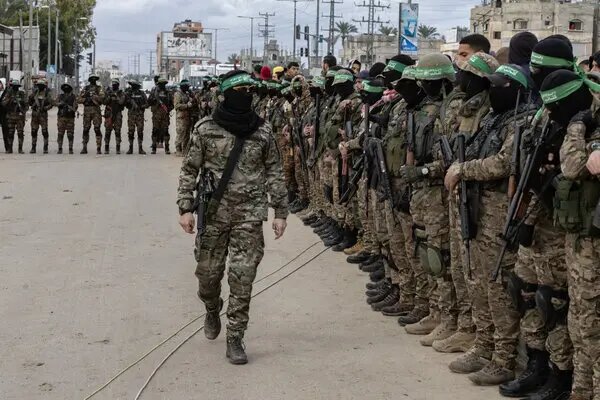
TEHRAN – More than a week after the October 10 ceasefire, the Gaza Strip remains under military pressure and Palestinians are under serious threat from Israel’s ongoing operations. Israeli forces have partially withdrawn from some residential areas in central Gaza, but local armed groups aligned with Israel’s Shin Bet security agency continue to target resistance fighters and civilians alike. These actions undermine prospects for durable peace and highlight Israel’s continued efforts to destabilize Gaza from within.
Historically, such groups have been accused of collaborating with Israel and disrupting Gaza’s internal security. According to the report, they participated in assassinating resistance commanders, infiltrating communities, and sowing chaos through a two-year war in the Israeli enclave. Over the past week, Hamas security forces have confronted these armed collaborators, resulting in dozens of deaths on both sides.
Gaza’s Interior Ministry has identified the Domush clan’s “outlaw gang” as responsible for attacks on resistance fighters following the ceasefire. Israel has a long history of supporting local militias as a means of weakening organized resistance and undermining Hamas’s rule.
These groups include the People’s Army, led by Yasser Abu Shabaab of the Tarabin Bedouin tribe. Israel has accused Hamas of stealing humanitarian aid, but investigations have found that the People’s Army was involved in looting and selling food meant for civilians. Clashes between Hamas and the People’s Army have been repeatedly reported since September 2024, with Hamas accusing it of collusion with Israeli forces.
Another key figure in the network is Hussam al-Astar, a former Palestinian Authority security official previously accused of collaborating with Israel in the 1990s, according to Al Jazeera. Al-Astar leads a group calling itself the “Strike Forces Against Terrorism,” which reportedly works with the People’s Army and has clashed with Hamas in recent weeks.
Israel’s dependence on these proxies highlights the limits of its military and political strategy in Gaza. Despite two years of conflict, Hamas maintains control of key areas, demonstrating the resilience of Palestinian resistance. Unable to defeat Hamas through direct military action, Israel has increasingly relied on militias to create division, weaken organized resistance, and undermine governance. Rather than being a show of strength, this strategy reflects strategic dissatisfaction and recognition of Hamas’s continued presence.
Approximately 68,000 Palestinians have lost their lives since the conflict began on October 7, 2023, underscoring the scale of the devastation and heavy human cost of Israeli operations.
The humanitarian situation remains dire. A week after the ceasefire, Palestinians in Gaza still face severe shortages of food, water and essential medical supplies. Restrictions imposed by Israel continue to impede the delivery of aid in violation of the ceasefire agreement, exacerbating civilian suffering. The World Food Program reports delivering around 560 tonnes of food per day since the ceasefire, far below what is needed. “We are still below the required level, but we are on track to reach our goals…The ceasefire has opened a narrow window of opportunity and WFP is moving quickly to scale up assistance,” Spokesman Abeer Etefa said. The agency claims it has enough supplies to feed all of Gaza for three months, but access remains severely restricted.
Despite the ceasefire, military operations continue. Al Jazeera reported on October 25 that Israeli forces shelled the Shujaiyah area in northern Gaza, killing three Palestinians the previous day and at least 20 people since the start of the ceasefire. Israeli authorities have drawn a “yellow line” to mark the withdrawal boundary, and military commander Yisrael Katz has warned that live fire will be fired if the line is crossed. Even before the line was fully marked, several Palestinians were shot nearby. Israeli forces continue to control about 60 percent of the Gaza Strip.
For many Palestinians, the ceasefire has done little to alleviate suffering. For Hamas and other resistance groups, Israel’s dependence on collaborators and proxies is not a sign of strength, but rather a sign of military exhaustion and strategic failure in the face of resilient and organized Palestinian resistance.