
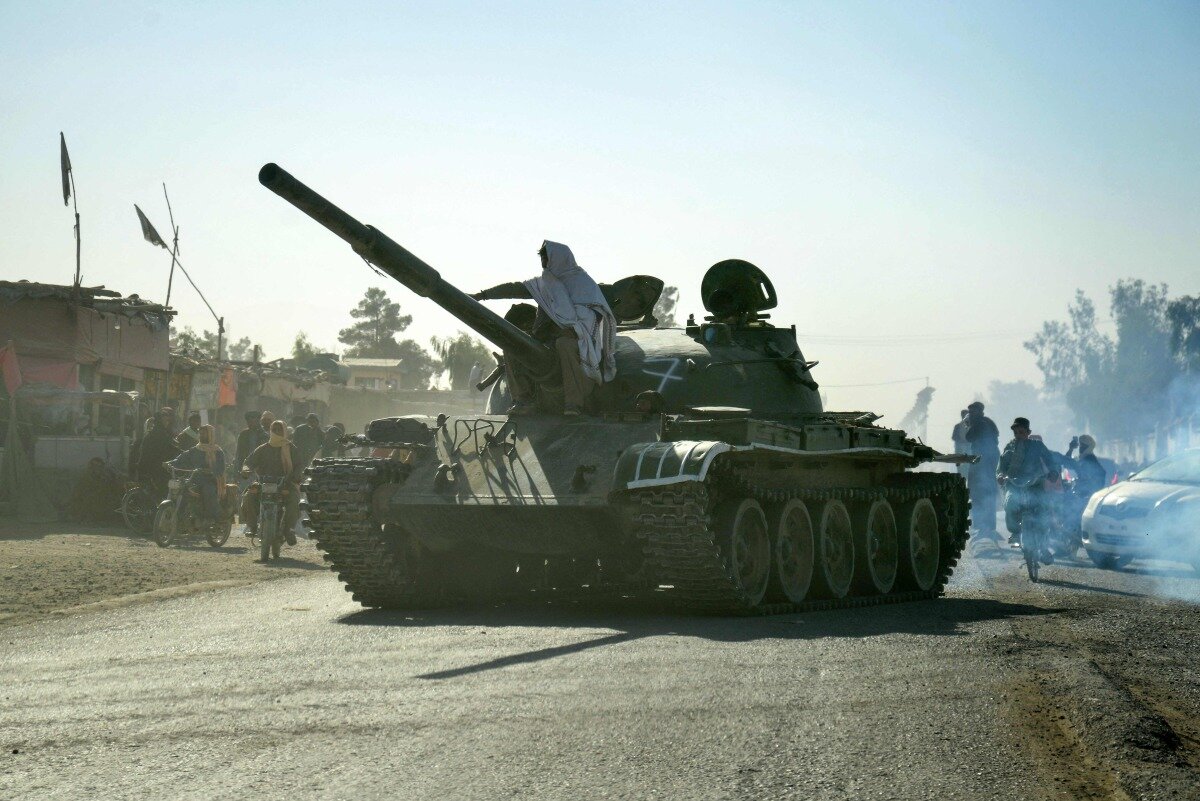
TEHRAN – Recent border clashes between Pakistan and Afghanistan highlight the fragility of South Asia’s security environment.
The conflict reflects broader global strategic dynamics and highlights different approaches to regional crises. One approach relies on military operations and strategic opportunism. The other emphasizes diplomacy, economic cooperation, and long-term stability.
fishing in rough waters
The clash coincides with increased U.S. attention on Bagram Air Base as President Donald Trump calls for a reinstated military presence. This marks a repeat of the US strategy of exploiting instability to justify intervention in the name of counter-terrorism.
The legacy of two decades of US involvement in Afghanistan remains significant. Weak institutions, a weak economy, and persistent insecurity continue to plague the country. The current border crisis may be partially due to these structural weaknesses. By prioritizing short-term strategic interests, the US approach risks perpetuating cycles of instability. Regionally, this strategy could exacerbate mistrust between neighboring countries and contribute to South Asia’s security dilemma.
diplomacy and economic integration
China’s approach contrasts sharply with that of the United States. The Chinese government has consistently called for restraint and dialogue, welcomed a ceasefire, and promoted tripartite talks with Pakistan and Afghanistan. These efforts aim to strengthen political trust and maintain bilateral and regional cooperation.
Recent trilateral talks highlight China’s active mediating role. At the 6th China-Afghanistan-Pakistan Foreign Relations Talks held in Kabul in August 2025, Chinese Foreign Minister Wang Yi, Afghan Foreign Minister Amir Khan al-Muttaqi, and Pakistani Foreign Minister Mohammad Ishaq Dar reaffirmed their determination to promote peace, stability and shared prosperity in the region. Mr. Wang emphasized expanding development cooperation, promoting trade and investment, improving connectivity infrastructure, and deepening security cooperation to fight cross-border terrorism.

Chinese Foreign Minister Wang Yi, Pakistani Foreign Minister Mohammad Ishaq Dar, and Afghanistan’s Deputy Foreign Minister Amir Khan Muttaqi held informal talks in Beijing on May 21, 2025. (Photo/Xinhua)
Prior to this, in Beijing in May 2025, the three countries agreed to promote Belt and Road cooperation by extending the China-Pakistan Economic Corridor (CPEC) to Afghanistan. Ministers emphasized the potential of the trilateral mechanism to strengthen mutually beneficial relationships, strengthen connectivity and promote economic development. China also pledged support for the normalization of diplomatic relations in Afghanistan and advocated regional cooperation free from external interference.
Economic integration is central to China’s strategy. Beijing is seeking to address structural drivers of instability, including poverty and exclusion, by turning Afghanistan into a hub of regional connectivity. That model prioritizes long-term stability over immediate strategic advantage. China reduces incentives for escalation of conflict by promoting common economic interests and encourages political engagement as a means of maintaining regional order.
Impact on regional stability
The different approaches between the United States and China have significant implications for South Asia. The US government’s military-first model risks entrenching insecurity and fostering dependence on outside forces. It could cause friction between regional actors and undermine prospects for a cooperative security agreement.
China’s strategy emphasizes long-term stability through economic interdependence, dialogue, and trilateral cooperation. Success could create a framework for sustainable peace and development across Afghanistan, Pakistan, and neighboring countries. Economic integration can act as a stabilizing force, fostering cooperative problem-solving and reducing the attractiveness of extremist activities.
global power relations
The Pakistan-Afghanistan border conflict also reflects broader geopolitical competition. US intervention, characterized by strategic opportunism, is consistent with the traditional power projection model. China’s approach exemplifies influence through infrastructure and development-driven diplomacy. The contrast between military-first and development-first paradigms highlights competing visions for shaping regional order.
The outcome of these approaches will shape Afghanistan’s trajectory, influence regional security architecture, and redefine patterns of global engagement with South Asia. Durable peace depends on whether dialogue and joint development can outweigh militarization strategies rooted in opportunism.