
TEHRAN – “Israel won everything by force. You won. So you won.”
When Donald Trump spoke these words in Congress on October 8, the room was filled with the performative applause of a society willing to believe something it knew was a lie. The faces behind the applause told a different story: exhaustion, disbelief, and even fear.
The line “You win” signaled the end. It sounded more like a denial.
But did Israel win militarily, politically, or morally? Although they have been forced to wear a mask of victory, the reality on the ground and in the halls of power tells a completely different story.
Undoubtedly, Israel has wreaked havoc on Gaza, with infrastructure leveled, hospitals destroyed, hundreds of thousands of people displaced, and more than 68,000 people killed, including at least 20,000 children, but the ultimate goal pursued by many in power – the near-total disappearance of Gaza as a political and social entity – has not been achieved.
The Palestinian population persists, Hamas maintains access to arms and influence, and governance networks continue to function. Genocide is not a victory. It’s proof that the campaign is incomplete, morally empty, and politically unstable.
The ceasefire, imposed under overwhelming international pressure, failed to secure Israel’s intended final state.
Despite mass displacement, crumbling infrastructure, and famine, Hamas has not been dismantled, nor have its clan networks and tunnel systems been eradicated. Despite the destruction of the military operation, it has not achieved its political objective of emptying and pacifying Gaza. What remains is a devastated enclave, a resilient population, and a continued armed and political presence of Hamas, the exact opposite of the “victory” declared in the chamber.
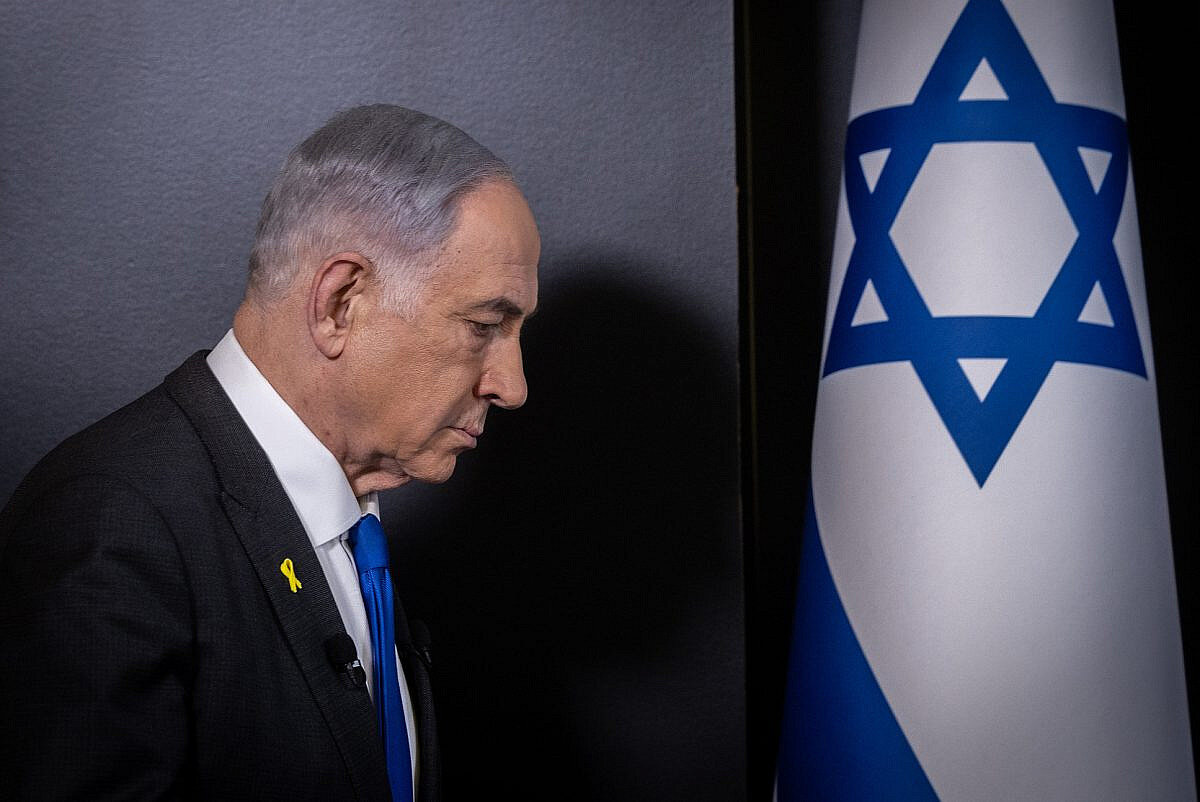
Domestically, the impact is profound. Prime Minister Benjamin Netanyahu’s coalition government, united by extremist ambition and political arithmetic, is under stress.
Far-right partners have lashed out at what they see as concessions, ultra-Orthodox parties have threatened to defect over the draft law and social compact, and opinion polls show growing public demand for elections and accountability.
The economy is reeling from market instability, and aid agencies have suspended operations due to bureaucratic delays. Stories of military success are now paralleled by legal and political vulnerabilities.
Internationally, the pressure is even more acute. The International Criminal Court’s arrest warrants for Mr. Netanyahu and Yoav Gallant, combined with the findings of the United Nations commission’s genocide investigation, have placed Israel under unprecedented legal scrutiny.
This is not just symbolic. It would constrain diplomacy, jeopardize partnerships with intelligence agencies, and impose conditions on allies to cooperate.
The project to normalize diplomatic relations with so-called Islamic countries has lost momentum, and the countries promoting it will be burdened with the devastation of Gaza.
As European governments, including France, the United Kingdom, and Belgium, successively formally recognize Palestine at the United Nations and in bilateral forums, Israel’s image among young Westerners is changing from a beleaguered entity to a global outcast.
The strategic contradictions in Prime Minister Netanyahu’s doctrine are clear. The more he uses force to secure his authority, the more his vulnerability deepens.
Each bombing campaign raised legal and ethical ramifications. Each military “success” deepened its diplomatic isolation. Policies designed to ensure survival instead fostered the conditions for political, legal, and moral considerations.
Now, the guns have temporarily fallen silent, and despite Israel’s repeated violations of the October cease-fire, it is being cast not as a victory but as a step towards Netanyahu’s reckoning.
Domestic anger over the October 7 failure is growing, protests have expanded beyond past judicial unrest, and ICC and ICJ oversight ensure that the effects of the war will continue long after the gunfire has died down.
Diplomatically isolated and politically cornered, Prime Minister Netanyahu’s so-called victory produced uncontrollable destruction and left a legacy marked by a collapsed regime, the continued existence of Hamas, and moral and institutional erosion.
History is unlikely to remember this as a strength, but as a leadership that fell from the very power it used to sustain itself.