
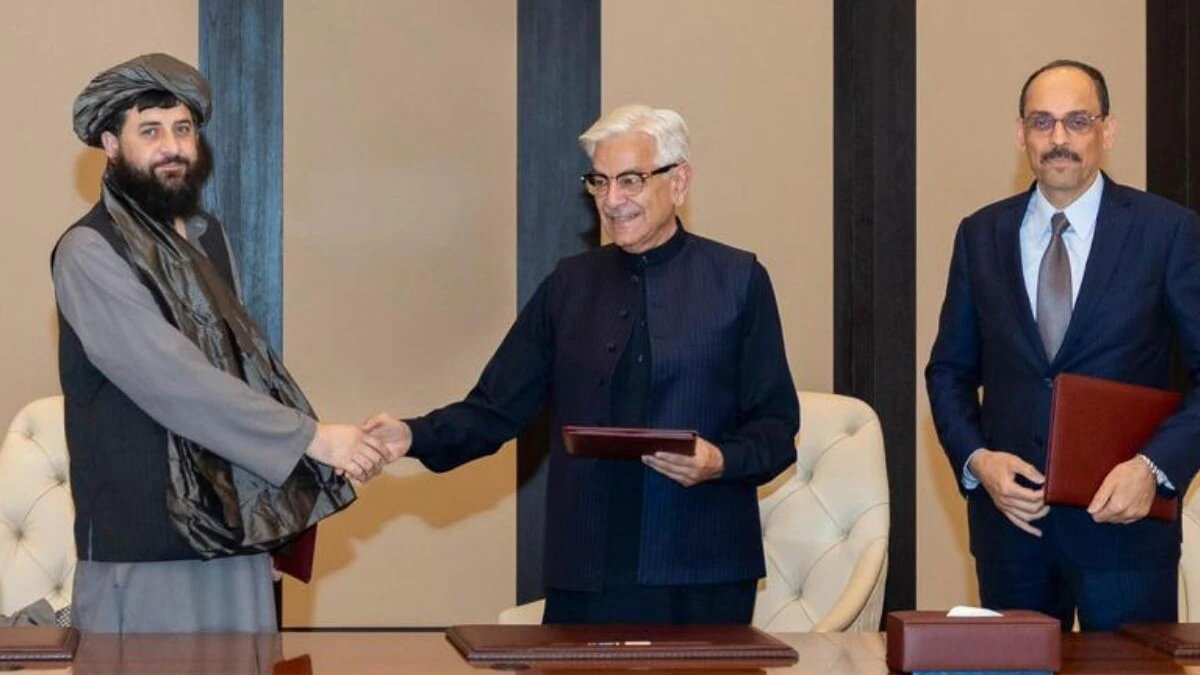
Pakistan and Taliban-controlled Afghanistan announced an immediate ceasefire on Sunday after emergency talks brokered by Qatar and Turkey, a move aimed at halting the worst cross-border fighting since the Taliban seized power in 2021.
The delegation, led by Pakistan’s Defense Minister Khawaja Muhammad Asif and Afghanistan’s Defense Secretary Mullah Muhammad Yaqoub, agreed not to target each other’s troops, civilians or critical infrastructure, and to meet again in Istanbul on October 25 to strengthen verification measures.
The ceasefire follows a week of exchanges sparked by Islamabad’s attack on a suspected militant camp and Taliban retaliatory attacks along the disputed Durand Line. Afghan officials and the United Nations have reported dozens of civilian deaths and hundreds injured, and are calling for urgent protection for non-combatants.
Both framed violence through competing narratives. Pakistan said it had attacked “confirmed” militant positions used by groups such as the Pakistani Taliban and repelled attacks during the ceasefire period. The Taliban have insisted that they will not use Afghanistan to attack Pakistan, while accusing Islamabad of attacking civilian areas. Both statements were reflected in the Doha negotiations.
The human and cultural impact of this conflict was enormous. The Afghanistan Cricket Board said three of its players were killed in Paktika province and the national team was withdrawn from three consecutive games scheduled in Pakistan, symbolizing how deeply the clashes have caused a rift in relations.
Analysts warn that the latest ceasefire addresses symptoms rather than the root problems, including a porous 1,600-mile frontier, decades of mutual distrust and cross-border extremist networks.
The Doha agreement provides some breathing room, but without sustained and verifiable measures against armed groups and border controls, the ceasefire may only be a pause until the next flare-up.