
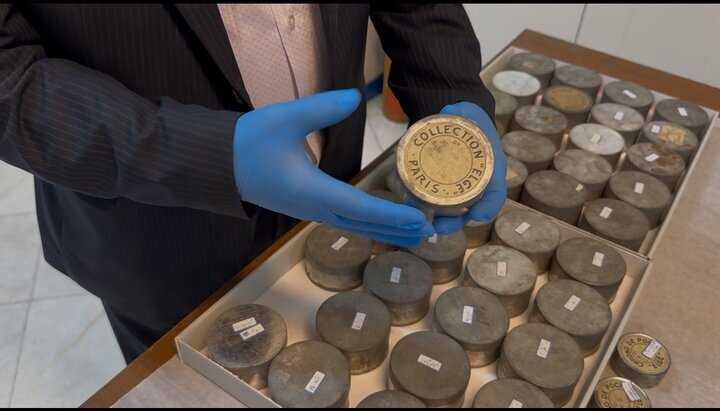
[TEHRAN]A total of 31 film reels from the Qajar Dynasty have been discovered in the UNESCO-designated Golestan Palace in central Tehran.
Officials say the films are likely to be some of the first footage shot in Iranian history and even the beginning of Iranian cinema.
According to Mehr News Agency, Afarin Emami, director of the Golestan Palace World Heritage Site, said that while organizing and preserving the collection of the Album Khaneh (Album House) and examining boxes of film reels from a collection called raw films recorded in the past, 31 film reels containing images from the Qajar period were identified.
She said these works included 28 reels of 35mm film and three reels of 16mm film, which were identified by experts and the custodian of the Golestan Palace Album House.
Emami added that more time and specialized research is needed to accurately identify and investigate the content of these films.
She emphasized the importance of these historical works, saying, “In addition to the films of the Mozaffari era, these films can provide researchers and enthusiasts with valuable new information about the Qajar period and understanding of the atmosphere at that time, and may even influence the way we view the early history of Iranian cinema.”
Based on this news, the Golestan Palace Album House houses more than 61,000 historical relics, including Qajar Dynasty cameras and films, photo albums, photographs, paintings, glass negatives, and other related works. This collection is considered the second most important album house in the world.
The Royal Album House displays 1,040 old photo albums taken by famous photographers from the Qajar period and more than 4,000 single photographs of various sizes, making it a treasure trove of rare and rich documents about the history and society of Iran and the world from the 18th to the 19th century AD.
The Album House is considered the second oldest photographic treasure trove after the Royal Museums Album House, and is considered one of the best sources for historical research of the period. In fact, this organization was founded on the basis of the records of Nasser al-Din Shah and Mozaffar al-Din Shah during their European travels in large cities in Iran and abroad.
KD