
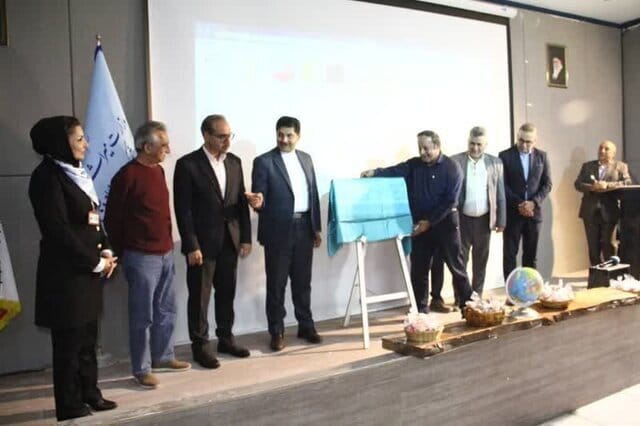
TEHRAN – A number of officials and tourist guides in Fars province on Sunday unveiled a plaque marking the world registration of the ancient Mehregan festival held in Persepolis.
Farideh Asadi, Chairman of the Association of Professional Tourist Guides in Fars, announced the event held at the World Heritage Site Persepolis, which was attended by around 200 tourist guides and officials from the government and private sector.
The Mehregan festival was jointly inscribed by Iran and Tajikistan on the UNESCO list of intangible cultural heritage in December 2024 at the 19th Intergovernmental Commission held in Paraguay.
“This historic event provides a unique opportunity for tourist guides to introduce to the world their important role in transmitting culture and preserving the country’s intangible heritage,” Asadi said.
Mr. Asadi also said that tourist guides are the guardians of Iran’s identity and rich culture, highlighting their commitment to transmitting these traditions to future generations. She said Mehregan symbolizes the unity of Iran’s ethnic groups and the preservation of ancient customs.
Also known as the Festival of Mer, this festival celebrates the Autumn Equinox and Harvest Thanksgiving. It has its roots in the Zoroastrian tradition and celebrates Mer, the god of friendship, peace and solidarity.
In Iran, Mergan is primarily celebrated within the Zoroastrian community, but also in local Muslim rituals. The festival includes various rituals such as the reading of Zoroastrian scriptures, the setting of traditional tablecloths decorated with seasonal foods, and the preparation of special dishes. Music, local wrestling and communal banquets are essential elements of the celebration. Although the festival is less common in urban areas, it is still important in certain regions such as northern Iran and Zoroastrian communities such as Yazd, Fars, and Tehran.
In Tajikistan, Mergan is celebrated as a post-harvest thanksgiving festival, emphasizing shared customs such as feasting, music, and community gatherings. Farmers and gardeners are the main participants, reflecting the festival’s agricultural roots. The event is also an important occasion for social cohesion, bringing together people of all ages, genders and backgrounds and promoting mutual respect and solidarity.
morning