
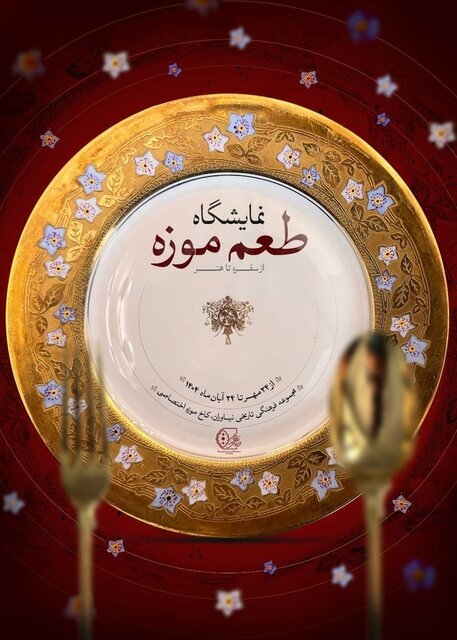
TEHRAN – A month-long exhibition titled “Taste of the Museum, From Table to Art” is currently being held at the Niavaran Cultural and Historical Complex in northern Tehran.
The event, which will be held from October 16th to November 15th, will display historical and cultural artifacts related to Iranian food and eating habits during the Pahlavi era.
On display are vessels, utensils, and items representing traditional Iranian and Western dining and hospitality practices. The exhibit also includes an oil painting from the Qajar period titled “The Cook.”
The event also commemorates World Food Day, which was established in 1945 by the Food and Agriculture Organization of the United Nations (FAO), Nyabaran officials said.
The exhibition aims to tell the historical and social aspects of Iranian food, tracing its evolution from the royal palace to everyday life. It also focuses on the relationship between tradition and modernity and explores the role of food in shaping national identity and culture.
Covering approximately 11 hectares in northern Tehran, the Niavaran Cultural and Historical Complex consists of several landmark buildings and museums dating back to the 19th and 20th centuries during the late Qajar and Pahlavi dynasties.
The history of this palace complex dates back approximately 280 years, when Fat Ali Shah of the Qajar dynasty ordered the construction of a summer palace in the countryside of the then capital. The two-storey Ahmad Shahi Pavilion is one of the highlights of the complex. The 9,000 square meter palace complex is decorated throughout with magnificent stucco, mirror and tilework. Its architecture boasts a fusion of pre-Islamic and post-Islamic art.
morning