
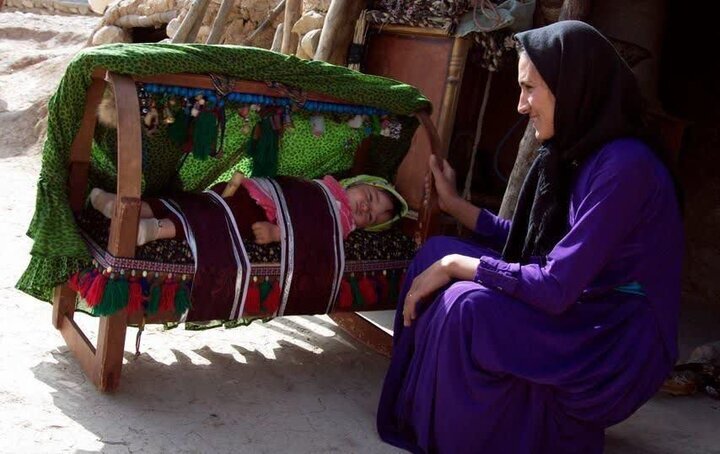
[TEHRAN]Director-General of Lorestan Province’s Ministry of Cultural Heritage, Tourism and Handicrafts, Ata Hassanpour, announced that “Lori’s Lullaby” has been inscribed on the list of national intangible cultural heritage.
According to the Mehr News Agency, he said that the “Lori Lullaby” was registered as one of the precious expressions of the oral and musical culture of the Lo people.
Hassanpour added that this registration was carried out as part of the implementation of Articles 11 and 12 of the Law of Accession of the Islamic Republic of Iran to the Convention for the Safeguarding of Intangible Cultural Heritage, approved by the Islamic Consultative Council in 2005, and Articles 2 and 3 of the Executive Regulations, approved by the Cabinet in 2008.
He continued that the aim of this initiative is to preserve and showcase the intangible cultural heritage of Lorestan’s cities and villages, preserve valuable elements of indigenous culture and transmit true cultural expressions to future generations.
Mr. Hassanpour concluded that the national registration of these musical and oral forms, in addition to their cultural importance, can play an effective role in promoting national and international recognition of the cultural heritage of Lorestan and pave the way for educational and research activities in the field of indigenous culture.
A lullaby, also known as a cradle song, is a calming melody or music usually played or sung to soothe children to sleep.
The role of lullabies varies from culture to culture. In some societies, it serves as a means of transmitting cultural knowledge and traditions. Lullabies also help develop communication skills, convey emotional intentions, maintain young children’s attention, regulate behavior, and promote appropriate alertness levels.
One of the most important uses of lullabies is as a sleep aid for infants. As a result, the music is often simple and repetitive. Lullabies have existed since ancient times and can be found in different countries.
KD