
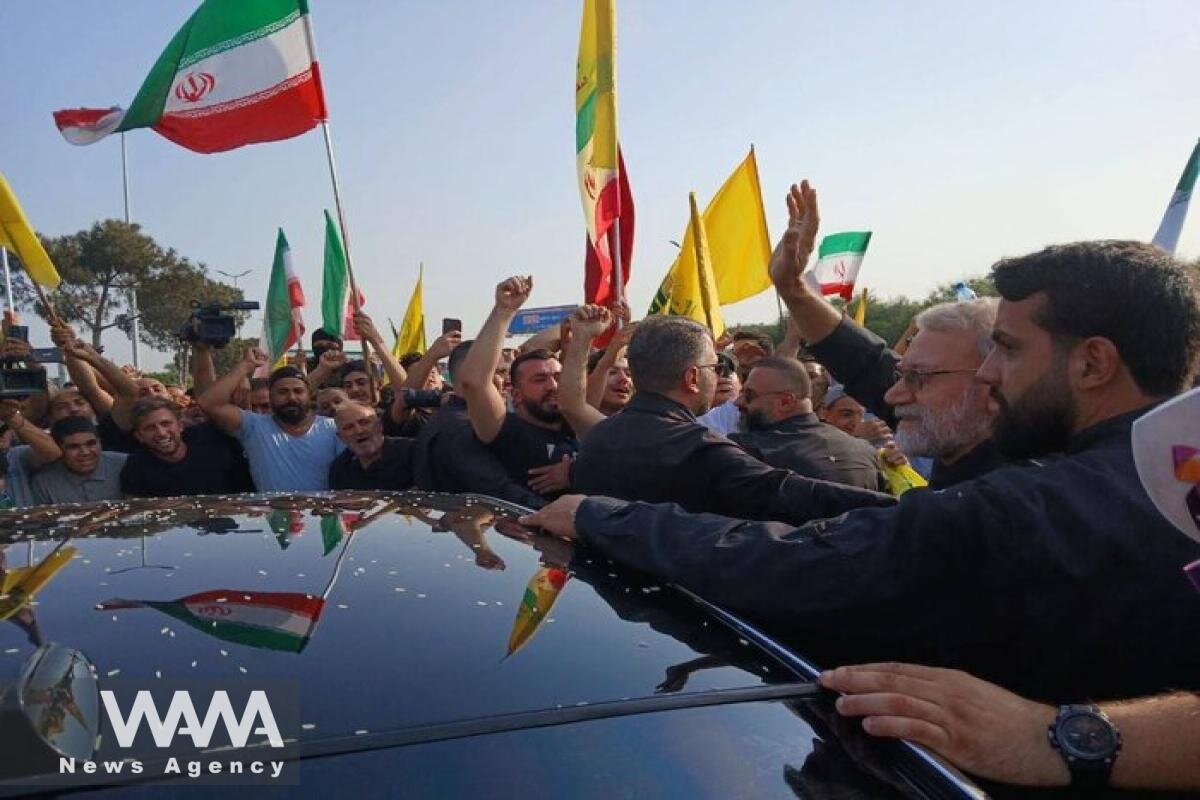
BEIRUT — As some Lebanese politicians rush to repeat the U.S. government’s rhetoric about the “Iranian occupation of Lebanon,” people in villages on the southern border are presenting the exact opposite picture. Residents of border villages staged a sit-in in front of the Iranian embassy in Beirut, not to protest but to seek Iranian help to return to villages that had been repeatedly evacuated by Israelis. attack
They wanted to send a direct message to the Supreme Leader of the Islamic Revolution, Ayatollah Seyyed Ali Khamenei, because they know that Iran is the only political party that has not abandoned them for 40 years.
The demonstrators clarified that while the Lebanese state is intentionally absent and the authorities are powerless or complicit, Iran has always stood by the oppressed and dispossessed in the south, the Bekaa, and all areas of Lebanese territory affected by the Israeli occupation regime.
When Israel invaded Lebanon in 1982, leading to official silence from Arab countries and the international community, Iran was among the first to lend aid to resistance fighters and villagers.
Out of a turbulent period of events and pressures, a resistance emerged, liberating the South in 2000 and establishing a deterrence formula in 2006.
This resistance would not have been able to withstand the most powerful military in the region without Iran’s wholehearted support.
Nevertheless, mercenaries at Beirut’s American spy den (embassy) insist on promoting a distorted narrative, portraying Iranian support as an occupation and resistance as a burden.
They turn a blind eye to the actual occupiers who bombard Lebanon with drones almost daily. Western embassies are also complicit in this occupation, as they impose financial, economic, and security policies on Lebanon.
The truth is that they are not defending “Lebanese sovereignty” as they claim, but rather the privileges associated with Washington’s recognition!
The U.S. Embassy in Beirut has long been the administrative center for Lebanese affairs, controlling aid, banking decisions and military appointments. It also imposes political conditions that undermine the country’s core independence.
However, Iran has not imposed any conditions on Lebanon in exchange for support for resistance activities and people affected by the war.
On the contrary, Iran’s aid has no political compensation and is driven by a principled position of supporting the oppressed and rejecting occupation.
The sit-in by residents of border villages was not a temporary phenomenon. Rather, it was a political event of great importance.
This reflects the collapse of public trust in the Lebanese authorities, who have abandoned the people of the south, destroyed their homes and left them in the open.
These people could not find shelter in their own countries, nor could they find anyone to listen to their voices in the international community. So they turned to parties they knew would not disappoint their allies or compromise their cause.
There is a common feeling among Lebanese that “Iran has never abandoned us and will never abandon us.” Lebanese recognize that Iranian support is never a means of domination, but rather a guarantee of survival.
In contrast, the Lebanese authorities advocate their own policies that amount to collective punishment of their own citizens. They are refusing to admit Iranian planes carrying aid, blocking aid from entering the country, and blocking reconstruction projects that the Iranian government has offered unconditional funding for.
All this to please Washington, which uses sanctions and threats to keep Lebanon in a state of perpetual poverty.
Nevertheless, Lebanese have come to realize that their salvation will come not through the promises of the International Monetary Fund or embassies, but through forging real partnerships with people who have proven their integrity and competence on the ground.
Iran was, and still is, the only party that has offered Lebanon something that no other country has. military support to enable the resistance to protect our borders, humanitarian assistance in times of crisis, and constant preparedness for recovery.
No doubt their message to Khamenei will reach us in the same way as the message of the resistance fighters. Lebanese feel in Iran a warm atmosphere that persists even as interests change.
Iran, which sided with the south at the height of the war, will continue to stand with the displaced people. As the mercenaries at the US embassy hurled accusations, Iran remained silent and loyal, proving once again that it was not an occupier but a true savior.