
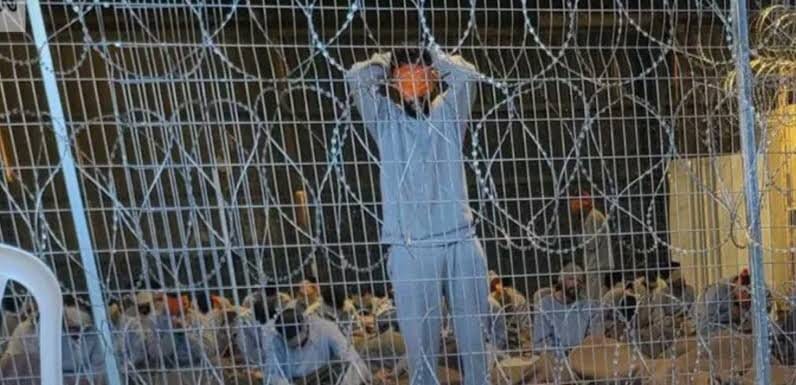
TEHRAN – The discovery of 135 dismembered Palestinian bodies returned to Gaza has revealed a disturbing pattern of torture within the Israeli occupation regime’s prison system.
This is especially true at the regime’s Sde Teiman military facility in the Negev desert, as reported by multiple news outlets, including the Guardian, and documented by other organizations.
The bodies, identified by Hebrew tags as being stored at Sde Teiman, show unmistakable signs of torture and execution. The Gaza Health Ministry confirmed that many people were blindfolded and handcuffed, and there was evidence of gunfire at close range.
Dr. Munir al-Bursh said: “The document tag inside the body bag was written in Hebrew, clearly indicating that the body was kept in Sde Teyman.”
Sude Teyman has become synonymous with cruelty. The facility, described by Israeli whistleblowers and human rights investigators as the scene of “systematic torture and murder,” operates as both a detention center and a holding center for bodies brought from Gaza.
Prisoners, including injured civilians, abducted by Israeli occupation forces from hospitals in the Gaza Strip, were shackled to beds, blindfolded and forced to wear diapers. Testimonies from released detainees highlight dire conditions of humiliation and suffering.
Palestinian journalist Shadi Abu Said described being forced to undress for 10 hours, remaining handcuffed and blindfolded for months, and witnessing the death and mental breakdown of fellow prisoners.
“They brought dogs and urinated on us,” he said. “When I asked them why they were arresting me, they said, ‘You’re going to die hundreds of times.'”
The physical condition of the bodies returned testifies to the brutality of their captors.
Doctors in Khan Younis recorded shattered limbs, ligature marks and evidence of execution-style gunshots. “These findings clearly demonstrate that acts of murder, summary executions and systematic torture took place during the Israeli occupation,” the medical experts concluded.
One of the bodies, identified as 34-year-old Mahmoud Ismail Shabat, had rope marks around his neck and legs that had been torn by tank tracks. His family said this was evidence of extreme violence that was “unimaginable”.
In contrast, Israeli prisoners released from Gaza during the recent ceasefire appeared to be in relatively stable health despite the unprecedented siege and shelling.
This apparent difference highlights a stark contradiction. While the occupation regime accuses Hamas of inhumane acts, it continues to torture, maim, and kill Palestinians in its custody with no consequences.
Organizations and prominent international human rights groups have been warning about these human rights violations for years. Activist Naji Abbas described the evidence as “horrifying, but unfortunately not surprising,” adding that the deaths and mutilations “confirm what we have documented over the past two years about systematic torture in Israeli detention facilities.”
Human rights groups called for an independent international investigation, saying the “unprecedented number of Palestinians who have died in Israeli custody leaves no doubt about the scale of the violations.”
But despite mounting evidence, the world’s reaction remains muted. Although Israeli occupation forces claim to have conducted internal investigations, such investigations have historically been re-declared by UN experts as having nothing close to accountability and allowing widespread torture.
Since Prime Minister Benjamin Netanyahu’s terror cabinet came to power, his prison system has been accused of significantly escalating the torture of Palestinian prisoners illegally held in its prisons. Security Minister Itamar Ben Gvir is accused of widespread torture campaign against Palestinians.
The United Nations has reported that at least 75 Palestinians have died in Israeli-occupied prisons since October 2023, but no sanctions, no international tribunals, or any concrete action or punitive measures have been taken since then.
The body returned from Sude Teiman is stark evidence of the ongoing impunity movement. asked the mother of one of the bereaved children. “Where is the world?” The question remains unresolved, an indictment of a world order that condemns torture in words but tacitly tolerates it when the victims are Palestinians.